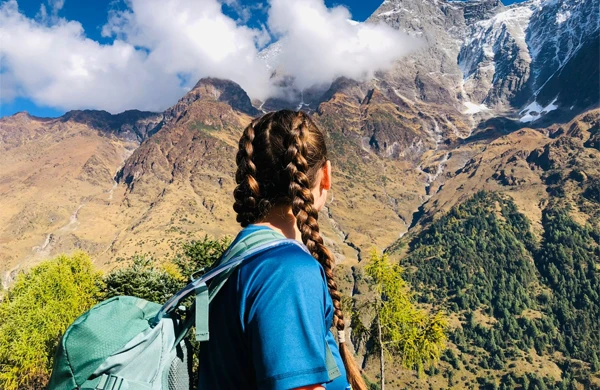
After crossing the 4000-meter mark, the next elevation will be 5000 meters, and getting used to the new heights is the best way to avoid altitude sickness going any further and ensure a successful trek. The day of going from Tengboche to Dingboche, you will be able to see the clear difference in the geography as the treeline disappears before your very eyes. By the time you reach Dingboche, the lush alpine forest will be replaced by the naked mountains with short, shrubby bushes instead.
This change in geography indicates the difference in the level of oxygen; your body itself will begin to notice the change as you go higher. So ultimately, this isn’t a day you skip and instead make sure you hike to the top or as high as you can go. The trekking mantra of “climb high, sleep low” will be practiced, and it is the final one before you move on to Lobuche and ultimately to Everest Base Camp via Gorak Shep.
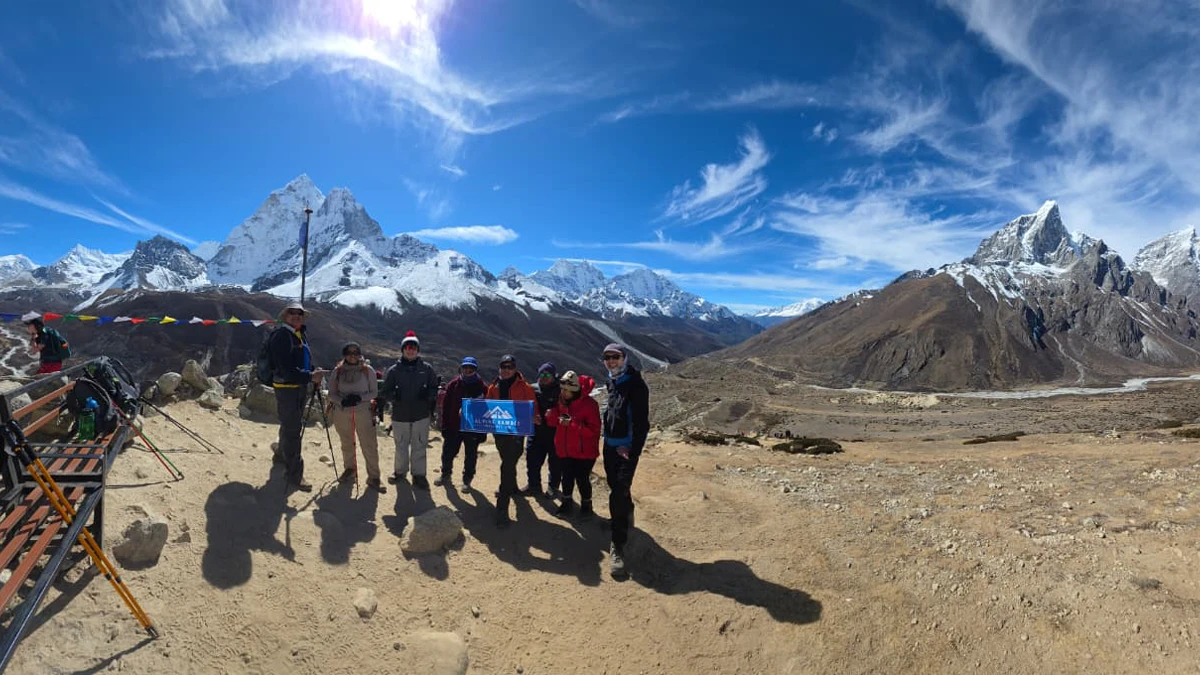
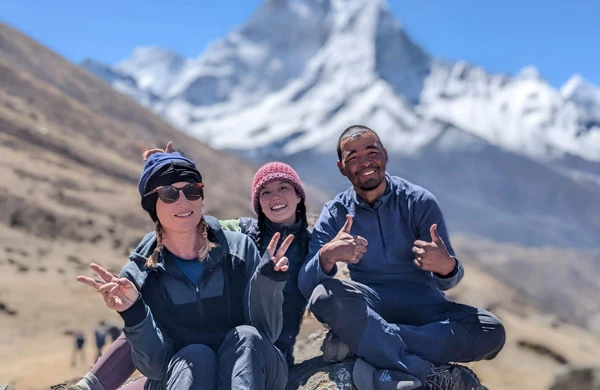
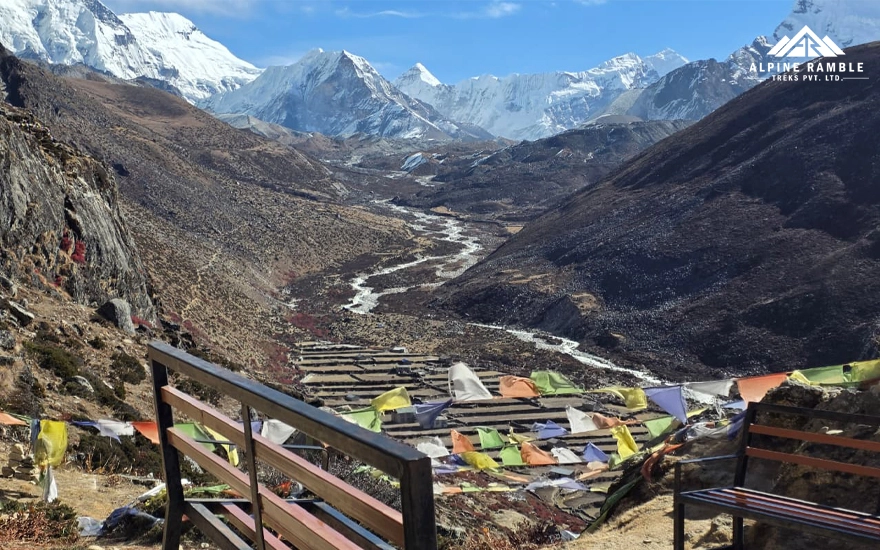
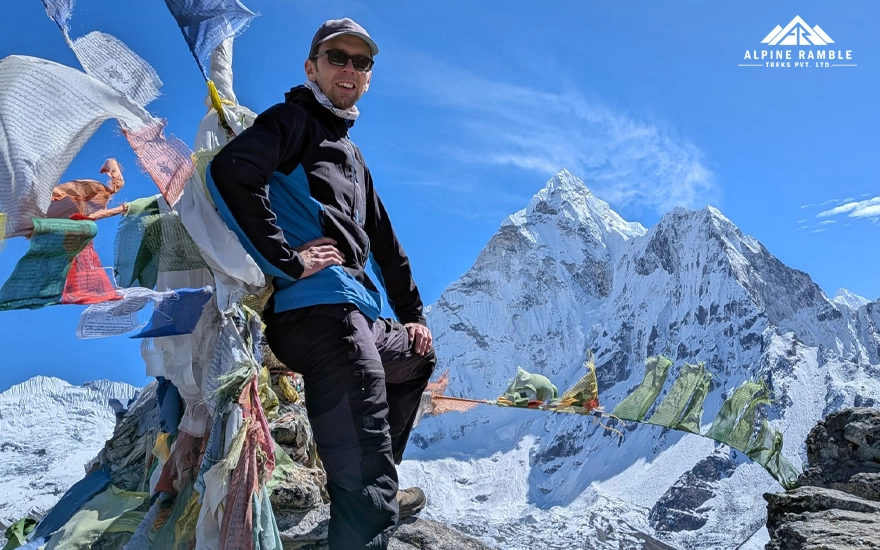
Along with your body adjusting to the higher elevations, you will also be subjected to some of the most mind-bending views of the mountains, especially Ama Dablam during the Dingboche acclimatization hike.
Dingboche Acclimatization Day at a Glance
| |
What to expect |
| Sleeping altitude |
Dingboche, approximately 4,410 m (14,470 ft) |
| Morning hike |
An out-and-back walk up the Nangkartshang ridge above the village |
| Walking time |
Allow roughly 4-6 hours round trip for the longer viewpoint hike. A lower turnaround makes for a shorter walk.
|
| Difficulty |
A steady, steep climb with loose footing in places. Expect to walk slowly and take breaks. |
| How high you go |
Your guide adjusts the turnaround point based on how you feel and the trail and weather conditions. Reaching the summit is optional. |
| Afternoon |
Lunch and downtime at the teahouse, with an easy stroll around Dingboche if you feel well |
Why Dingboche Needs a Rest Day
The main idea of the “rest day” is for the body to get rest after trekking for long days. But with acclimatization as one of the main components, the rest day also includes a short hike to gain more elevation so that your body adjusts better when you reach Lobuche.
Dingboche sits at an elevation of 4,410 meters (14,470 feet), which is significantly lower compared to Lobuche, which has an elevation of 4,940 meters (16,210 feet). This means if your body does not adjust properly to the new altitude, there will be a very high chance you might start getting altitude sickness.
Since Dingboche is the very last stop for acclimatization, this place will be a pillar location that will help to determine the overall success of reaching the base camp without any altitude issues.
Climb high, sleep low in practice
As mentioned above, for the Dingbiche acclimatization, the entire idea is to practice the “climb high, sleep low” motto of trekking. But what really does it mean to climb high and sleep low?
Climbing high and sleeping low is a very standard practice done during any high-altitude trekking or mountain expedition. It is one of the foundational strategies to make sure the body adjusts well to the high altitude and low oxygen levels. This is during the Everest Base Camp Trek, Namche Bazaar and Dingboche are the two major locations where this strategy is practiced.
How Dingboche Acclimatization differs from Namche Bazaar
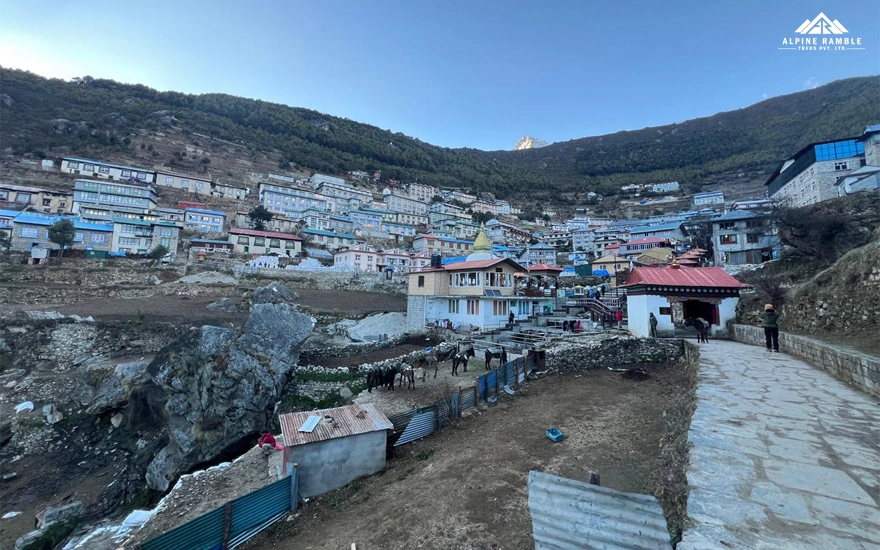
The main difference between Dingboche and Namche Bazaar is, of course, the altitude. Namche Bazaar sits significantly lower in elevation at 3,440 meters (11,286 feet) compared to Dingboche, which is at 4,410 meters (14,470 feet) above sea levels.
This means the two completely different elevations impact your body in terms of oxygen levels. Naturally, adjusting to the altitude of Dingboche will be harder compared to that of the Namche Bazaar. But the idea behind acclimatization is all the same.
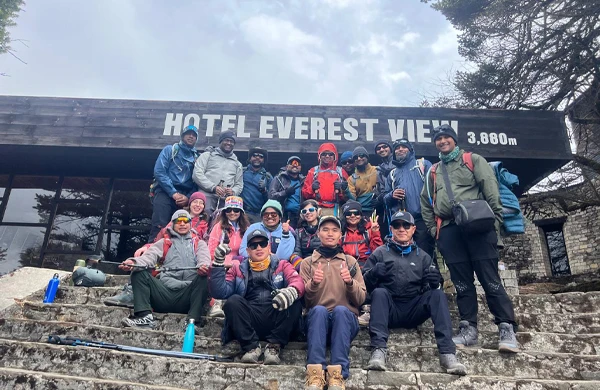
For Namche Bazaar acclimatization day, the main activity will be hiking to Hotel Everest View at 3,880 meters, where you will gain a further elevation of 440 meters. Meanwhile, with Dingboche, the main activity is hiking the Nangkartshang Peak (5,083 meters). The total elevation gain during the Dingboche rest day hike is 673 meters.
The main objective of the Dingboche Nangkartshang Peak hike is to reach up to the elevation of Lobuche and come back down. This is to make your stay at Lobuche easier and minimize issues that can arise as a result of high altitude.
The Nangkartshang Hike, Step by Step
The Nangkartshang Hike is one of the memorable moments of the entire Everest Base Camp Trek. Aside from being acclimatized, the hike also offers panoramic views of the surrounding mountains.
The hike begins early, after breakfast, while the mornings are still clear and the wind is calm. There’s no gentle warm-up. The trail begins behind Dingboche (4,410 m) and goes straight uphill along the ridge.
The climb is slow and steady. The air is thin, so even a gentle slope leaves you breathing hard. The path zigzags up the hillside, which makes the steepest parts easier to manage. Walk at a pace where you can still talk, and drink water as you go.
As you rise, Dingboche shrinks into a tiny picture of stone-walled fields below you with colorful roofs of the teahouses. You will be able to see Ama Dablam rising across the valley, Island Peak, the Imja Valley and the entire Dingboche village. Each switchback opens up more of the Himalayan skyline, which helps take your mind off the effort that will be taking on both your mind and body.
The high point is around 5,083 m. The view opens in every direction, with Makalu, Lhotse, and Ama Dablam and the valley below.
The way down is easier on your lungs, and your breathing settles quickly. It’s harder on your knees, so take it slowly and watch the loose stones. You’ll be back in Dingboche by afternoon, ready for lunch and a long rest.
Possible Altitude Symptoms During the Dingboche Hike
At 4,410 m and higher, the body works harder for every step, so some discomfort on the Nangkartshang hike is normal. Most trekkers feel it most on the steeper stretches and near the high point.
Normal effects of altitude
Shortness of breath: Breathing becomes fast and heavy, even on gentle slopes, and recovers within a few minutes of stopping.
Faster heart rate: The heart beats harder to move oxygen around the body.
Tiredness in the legs: Muscles tire sooner than at lower altitudes, so the climb feels slower than the distance suggests.
Cold hands, feet and face: Wind and thin air make exposed skin feel colder than the temperature suggests.
Dry mouth and throat: Dry air and heavy breathing cause this, and it makes drinking water regularly important.
Reduced appetite: Many trekkers eat less at this altitude, even when they are hungry for energy.
Some trekkers develop mild acute mountain sickness (AMS) during or after the hike. Common signs include:
- A mild to moderate headache
- Dizziness or light-headedness
- Nausea
- Unusual fatigue or weakness
- Difficulty sleeping that night
These symptoms are common and often settle with rest, fluids and a slower pace. Trekkers should tell their guide as soon as any of them appear, rather than waiting to see if they pass.
Practical Tips for Your Dingboche Rest Day
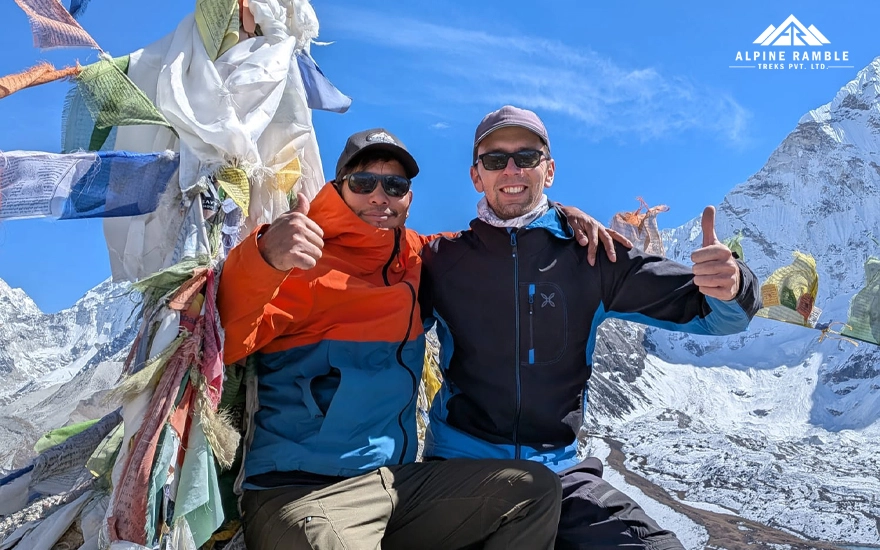
Here are some practical tips that will make your Dingboche rest day productive and helpful in making your trek to the Everest Base Camp a total adventurous success:
First things first, start early. Set out soon after breakfast, ideally by before 8 am. As mornings are usually clearer and calmer, and you’ll be back before the afternoon wind and clouds arrive.
Second, carry a light daypack only, as it is not a full-fledged trek and you will return to the same teahouse, so leave your main bag behind.
Your daypack should include the following:
- At least 1 to 1.5 liters of water
- Snacks such as chocolate, nuts or biscuits
- A windproof jacket, warm hat and gloves
- Sunglasses and sunscreen, since the sun is strong at this altitude
- Your camera or phone, kept warm inside a pocket
Third, dress up in layers instead of only wearing one big jacket. It can be cold at the start, warm during the climb, and very windy at the top. Take layers off before you sweat heavily and add them back when you stop.
Fourth, walk in a slow and steady pace. It is better to reach the top slowly instead of rushing it out and losing energy and having the altitude effect on you. Hence, short, regular breaks work better than rushing and then collapsing.
Fifth, drink and eat little but often. Sip water throughout the hike, and keep your meals simple and familiar, such as dal bhat, soup or noodles. Appetite often drops at this altitude, but your body still needs the energy.
Sixth, tell your guide how you feel. Make sure to mention even small changes, like a mild headache, nausea or unusual tiredness, as soon as you notice them. This way the guides can adjust the pace or call the hike off early.
Seventh, know when to turn back, and it does not mean you are giving up. Reaching to the top of the Nangkartshang Peak is the goal but not the priority. The main idea is to ascend as higher as your body can go, so if that means only reaching halfway through, then it is enough. A severe headache, repeated vomiting, confusion, loss of balance or breathlessness at rest are reasons to stop and descend. Don’t try to push through them.
Eighth, avoid medication unless advised, or ask your guide before taking it.
And finally, rest properly afterwards. Once you’re back, change into dry clothes, eat a warm meal, keep drinking fluids and go to bed early. It is strictly advised to avoid alcohol, which can affect sleep and acclimatization.
How This Day Prepares You for Lobuche
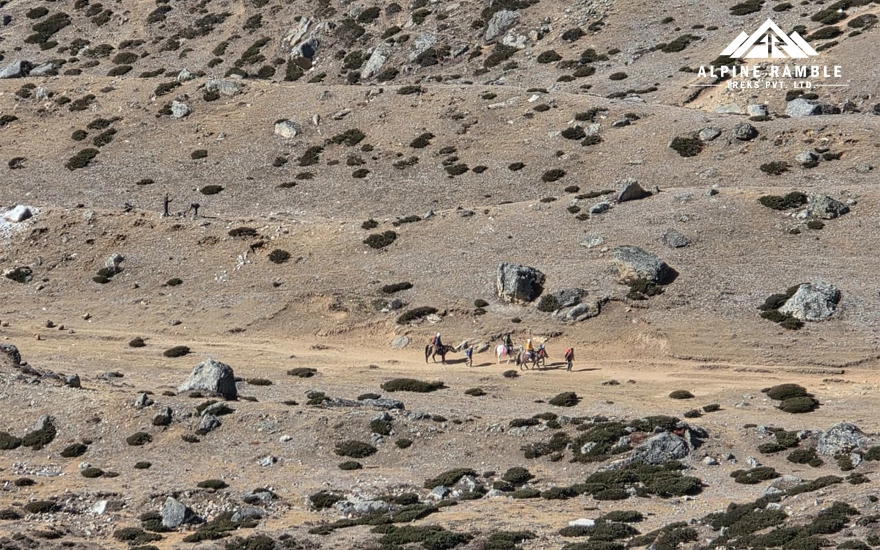
As we have already established, the main reason for the acclimatization day hike on Dingboche is to prepare the body for the elevation of Lobuche. And here’s how this day prepares you for Lobuche:
Your body will adjust better to the altitude of Lobuche once you have done the acclimatization hike compared to when a person avoids it.
The trek to Lobuche will also feel easier, as your breathing will have settled and you will be able to maintain a steady hiking pace as you ascend.
A good rest after the Nangkartshang Peak hike will allow your body to recover and give you a small step up. As the route passes through Thuk La Pass and the memorial ridge, the air will get thinner and the temperature will get colder, but the climb will feel more manageable.
You will also have better sleeping odds. Sleep and appetite are already low when it comes to high altitude, but with acclimatization, your chances of getting better and longer hours of sleep will increase.
Dingboche Acclimatization FAQs
1. Do I need a rest day in Dingboche?
Yes. Dingboche sits at about 4,410 m, and a rest day here is a standard part of the Everest Base Camp route. Going higher without it raises your risk of altitude sickness at Lobuche and beyond.
2. Can I skip the Nangkartshang hike?
You can, but it isn’t recommended. The hike is what makes the day active acclimatization rather than just a day off. If you feel unwell, tell your guide and let them decide whether to shorten it or stay in the village.
3. How long does the Nangkartshang hike take?
Most trekkers need 4-6 for the round trip depending on how far you go, including rests and time at the top.
4. How high is Nangkartshang?
The high point is about 5,083 m, roughly 670 m above Dingboche.
5. Is the Dingboche rest day harder than the Namche one?
Usually, yes. The air is thinner, the nights are colder, and the climb starts higher. It’s also a shorter hike, so the effort is more about breathing than distance.
6. What if I get a headache at Dingboche?
A mild headache is common at this altitude. Drink water, rest and tell your guide. A severe headache that doesn’t ease, or one that comes with vomiting or confusion, means you should stop and go down.
7. Should I take altitude medication?
Only after talking to your guide or a doctor. Medication is not a substitute for a slow pace, good hydration and honest reporting of symptoms.
8. What should I pack for the hike?
A light daypack with water, snacks, a windproof jacket, a warm hat, gloves, sunglasses and sunscreen. Leave your main bag at the teahouse.
9. Are there other hikes I can do on the rest day?
Yes. Some trekkers walk toward Chhukung, which is higher and quieter, instead of Nangkartshang. Your guide can suggest the best option based on the weather and how everyone feels.
10. How do I sleep better at Dingboche?
Eat a warm meal, drink fluids, avoid alcohol and keep your sleeping bag warm. Mild sleep disturbance is common at this altitude, so don’t worry if you wake often. Tell your guide if you have trouble breathing at night.
Planning Your Own Trek?
A well-timed rest day at Dingboche makes the climb to Lobuche and beyond much more manageable. If you’re planning your own trip, our 12-day Everest Base Camp itinerary includes acclimatization days at both Namche and Dingboche, so the height gain is spread out sensibly. It is our pleasure to be of your service.