Ama Dablam Base Camp Trek with Everest Base Camp – 15 Days
US$1780US$2000
Book Now

Ama Dablam Base Camp Trek with Everest Base Camp – 15 Days

1478+ reviews in TripAdvisor
400+ reviews in Google
106+ reviews in TrustPilot
Trip Facts
Duration15 Days
Maximum Altitude5545m/ 18,225 ft
Group SizePrivate / Group
StartsKathmandu
EndsKathmandu
ActivitiesTrekking/ Hiking
Best TimeMarch- May & Sep- Nov
Overview

Overview (Ama Dablam First)

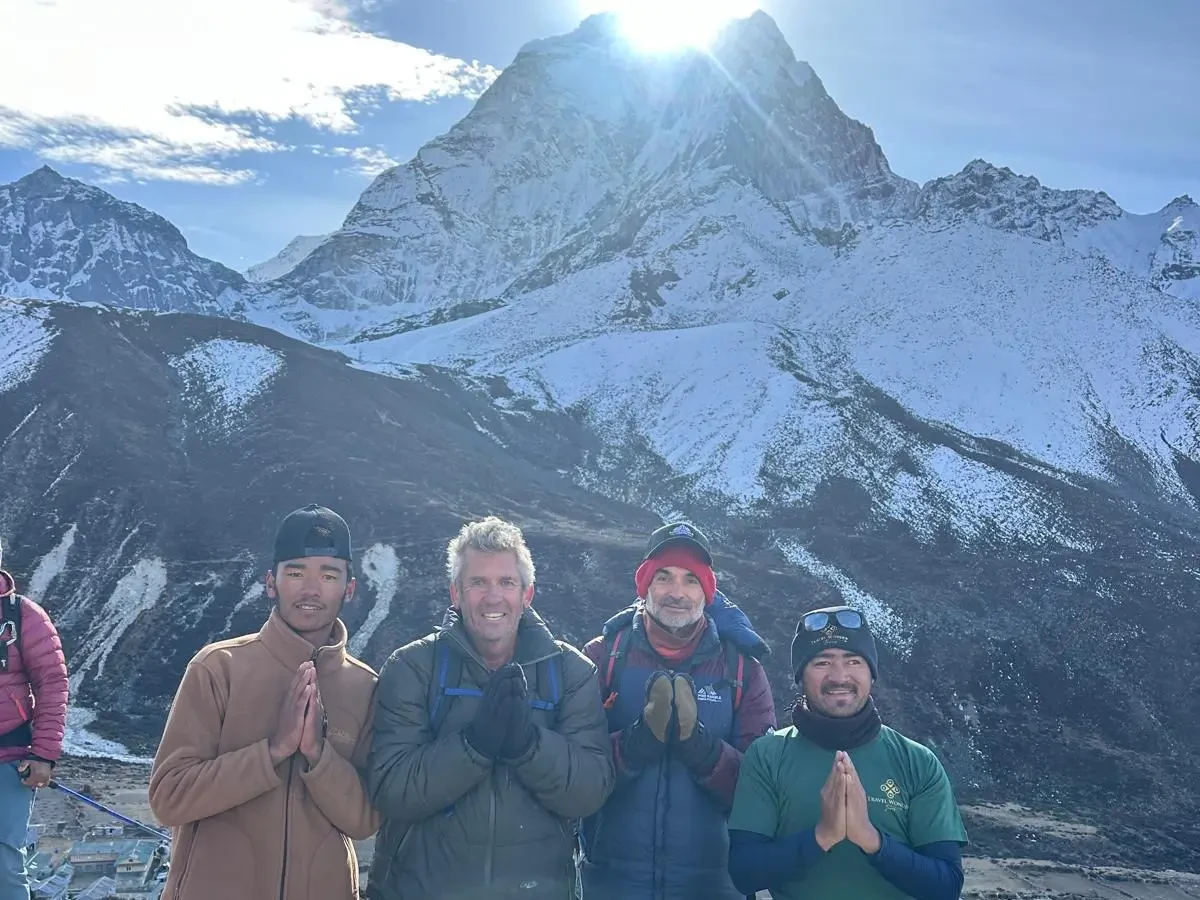
The Ama Dablam Base Camp Trek takes you to the foothills of Mount Ama Dablam itself, a one-of-a-kind journey. It is often referred to as one of the most beautiful mountains in the world, and even compared to the Matterhorn of Europe, it is truly a sight to behold. 

The name Ama Dablam is derived from the Sherpa-Tibetan language, which translates to “Mother’s necklace.” The long ridges on either side are thought to be the arms of the mother (ama), which are protecting her child. The hanging glaciers, which are on the southwest face, are thought to be the “Dablam,” which is a traditional double pendant with the god's picture on it that Sherpa women in Nepal wear a lot.

As it is known to be the third most popular Himalayan peak permitted for expedition, a huge number of people line up to scale the said mountain every season. But even so, in comparison to the Everest Base Camp, there are far fewer people who divert here as a trekking destination. 

The journey entails the same route as the Everest Base Camp until the Pangboche village, which then diverts toward the Ama Dablam Base Camp. But in this case, the EBC comes as a bonus extension of the Ama Dablam Base Camp trek, and you will be able to experience the best of both worlds! 

Why Ama Dablam Base Camp Is the True Highlight

This trek is the perfect opportunity to kill two birds with one stone. While reaching the base of one of the world’s most beautiful peaks, Mount Ama Dablam, you can also cross the Everest Base Camp Trek off your list. 

While Mount Everest is known as the highest point on Earth, Mount Ama Dablam is known as “Mountaineer’s Mountain” due to the technical abilities required for its difficult terrain. This trek allows you the perfect opportunity to view the full mountain from the Base Camp itself. 

Trek Highlights of Ama Dablam base Camp Trek with Everest Base Camp

Uninterrupted close-up views of Ama Dablam from its base camp, where the mountain rises almost vertically above the trail, offering one of the most dramatic single-peak perspectives in the Himalaya.

Panoramic views of three 8000-meter peaks, Mount Everest, Mount Cho Oyu, and Mount Makalu, and many 7000- and 6000-meter peaks from various points of the Ama Dablam Base Camp. 

A dedicated side trek to Ama Dablam Base Camp, away from the main Everest Base Camp highway, providing a quieter and more immersive high-mountain experience.

Classic Sherpa villages and culture, including Namche Bazaar, Tengboche, Pangboche, and Phortse, with ancient monasteries, mani walls, prayer flags, and traditional stone houses.

A visit to Tengboche Monastery, which is the biggest monastery of the Khumbu region and a site of sacredness where different Sherpa festivals and rituals are performed. 

Pangboche Monastery visit, the oldest monastery in the Khumbu region, set beneath Ama Dablam’s south face and deeply connected to local Himalayan spiritual life.

Fewer trekkers beyond Pangboche, creating a stronger sense of solitude and authenticity compared to the standard Everest Base Camp route.

Balanced altitude acclimatization, allowing proper adaptation while exploring both Ama Dablam Base Camp and Everest Base Camp safely.

Everest Base Camp as an added extension, giving trekkers the opportunity to stand at the foot of the world’s highest mountain without making it the sole focus of the journey.

Kala Patthar viewpoint, offering sunrise or sunset panoramas of Everest, Lhotse, Nuptse, and the Khumbu Glacier.

Ever-changing Himalayan landscapes, from pine forests and rhododendron valleys to alpine terrain, glaciers, and high-altitude moraines.

Ideal trek for photographers and mountain enthusiasts, combining dramatic vertical peaks, cultural depth, and varied scenery in a single itinerary.

How This Trek Is Different from Standard EBC

There definitely will be certain impressions of both trekking destinations, because Everest Base Camp is one of the most popular trekking destinations not only in Nepal but also in the world. Fueled by the desire to reach the base of the world’s tallest peak, the route of Mount Everest sees quite a number of people during the peak seasons. 

At the same time, the Ama Dablam Base Camp is like a much more composed version of Everest Base Camp when it comes to crowd comparison. This appeals more to people who prefer a more peaceful and intimate experience with nature. And when it comes to visual impact, both have their own unique features. 

But when destinations are combined to form one complete package, the trekking experience is like no other. Seeing the same mountains from different perspectives shows how location can impact the visuals of certain things. For example, the view of Ama Dablam and Mount Everest from Everest Viewpoint in Syangboche is nothing like the view of them from their respective base camps. 

Ama Dablam Base Camp Trek Difficulty

Reaching the Ama Dablam Base Camp itself wouldn't be considered a difficult trek; it can be rated as moderately difficult, whereas adding the Everest Base Camp does increase the difficulty. 

But whether it's one or both of these places, good physical and mental health is vital. It is not the technicality of the trek but rather the long hours of consistent trekking for 15 days and altitude that make it challenging. 

So, training your body with appropriate physical exercises such as hiking, cardio, running, etc., is recommended at least four weeks before the trek. 

Altitude Profile – Ama Dablam vs. Everest Base Camp

There is, of course, a difference between the altitude of Ama Dablam and Everest, no matter if it's a comparison between two base camps or mountains. 
 

Name 

Altitude

Ama Dablam Base Camp

4,600 meters (15,092 feet)

Mount Ama Dablam

6,812 metres (22,349 ft)

Everest Base Camp 

5,364 meters (17,598 feet)

Mount Everest 

8,848.86 meters (29,031.7 feet)

With this trek, the highest elevation is actually Kala Patthar, at 5,545 meters (18,192 feet), so taking precautions with the elevation is crucial. Specifically to avoid altitude sickness during the trek. 

The itinerary is perfectly molded to require acclimatization during the trek to avoid getting altitude sickness. The ascent is gradual with perfect locations for stops, and especially once reaching the Ama Dablam Base Camp, it will be let the body acclimatize for the Everest Base Camp, but being physically fit will be of great help

Maintaining a good diet throughout the trek is as important as maintaining physical fitness. Avoiding meat, unfiltered water and any food that might impact your health should be the priority. 

Best Season for Ama Dablam Base Camp Trek

When it comes to trekking in the Himalayas in Nepal, the majority of the locations are best travelled during spring and autumn. This is the best window for good weather, great visibility, and avoiding rain and extreme cold when trekking. 

That being said, particularly for this trek, spring (March-May) would technically be the best time, as you will get the opportunity to see the team of mountain climbers in action. Both of these seasons have their own selling points when it comes to visibility. 

Autumn offers more crisp and clear views of the Himalayas under the vibrant blue sky, but the spring season offers the eye-catching views of the blooming rhododendron flowers of multiple colors. 

The summer season can be trekked with proper preparation, but due to the monsoon, visibility is low, and there will be frequent rain with muddy and slippery trails. But winter is one of the best times for views, though one must be ready for extreme cold. 

Temperature during the Ama Dablam Base Camp Trek with Everest Base Camp

The temperature of the Everest region depends on two major factors: season and altitude. Each season has its temperature range, where one can expect warm to mild temperatures during summer and spring, cooler temperatures in autumn, and extreme cold during the winter season. 

The average temperature during the Ama Dablam Base Camp Trek with Everest Base Camp, based on altitude variation and different seasons, is shown in the table below: 

Altitude Range (m) Typical Trek Locations Spring (Mar–May) Summer / Monsoon (Jun–Aug) Autumn (Sep–Nov) Winter (Dec–Feb)
2,600 – 3,000 m Lukla, Phakding 5°C to 15°C 10°C to 20°C 5°C to 15°C -3°C to 8°C
3,000 – 3,500 m Namche Bazaar 3°C to 12°C 8°C to 18°C 3°C to 12°C -6°C to 6°C
3,500 – 4,000 m Khumjung, Phortse, Pangboche 1°C to 10°C 6°C to 16°C 0°C to 10°C -10°C to 4°C
4,000 – 4,500 m Dingboche, Pheriche -1°C to 9°C 3°C to 13°C -3°C to 8°C -15°C to -4°C
4,500–5,000 m. Ama Dablam Base Camp, Lobuche -4°C to 6°C 0°C to 10°C -6°C to 5°C -20°C to -8°C
5,000 – 5,600 m Gorak Shep, Everest Base Camp, Kala Patthar -8°C to 2°C -2°C to 8°C -10°C to 2°C -25°C to -15°C

Ama Dablam Base Camp Trek Route

This particular Ama Dablam Base Camp Trek with Everest Base Camp features a pretty intriguing trekking route. Not only can you retrace the footsteps of the first successful and famous mountaineers, but you also have the opportunity to deviate from the trail and explore completely different trails and villages

Route:

Kathmandu–Lukla–Namche–Khumjung–Phortse–Pangboche–Ama Dablam Base Camp–Dingboche–Lobuche–Gorak Shep–EBC–Kala Patthar–Pheriche–Tengboche–Namche Bazaar–Lukla–Kathmandu

Additional Information

Is Ama Dablam Base Camp suitable for first-time trekkers?

Yes, the Ama Dablam Base Camp Trek with Everest Base Camp is suitable for first-time trekkers. But training and preparation should be done before the trek. Many people have done this trek as their first, but good preparation beforehand makes it easier and increases the success rate. 

How crowded is Ama Dablam Base Camp compared to EBC?

In comparison to the Everest Base Camp, the Ama Dablam Base Camp is very sparsely crowded. The trail to Ama Dablam diverts from Pangboche, and the difference will be prominent. Very few people go for the Ama Dablam Base Camp, allowing for an intimate experience where, in many instances, you can have the trail to yourself. 

Photography & viewpoints along the Ama Dablam route

For photography enthusiasts, this particular route offers the absolute best views, especially with Ama Dablam Base Camp, where you can see the closest view of Ama Dablam that no other location offers. 

Cultural importance of Pangboche & Tengboche

This particular route from Ama Dablam Base Camp to Everest Base Camp passes through many Sherpa settlements, providing the opportunity to visit four different monasteries in the Everest region. 

Can this trek be done without going to Everest Base Camp? 

Yes! The Ama Dablam Base Camp trek can absolutely be done without going to Everest Base Camp if that is what you prefer. Removing the EBC trek will only leave the Ama Dablam Base Camp part of the trek, which itself is incredible. 

Cost for the Ama Dablam Base Camp with Everest Base Camp of 15 Days

Pax Cost (USD)
1 Pax $1780
2 - 3 Pax $1500
4 - 7 Pax $1350
8 - 13 Pax $1200
14 - 15 Pax $1170

Permit Cost for the Ama Dablam Base Camp Trek 

There are two main permits required for the Ama Dablam Base Camp Trek with Everest Base Camp: the Sagarmatha National Park Entry Permit ($30) and the Khumbu Pasang Lhamu Rural Municipality Entry Permit ($20).

Guide and Porter Cost for the Ama Dablam Base Camp Trek 

The cost for a guide and porter for the Ama Dablam Base Camp Trek with Everest Base Camp is ~$30-$35 and ~$20-$25 per day, respectively. 

Note: 

The cost for the package depends on group size and level of service.

When you purchase the package, the costs for the guide, porter, flights, permits, and staff are included. 
Itinerary

Ama Dablam Base Camp Trek with Everest Base Camp – 15 Days Day-by-day Plan Itinerary

Kathmandu to KathmanduExpand all

Your arrival in the land of the Himalayas marks the beginning of an unforgettable journey. A thrilling adventure awaits that takes you to the heart of the Everest Region and not one but two of the base camps of such majestic mountains, Ama Dablam and Mount Everest.

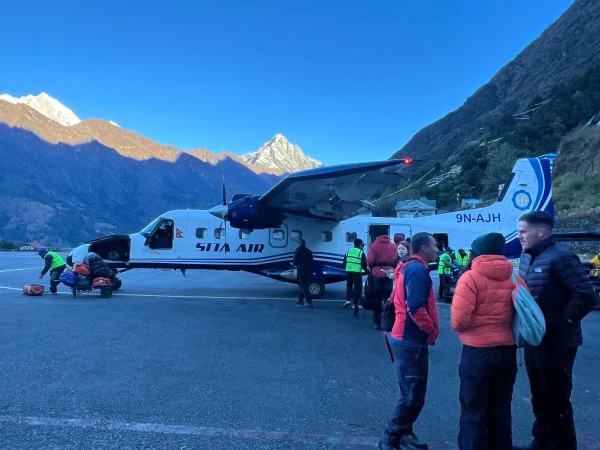
Hop on to the world’s most dangerous flight early in the morning and touch down in Lukla, the gateway to Everest, or, in our case, the gateway to Ama Dablam Base Camp as well. The trek begins with scenic forested hills, reverberating rivers and quaint Sherpa villages, as the trails offer rounds of multiple mani walls and prayer-flag-adorned suspension bridges. Then Phakding arrives, where we stay for the night to rest.

It is quite an interesting day because as we gain elevation, we also gain more majestic views and even some glimpses of snow-covered peaks from a few points on the trail. On our journey to reach the famous Sherpa village, Namche Bazaar, we first have to cross a few landmarks that make this trek even more memorable. 

This trek includes entering the Sagarmatha National Park, which is listed as a UNESCO World Heritage Site; crossing the iconic Hillary Bridge adorned with prayer flags; passing many small chortens and stupas; and, of course, enjoying the mesmerizing views and small Sherpa villages scattered along the trail. 

Arriving at Namche Bazaar, it truly feels like a triumph after over hours of rigorous uphill hiking. A horseshoe-shaped village nestled in a slanted hill, filled with colorful-roofed houses, Namche Bazaar really looks like the gateway to Everest.

We are taking a different approach from the standard itinerary, which typically designates day 4 for acclimatization, involving trekking to Everest View, exploring Khumjung village, and returning to Namche for the night; instead, we will stay in Khumjung village.

This means we will do our regular acclimatization activity but also have a change of scenery and avoid staying at the same place for multiple days. Surrounded by majestic mountain views, Sherpa settlements, and monasteries, Khumjung village is a true wonder of this trek.     

From Khumjung we take a different yet scenic route that leads us to another Sherpa village of the Khumbu region called Phortse. And while walking on the trail, we can see the magnificent view of Ama Dablam, along with Cholatse and Taboche to the left, Thamserku and Kangtega to the right, and even distant views of Everest and Lhotse. 

At around 3,840 meters, the Phortse village offers a deeper cultural experience, as it is not as commercialized as Namche Bazaar. This part of the route offers an exciting opportunity to observe the Sherpa culture and traditions in an authentic Sherpa village. 

Furthermore, Phortse is also known for being rich in biodiversity, unique landscapes, and strong Sherpa heritage; it serves as a gateway for alternative treks and is home to the Khumbu Climbing Centre, providing mountaineering training.

As we gain altitude while trekking from Phortse to Pangboche, we are rewarded with increasingly scenic views, and Pangboche, a quaint Sherpa village at an elevation of 3,930m, is especially known for having one of the oldest monasteries in the Khumbu region, which is said to have been founded in the 17th century. 

As we diverted from Namche to Khumjung to Phortse, we again joined the standard trail when we reached Pangboche. Being a relatively short and easy hike, you will have plenty of time to explore the old village and the Pangboche Monastery, which is surrounded by the magnificent snow-covered Himalayas. Ama Dablam sits beautifully in all her glory and looks even closer than the previous days.

The seventh day is among the most thrilling of the entire trekking journey. We finally make our way to the iconic Ama Dablam Base Camp. The major thing to notice is that there are going to be far fewer people on the trail compared to the trail at Everest Base Camp. 

Therefore, this day presents a perfect opportunity to completely immerse in the peace and serenity of the low-traffic trekking trail that provides some of the best views in the entire trek. 

And upon reaching the Ama Dablam Base Camp, and if it is the spring season, you can see many tents laid out and climbers getting ready for their trainings or even climbing one of the most technical peaks in the Himalayas. 

The views from here are unmatched, offering the closest perspective of Mount Ama Dablam itself, as well as other 8000-meter peaks, including Mount Everest, Cho Oyu, and Mount Makalu, along with countless 7000- and 6000-meter peaks. 

After exploring the area, clicking thousands of photocard-worthy pictures, and admiring the view, we will hike back to Pangboche village and rest for the night. And not only have you seen mesmerizing views of Ama Dablam, but you have also fulfilled the acclimatization process that will be a tremendous aid in coming days as you ascend higher.

Today we are back on the standard trail of the Everest Base Camp. The hike from Pangboche to Dingboche is relatively short, but pacing is important as the altitude reaches 4410 meters. Any sign of forest with tall trees will now be replaced with plants that are no taller than a meter or two and look absolutely tiny in comparison to the colossal giants of mountains on all sides. 

Located in a valley, Dingboche is a small village consisting of a limited number of teahouses with surprisingly excellent facilities. And since you will reach Dingboche relatively early in the day, you can spend the remainder of the day exploring the village and even go on to hike the nearest hill for better views.

Today, you gain even more elevation as the trail leads toward Lobuche. Along the way, several striking Himalayan peaks come into view, including Lobuche Peak, Pumori, and the unmistakable Ama Dablam, which remains behind you as you steadily climb higher into the alpine landscape.

One of the most moving moments of the day is crossing the Thuk La Pass. Here, you pause at a memorial viewpoint marked by over a hundred stone cairns and monuments dedicated to climbers and Sherpas who lost their lives on Mount Everest and throughout the Himalayas. The quiet setting and surrounding peaks create a powerful reminder of the sacrifices made in these mountains.

Upon reaching Lobuche, there is time to explore the small settlement and, if you are lucky, spot some unique high-altitude mountain birds. Accommodation and amenities here are noticeably more basic compared to the lower sections of the trek, reflecting the increasing remoteness and altitude. 

Even so, the tea houses still offer warm meals, comfortable shelter, and a welcoming atmosphere. It is a good moment to appreciate these comforts, as the following day in Gorak Shep brings even simpler facilities at the very edge of human settlement.

Today is one of the most meaningful days of the entire journey. Leaving Lobuche behind, the trail gradually climbs toward Gorak Shep, the last settlement before Everest Base Camp. 

The landscape becomes more rugged and dramatic, with glacial terrain and sweeping views of Nuptse and Pumori setting the tone for what lies ahead. After a short rest at Gorak Shep, the trek continues across the Khumbu Glacier to reach Everest Base Camp. 

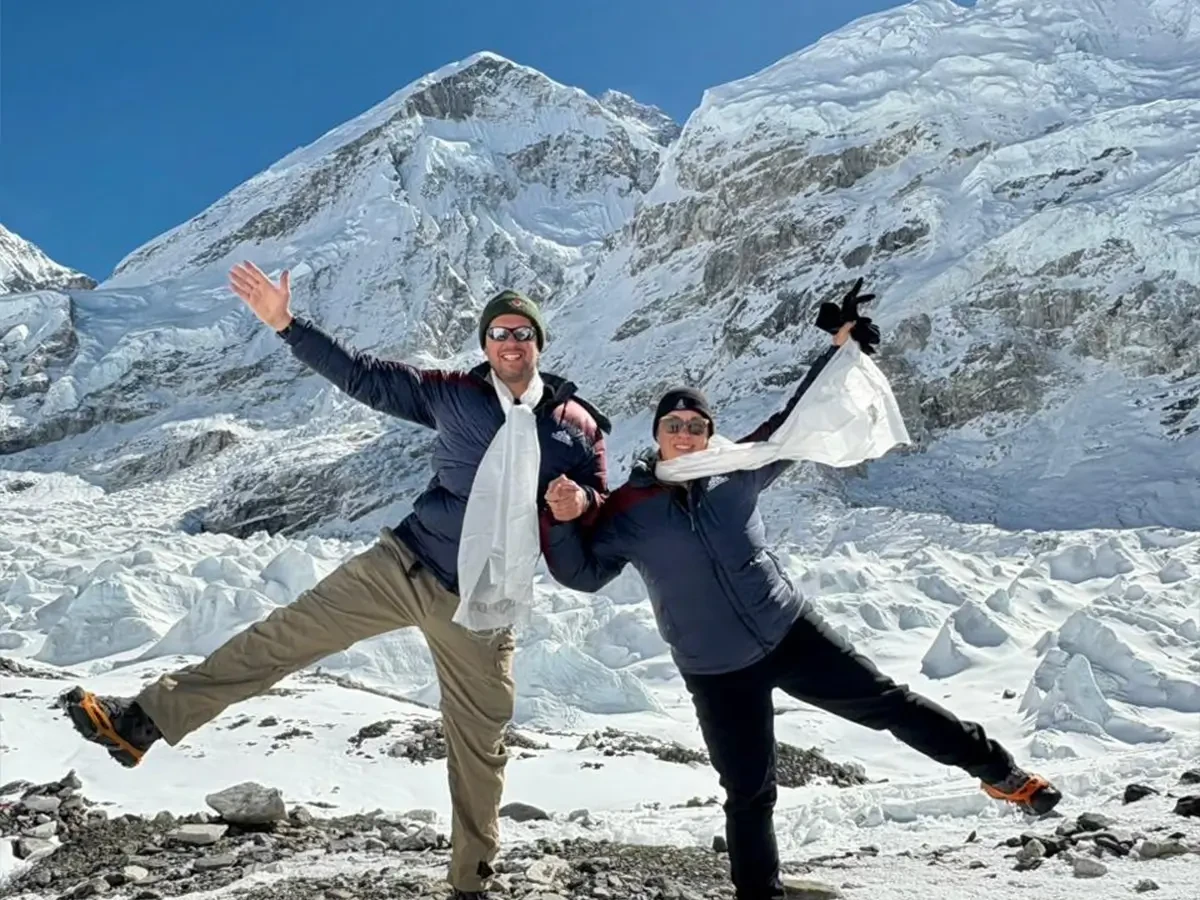
Standing at the foot of the world’s highest mountain will be an unforgettable experience, surrounded by prayer flags, ice formations, and the powerful presence of Everest itself. After spending time at base camp, the trail retraces back to Gorak Shep for the night.

It is natural to think you can see Mount Everest from Everest Base Camp itself, but sadly, that is not the case. However, the best and closest view of Mount Everest in the entire region is from Kala Patthar. 

This is why you will find yourself hiking the uphill trail of Kalapatthar in the early morning to get one of the best views of Mount Everest in the entire trek. As the sun rises, Everest, Nuptse, and the surrounding peaks glow in golden light, creating one of the most iconic Himalayan panoramas. 

After soaking in the views, the descent leads back to Gorak Shep for breakfast before continuing downhill toward Pheriche. The drop in altitude brings noticeable relief, and the trail passes through familiar valleys with expansive mountain scenery along the way. Overnight stay in Pheriche.

The journey continues downward through the Khumbu Valley, following the Dudh Koshi River and passing through traditional Sherpa villages. As you descend, the landscape slowly changes, with more greenery and warmer air returning. 

The trail winds until Pangboche, then takes a different route that leads to Tengboche, a place that we missed the first time round, and here you can visit the famous Tengboche Monastery. By evening, you reach Namche Bazaar, the vibrant heart of the Everest region, where hot showers, bakeries, and familiar comforts await.

The final trekking day retraces the path through forests of pine and rhododendron, crossing suspension bridges and small settlements along the way. While the trail includes a few final ups and downs, the sense of completion makes the walk rewarding. Arrival in Lukla marks the end of the trekking adventure, offering a chance to celebrate the journey with your team and reflect on the experience in the mountains.

An early morning flight takes you from Lukla back to Kathmandu, offering one last aerial view of the Himalayas. Upon arrival in the capital, you will be transferred to your hotel. The rest of the day is free to relax, enjoy a proper meal, explore the city, or simply rest after the trek.

Today marks the end of your adventure in Nepal. Depending on your flight schedule, you will be transferred to the airport for your onward journey. You leave with memories of Ama Dablam, Everest Base Camp, and the Khumbu region that will stay with you long after the journey ends.

Cost Details

Ama Dablam Base Camp Trek with Everest Base Camp – 15 Days Cost Details

Includes

Food

  • Standard Meals (12 Breakfasts, 11 Lunches & 11 Dinners) During the trek
  • Breakfast in Kathmandu
  • Water purification tablets or drops to purify your water for safe drinking on a hike.
  • Seasonal fruits every evening on a hike

Transportation

  • Private transport from the airport (pick-up and drop-off service) to the hotel and back to the airport.
  • Round-trip ground transportation between Kathmandu and Ramechhap/Manthali during peak trekking seasons.
  • Round trip flight from Kathmandu/Manthali to Lukla and back to Manthali/Kathmandu.

Guides

  • Friendly, experienced, first-aid-trained, government-licensed, English-speaking local ART leader/guide.
  • An assistance guide if the group is bigger than 6 people.
  • Guides' wages, meals, accommodation, insurance, and necessary equipment

Permits for Trek

  • Sagarmatha National Park fee (SNP)
  • TIMS (Trekkers’ Information Management System) card.
  • Khumbu Pasang Lhamu Rural Municipality fees
  • All government/local taxes & official fees.

Accommodation

  • Two nights at the best 3-star hotel (Hotel Thamel Park) in Kathmandu with breakfast (one night before and another night after the trek).
  • Eleven nights' accommodation at the teahouses/lodges, generally twin sharing room (a single person will get a single room on request!)

Luggage storage

  • Easy and free access to store the luggage (if any inessential trekking gear) at our ART's office or hotel, both in Kathmandu and Pokhara.

Medical Assistance

  • A first aid kit, including an Oximeter to measure pulse and oxygen levels daily in the mountains
  • Help in arranging a rescue operation in the complicated health situation (funded by your travel insurance).

Benefits and Souvenirs

  • Rental-free (free use) of ART's duffel/kit bag, sleeping bag, and down jacket.
  • ART's breathable Hiking t-shirt (sport-based), warm beanie and sun hat (all takeaways—souvenirs)

Farewell Dinner and Certification

  • Trip completion certificate
  • A farewell dinner with cultural shows in Kathmandu. 


Excludes

  • Nepal Entry Visa (can be obtained easily after your arrival at the airport in Kathmandu with a fee of usd 30 for 15-day visa, usd 50 for 30-day visa, & usd 125 for 90-day visa)
  • Extra accommodation and meals behind schedule the schedules of this trekking trip program 
  • All kinds of beverages, including alcoholic and nonalcoholic as well as hot (Tea/coffee) and cold drinks
  • Personal expenses such as shopping, hot and cold drinks, hot showers, hard and soft alcohols, snacks, hot and cold water, Wi-Fi, battery re-charge fee, & helper
  • Travel insurance has to cover emergency rescue evacuation from high-altitude up to 6000 m.
  • Personal hiking/trekking gear and equipment
  • Tip for trekking staff and driver 
Departures

Ama Dablam Base Camp Trek with Everest Base Camp – 15 Days Dates and Price

Private Trip
Select your preferred date
Feb 2026
Mar 2026
Apr 2026
May 2026
Jun 2026
Jul 2026
Aug 2026
Sep 2026
Oct 2026
Nov 2026
Dec 2026
Jan 2027
Feb 2027
Mar 2027
Apr 2027
May 2027
Jun 2027
Departure Date
05
Feb
19
Feb
Price
US$1780US$2000
Save US$220
Trip Status
Guaranteed
Departure Date
14
Feb
28
Feb
Price
US$1780US$2000
Save US$220
Trip Status
Guaranteed
Departure Date
15
Feb
01
Mar
Price
US$1780US$2000
Save US$220
Trip Status
Guaranteed
Departure Date
18
Feb
04
Mar
Price
US$1780US$2000
Save US$220
Trip Status
Guaranteed
Departure Date
23
Feb
09
Mar
Price
US$1780US$2000
Save US$220
Trip Status
Guaranteed
Departure Date
27
Feb
13
Mar
Price
US$1780US$2000
Save US$220
Trip Status
Guaranteed
Trip FAQs

Ama Dablam Base Camp Trek with Everest Base Camp – 15 Days FAQs

It is a high-altitude trek in the Everest region that leads to Ama Dablam Base Camp, often combined with Everest Base Camp for a more complete Himalayan experience.

The Ama Dablam Base Camp offers the closest view of Mount Ama Dablam and has fewer crowds compared to Everest Base Camp

Yes, the Ama Dablam Base Camp is the main highlight of this itinerary, along with bonus side trips to Everest Base Camp and Kala Patthar.

Ama Dablam Base Camp lies at approximately 4,600 meters above sea level.

The Ama Dablam Base Camp trek is considered moderate in the difficulty scale, and combined with the Everest Base Camp, it requires good physical and mental fitness.

Yes, with proper preparation and acclimatization, first-time high-altitude trekkers can complete this trek.

It usually takes 8 to 10 trekking days from Lukla, depending on the itinerary. And for this particular package, with the addition of the Everest Base Camp, it takes a total of 15 days.

No, mountain climbing experience is not required for Ama Dablam Base Camp. However, prior trekking experience will be helpful.

The Ama Dablam Base Camp is a trekking route, and the expedition begins after the base camp.

In comparison to the Everest Base Camp, the Ama Dablam Base Camp is much less crowded, as EBC has global popularity.

The highest point is Kala Patthar at 5,545 meters.

The best time to do the Ama Dablam Base Camp Trek with Everest Base Camp is spring (March, April, and May) and autumn (September, October, and November).

Expect mild days at lower altitudes and cold, windy conditions at higher elevations.

Ama Dablam Base Camp can feel cold, especially in the early morning and evening. In spring and autumn, daytime temperatures are usually 5–10°C, with nights dropping below freezing. We return to a lower village the same day, so you won’t sleep there.

The trek is paced slowly, with natural acclimatization stops in Sherpa villages like Namche and Khumjung. We gain altitude gradually and always descend to sleep lower after higher walks, helping your body adjust comfortably.

You need the Sagarmatha National Park Permit and the Khumbu Pasang Lhamu Rural Municipality Permit.

Yes, this trek can be done without visiting the Everest Base Camp and only going to the Ama Dablam Base Camp.

Yes, Kala Patthar is included but is optional depending on the weather and your health condition.

Packages usually include permits, accommodation, meals, a guide, porter support, and flights to Lukla.

Choosing the Ama Dablam Base Camp Trek offers a more complete Himalayan experience. It combines iconic Everest landmarks with quieter trails, closer mountain views, and a sense of remoteness that the standard Everest Base Camp Trek does not always provide.

Dil Gurung
Speak to an Expert+977 9851175531
Dil Gurung
Need Help? Call Us+977 9813593530