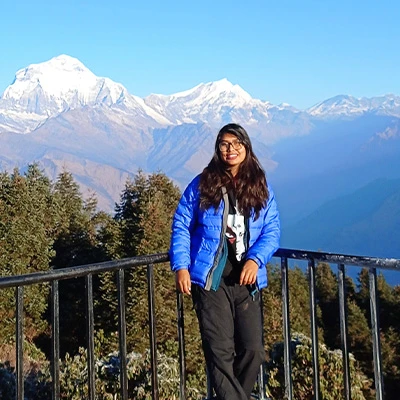
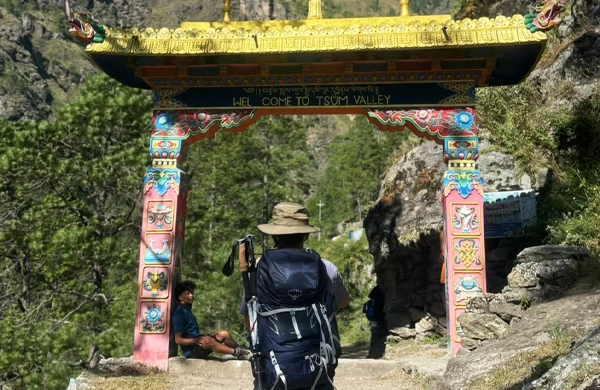
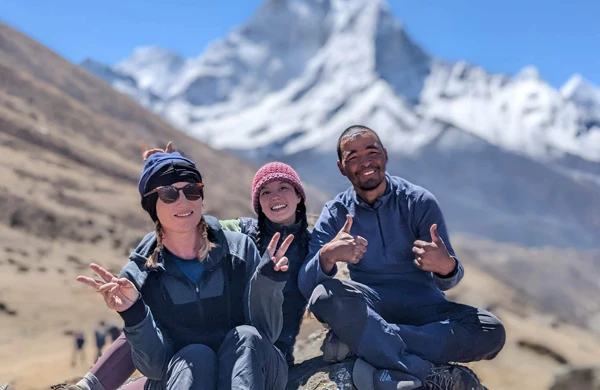
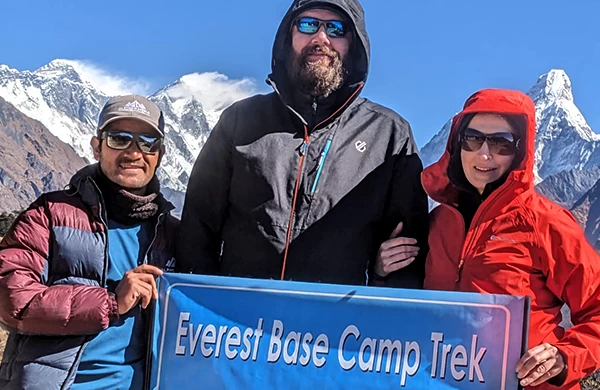
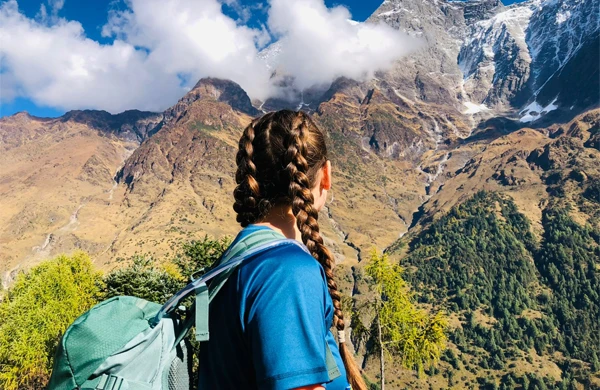
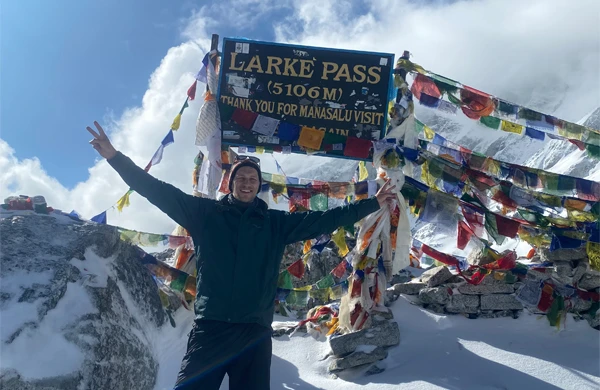
Everest Base Camp has always been a dream trekking destination of mine for a long time before I even got a chance to set foot on the Trail. And this definitely wasn’t my first time trekking, but it was my first time doing a trek of this level. My previous treks consisted of smaller destinations such as Langtang Valley, Annapurna Base Camp, and Poon Hill, which isn’t nearly as challenging as the Everest Base Camp. But nonetheless, those treks did prepare me for the Everest Base Camp journey.
But more than reaching the base camp itself, I want to focus on the acclimatization part of the trek, specifically the first part in the Namche Bazaar. While it has been a few years since my journey, the memories of each step still live fresh on my mind. And on this blog, I will lay out all my experience on the acclimatization process in Namche Bazaar, my own good and bad experiences that can help you for your own journey, and avoid the mistakes I made.
Preparation for the Everest Base Camp Trek
My journey began a month before the trek even began. The preparation for the trek, both physically and mentally, had to be done, and my priority was to make myself healthy and build stamina and endurance. For this, I and my two friends began hiking to the nearest hill every saturday, and I also personally went on a walk every morning. This helped me get used to the walking and pacing for the trek.
The hike was more useful, as it gave me a sense of familiarity and allowed my mind to prepare for what was most likely to come during the real trek. The other thing that helped me the most was the wall climbing and rock climbing I did a week prior to the trek.
The one week of introductory rock climbing course not only prepared me for the hike but also helped me build my endurance, as the activity required a good deal of stamina and mental strength. By the time the trek day came, my legs were already used to hiking uphill and downhill.
An entire week was also spent shopping for gear and equipment I would be needing for the trek. This was actually more challenging than going on those hikes; searching for the right type of clothes suitable for the trek that also fit within your budget was the real challenge. But one that was done, I was ready for the long-awaited journey to the Everest Base Camp.
Drive to Tham Dada and Trek to Phakding:
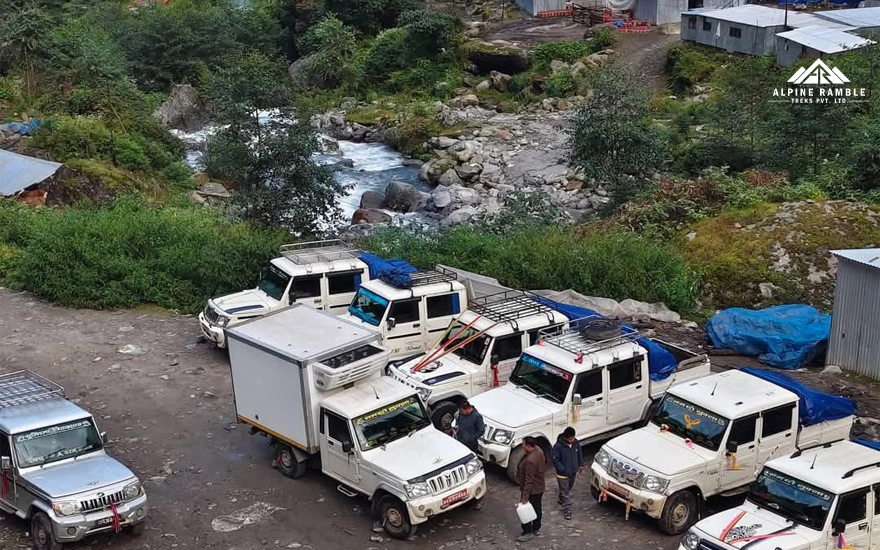
For this trek, instead of taking the flight, we decided to take upon the journey via the road the classic route to the Everest Base Camp. The ride began from Kathmandu early in the morning via a jeep, and in a short time we were out of the busy streets of Kathmandu and into the peaceful roads with steller views of the Himalayas and hilly villages.
The ride remained smooth for the most part, as the roads were decently paved, but sitting in a jeep for an entire day is not fun, no matter how good the views are, but it still is part of the adventure. Around evening, we reach a place called Salleri, where we check into a teahouse for the night.
Salleri is a beautiful village with a small airport as well as a stop that leads to the Everest Base Camp Trail. And the next day, we leave the village and get on a four-wheeler jeep, as the bumpy ride was about to get even bumpier. The off-road drive really will do a number on your back considering the roads bumpy and uneven. But in the late afternoon we reached Tham Dada, where we got off and began our trek to Paiya.
The trek was short, but by the time we reached it, it was already dark. Settling in the teahouse and having dinner and preparing for the real trek. On the third day, we really made use of our hiking boots as we hiked to Phakding. The trek was not as demanding on this day; the hilly trails were nice and scenic with Sherpa villages, chortens, and monasteries.
After crossing multiple suspension bridges, we finally reached the Phakding village. And surprisingly, the teahouse we stayed at here was better than the teahouses compared to the previous days. Phakding village sits at the side of the Dudh Koshi river and is the gateway to the Everest Base Camp.
Reaching Namche Bazaar
The day began as usual with an early morning breakfast and starting at the Namche Bazaar. Our itinerary and schedules were all fixed even prior to the trek beginning, so every day our breakfast was at 7 am, and by 8 we would be on our merry way to the next destination. This day definitely felt more challenging compared to the day before. The first hour or two didn’t feel too bad, but as the altitude picked up and the trail started to get steeper, it was when I finally started becoming real that I was doing the Everest Base Camp Trek. Since it was December, the day was shorter and the trail had fewer trekkers compared to a month back, as the guides told me.
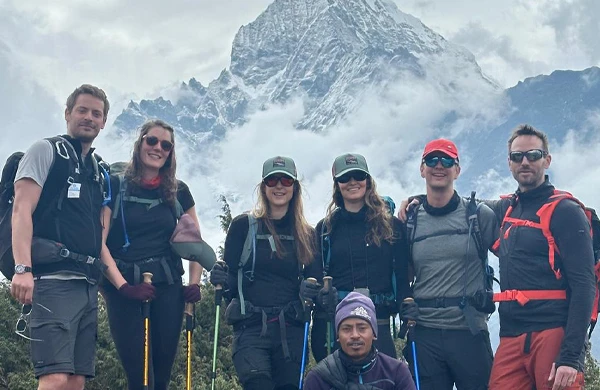
Maybe it was because I was in a big group of friends and guides; they were a big mental support. Despite the physically taxing trek, my mental state remained strong, which also supported me physically. Some of the memorable moments were crossing the Hillary bridge, seeing the first view of Mount Everest, and, of course, reaching the Namche Bazaar.
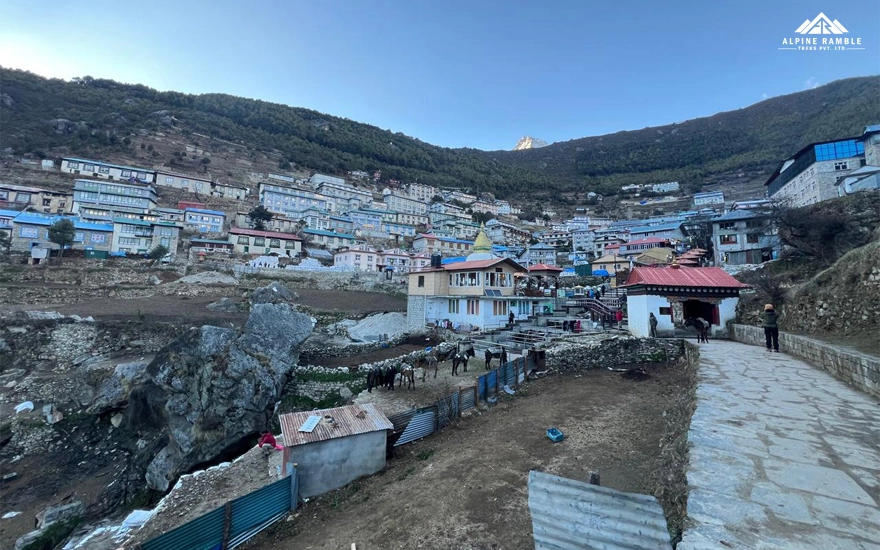
That was the good part of the memory, and now the challenging part was the staggering hours of steep uphill trail before reaching Namche Bazaar. It truly was, for me, one of the most challenging parts of the entire trek, because the uphill is steep and seemed never-ending. The first glimpse of Namche Bazaar when you turn around the corner gave me an overwhelming sense of relief.
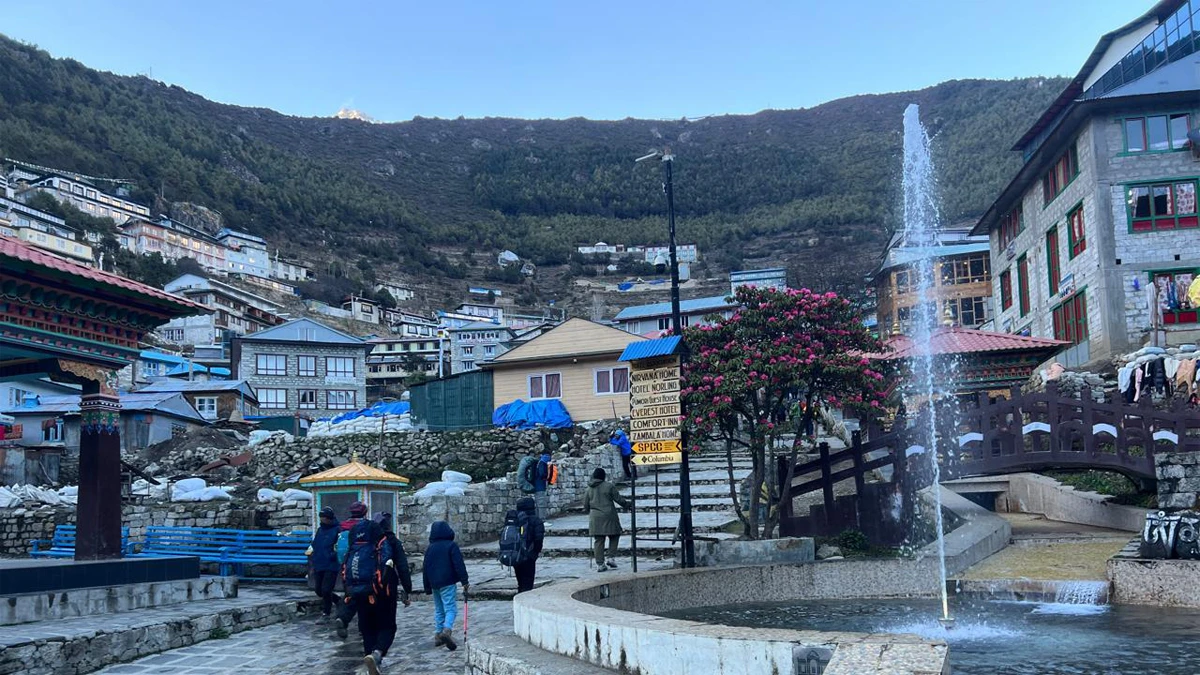
The Namche Bazaar is by far one of the most popular parts of the Everest Base Camp Trail, and it definitely lived up to the hype. The houses and architecture were unlike anything I had ever seen. From the outside it seemed organized and peaceful, but the deeper I went into the town, the more there was chaos within, and that was what made it even more interesting.
After making a round of the small monastery on the left side after entering the Namche gate, I, along with my friends, made our way into the teahouse. The teahouse was cozy, especially the dining room with the inner heating. Since it was December, I still remember it being exceptionally cold every time I left the dining room.
Since we had reached Namche fairly early, we had some time to get out and explore a little. The entire village seemed lively and had places you’d least expect at an elevation of 3500 meters. From laundry services and spas to bakeries to even a pub, everything was surprisingly available.
We didn’t really go to the pubs but instead went to a local shop and had delicious momo and a completely new food to me called Aloo Roti, a potato pancake with spicy dipping sauce. Getting around the village involved a lot of stairs, and on that elevation, two steps in and you’re already out of breath.
Our day ended with a warm and full meal of Dal Bhat. The next day would be the real acclimatization day of the Namche Bazaar.
Acclimatization Day: Namche Bazaar
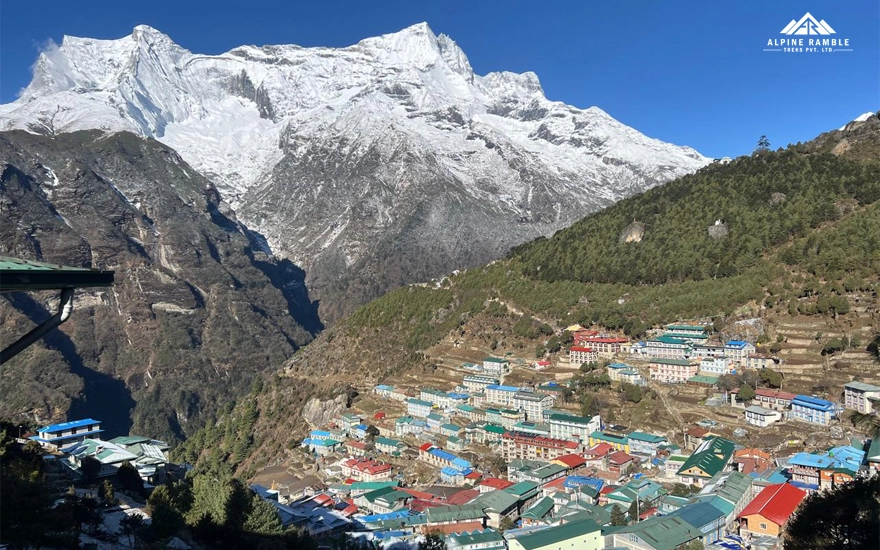
The acclimatization day at the Namche Bazaar began like any usual trekking schedule, with an early breakfast. Our guides briefed us on the day plan over breakfast, which included a couple of stops throughout the day while still having enough time to get back and rest in the tea house.
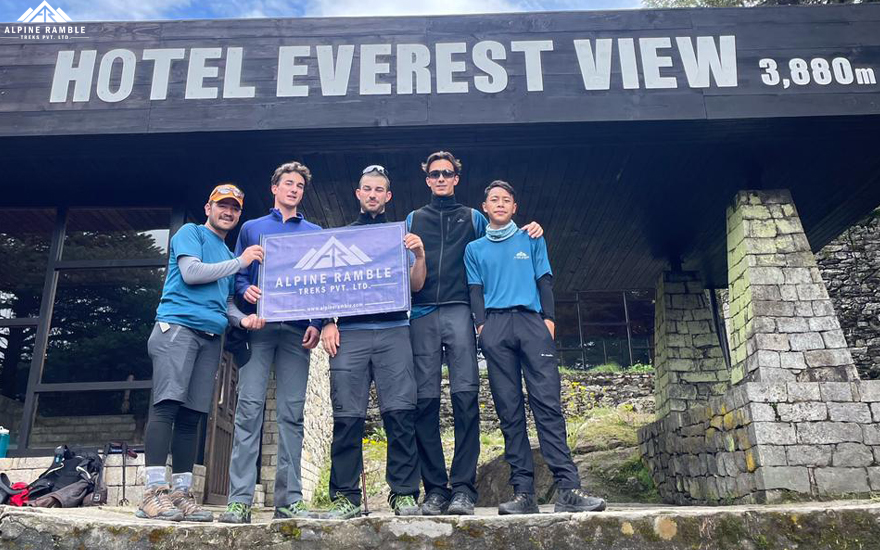
After the breakfast, we carried our daypack filled only with a bottle of water and some snacks. The first stop was the famous Hotel Everest View. Located in Syangboche at an altitude of 3,880 meters (12,730 feet), the hotel is one of a kind, as it is the highest hotel in the world. The first view of Mount Ama Dablam was more memorable for me than the view of Mount Everest.
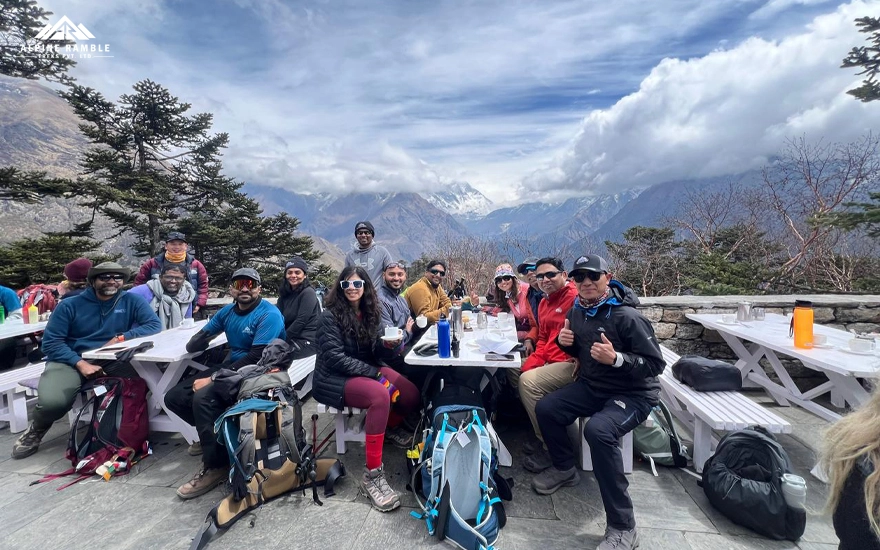
The view from the Hotel Everest View did live up to the expectation. For people who only want to do the Everest Panoroma Trek instead of the full base camp, it is totally worth it. You can actually see the entire panoramic views of the mountains like Lhotse, Ama Dablam, and Nuptse, including Mount Everest.
The whole idea of today was so that we could get our bodies used to the increasing altitude and aid our trek in the coming days. And after spending some time in the hotel Everest View, we move towards our next destination, which is the Khumjung Village.
The trails feel nice with majestic mountain views on all sides; the forests were giving us some glimpses of some wild bird species and goats. It was a short walk to reach from Syangboche to Khumjung village. The village was similar to Namche Bazaar but noticeably quieter and with fewer tourists. When we reached the entrance of the village, we had to give way to the yaks before entering.
One of the noticeable features of the village was the stone walls that surrounded every house or fields and made a trail as well. It sort of felt like going through a maze. It was already lunchtime, so we stopped at a teahouse for our daily dose of dal bhat, and it was the best dal bhat I had in the entire trail.
After resting and having lunch, we set out to explore the Khumjung Village, and we had our sight set on the Khumjung Monastery. One of the major monasteries of the Khumbu, the Monastery inside was full of intricate scrolls and big statues and paintings of the Tibetan Buddhism deities. There were monks meditating and chanting prayers on the sides inside the monastery. One of the peculiar instances was when we were shown the so-called “yeti scalp," which was on display inside a transparent glass box. Learning about the history tied to the yeti was a very unique experience.
Once we had explored every part of the monastery, we headed back to the teahouse in Khumjung for another short tea break and then began our hike back to Namche. More than half of our day was spent exploring all these areas. And one of the best things about today was that we didn’t hike back from the same trail.
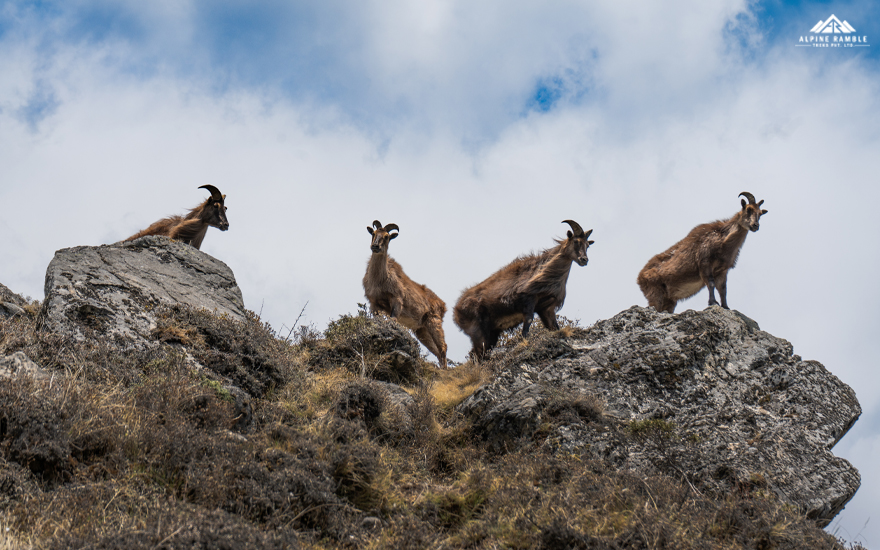
When we had almost reached the Namche Bazaar, just above the village where we could see the entire village, we encountered Himalayan goats and a flock of the lophoporus birds, which is the National bird of Nepal. And after trying to take stable and clear photos of the birds and ultimately failing to, we finally reached Namche Bazaar again, where a warm cup of tea was already waiting for us.
However, our day didn’t end there; a few of us again set out to explore the Namche Bazaar. The handmade woolen gloves, hats, and scarves were pleasing to see even if we didn’t buy any. Watching the tourists and locals alike going about their own way seemed calming and serene. Once we had spent some time, we went back to the teahouse to rest, as it had been quite a tiring day. Everyone was in the dining room, as it was the only place with heating. And just like that, it was dinner time, and time to go to bed.
How I Felt after the Climb into Namche Bazaar
Arriving on Namche, I could definitely feel the difference between the air in the atmosphere. It wasn’t really a sudden change but a gradual one. The first thing I noticed was the loss of appetite and shortness of breath while walking. Reaching Namche Bazaar was already a tiring journey, and add elevation to that, some symptoms of altitude sickness had already managed to sneak up on me. And headache was one of them.
After exploring the Namche Bazaar, I went back to the teahouse and made sure to drink enough water, have a bowl of garlic soup, and make sure to go to bed early to get much-needed sleep. Fortunately for me, I was able to sleep without any problem, as one of the major symptoms of altitude sickness is not being able to sleep. Since we are at an elevation of 3,440 meters, none of what I was experiencing was unusual.
Surprisingly, I woke up feeling a lot better the next morning, and my body felt well rested after a good sleep. This also made the acclimatization hike significantly easier despite the steep trail and climbing even higher. After completing the second-day hike at Namche, even my breathing had gotten better along with my appetite, and the headache was also gone.
What I got Wrong about Acclimatization at Namche Bazaar
One of the things I assumed wrong was how long the hike would actually take on the acclimatization day. What I thought was just 2-3 hours of hiking actually turned out to be around 6-7 hours. But it was all done as a practice of “walk high, sleep low," a part where we needed to let our body adjust to the altitude.
Many of my trekking partners thought the acclimatization day would be spent with less hiking and more resting at the teahouse, which is kind of correct, but with the opposite ratio. I also underestimated how quickly the weather would change during the hike, because one minute the sky was crystal clear with some of the absolute best views, and the next the clouds came in and covered up everything, bringing in the cold and chilling wind. In hindsight, I would tell a trekker in that position not to treat the acclimatization hike as optional or as something to shorten if the weather looks poor. The gain in elevation is the point, not the view from the top.
How Namche Bazaar Acclimatization Prepared Me for What Came Next
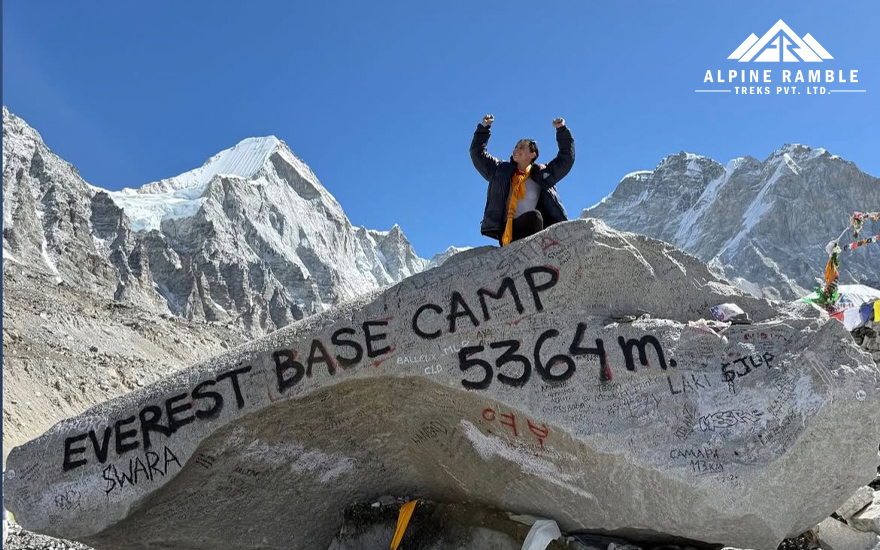
Sometimes when we reach high altitude, we feel exhausted even with little movement, but carrying on with our hike is extremely crucial. Especially when the hike is to make our body used to the said altitude. The Namche Bazaar acclimatization hike gives us exactly that, which is why it cannot be skipped or neglected.
Because the next destination after Namche Bazaar is either Tengboche or Debuche, which are 3,867 meters and 3,700 meters, respectively. The previous hike of the acclimatization day definitely prepared me well because I hiked with ease without any problems even during the steep parts of the trail where I normally used to struggle. The altitude didn’t seem like a problem anymore, and I, who usually arrived last, was actually ahead of the group (not that it’s a competition).
The hike to the Hotel Everest View (3,880 meters) and Khumjung Village (3,790 meters) very much prepared me for the continuation of the Everest Base Camp Trek. It, in fact, was one of the most quintessential parts of the trek that prepared me for the next day reaching Tengboche and coming days after that.
Practical Notes From My Acclimatization Day
After doing the acclimatization, here’s what I learned and would like to pass down to other hikers preparing for their own journey through Everest.
- Carry a separate daypack, which can fit a bottle of water and a few snacks for the way. Since you will come back to the same teahouse in Namche, there’s no need to carry your 60+ liter bag for the acclimatization.
- It is better to start the hike early and finish early. Even if the temptation of sleeping in is strong, waking up early and going on the hike is the best approach to avoid bad weather and strong wind of the late afternoon.
- Watch your diet and only eat simple food along with keeping up with the hydration.
- Consult and listen to your guide and group leaders and let them know about even the smallest changes in your health status.
- Only take medication for altitude after consulting with your guide or if you have consulted with your physician.
Looking Back on Namche Bazaar Acclimatization Day
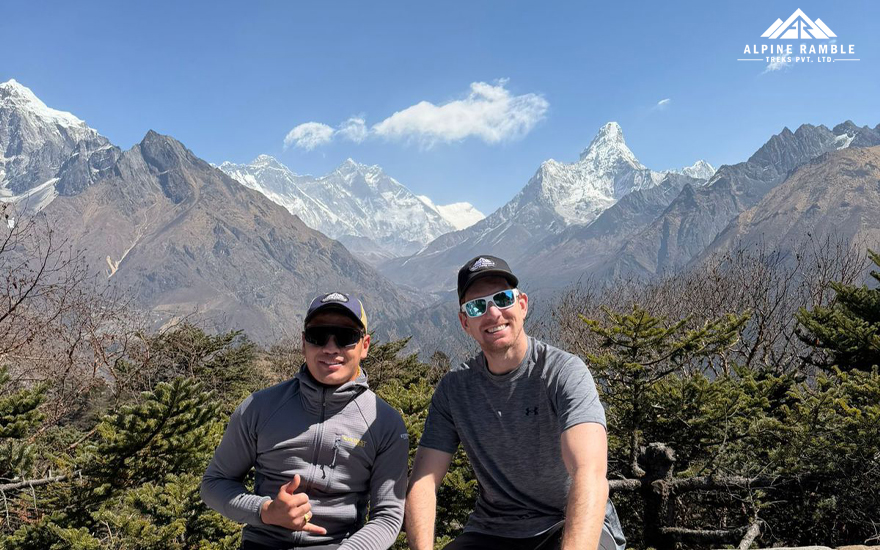
Looking back at it now, the acclimatization day during the Everest Base Camp might not have been the hardest, but it was definitely an important one. That one day helped me prepare both physically and mentally for the days to come. In fact, the day at the Namche hike sets the tone for Dingboche and Lobuche all the way up to the base camp.
If you're planning your own EBC trek, my advice is simple: do not skip the acclimatization day at Namche. And if you are already feeling the symptoms of altitude sickness here, it is better to stay an extra day so you can adjust properly. Because the higher you climb, the less likely you are to get good medical care.