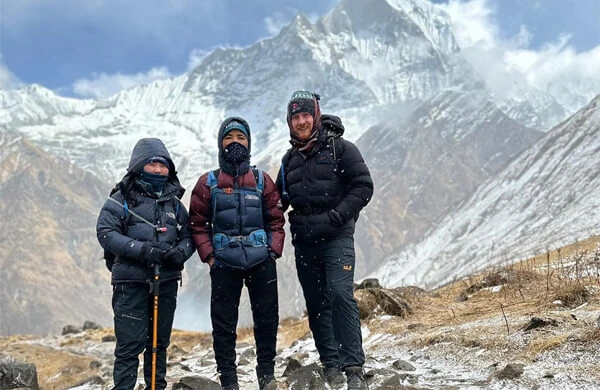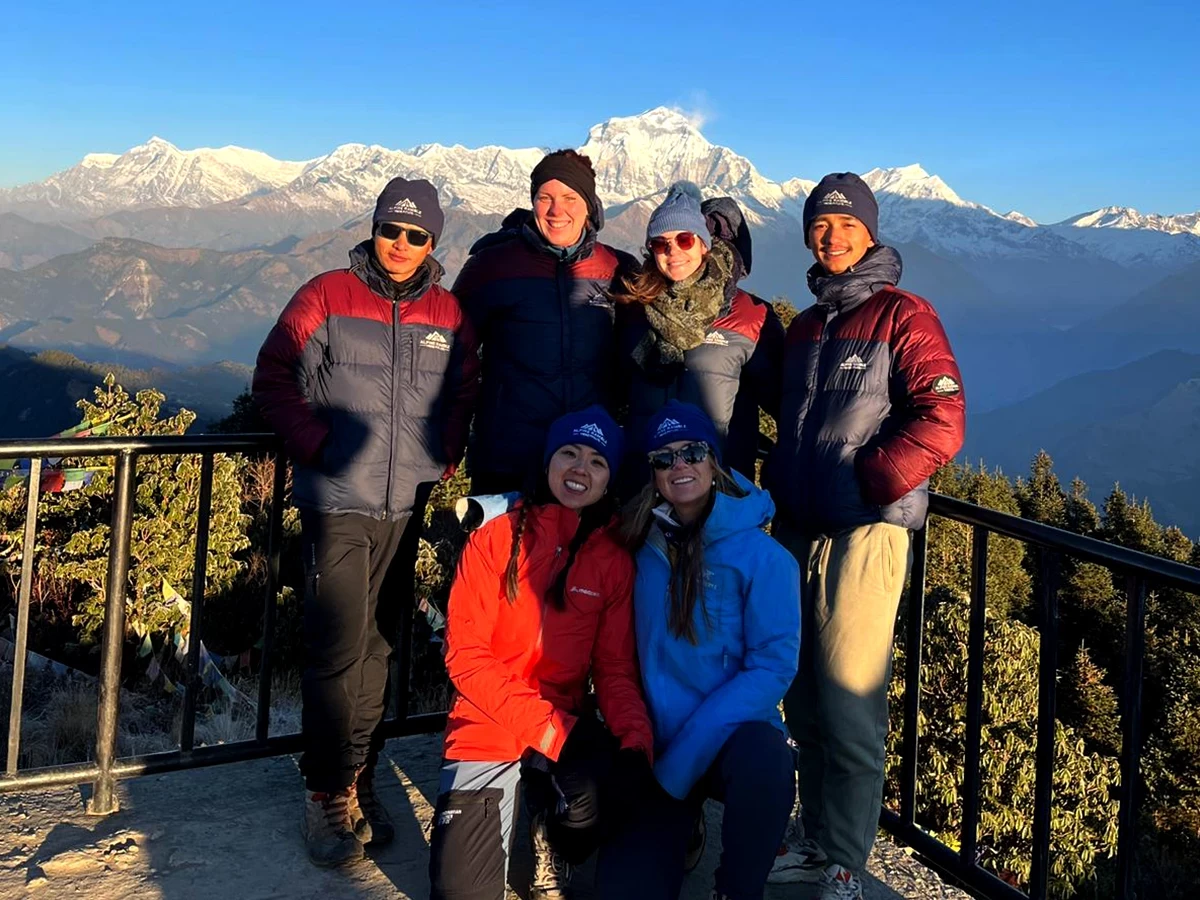
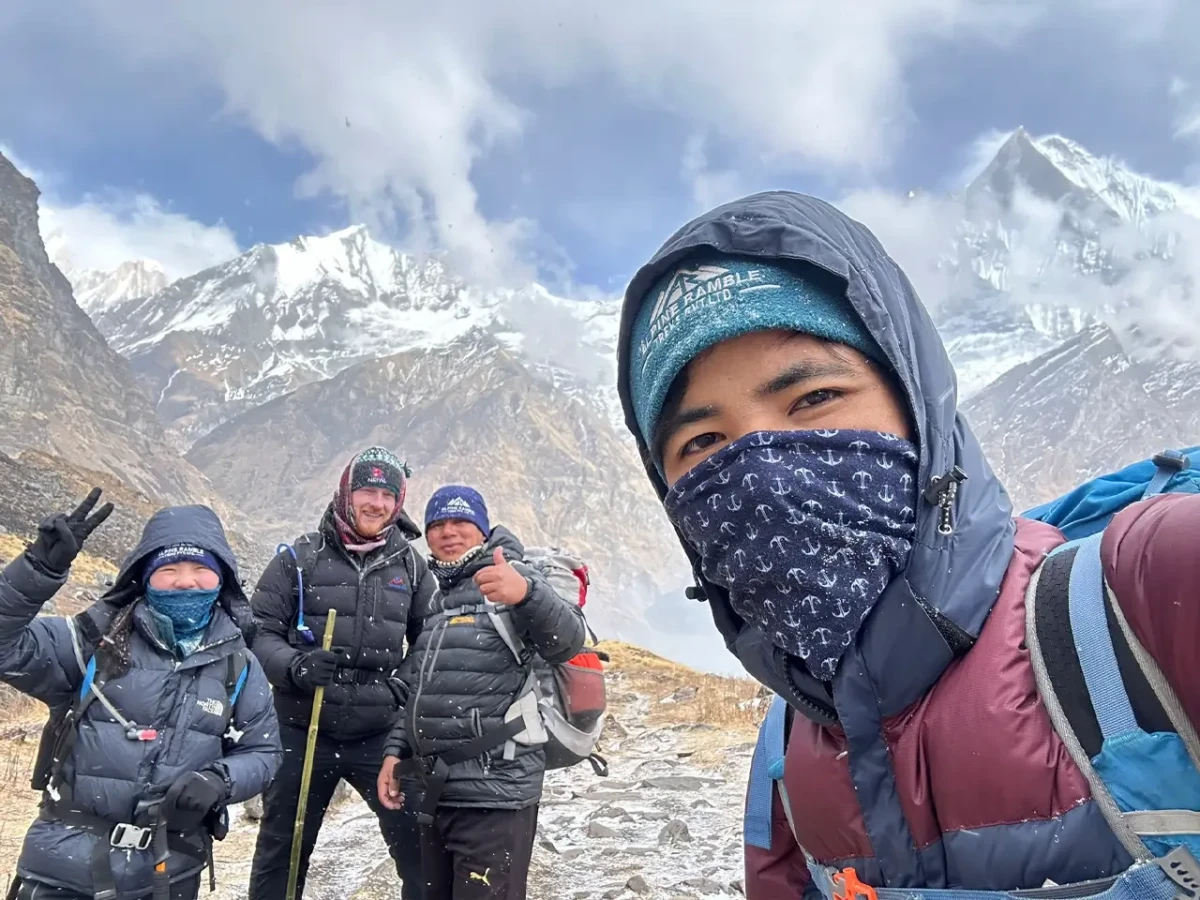
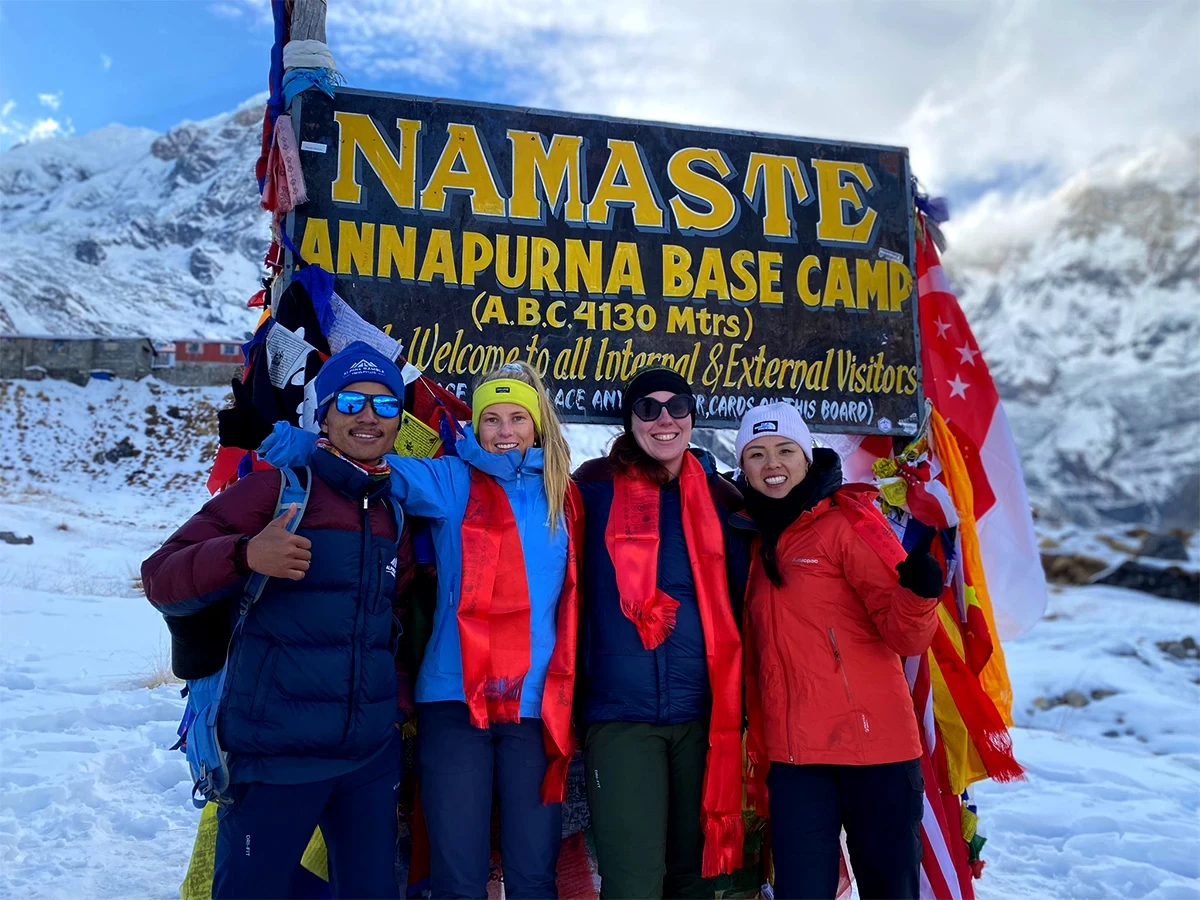
Annapurna Base Camp Trek with Helicopter Return is a 9 days journey that offers a different experience than the standard itinerary. The Annapurna Base Camp is one of the more popular trekking destinations in Nepal. Due to being easily accessible and flexible on days, it remains popular among the trekkers.
It sits roughly 40 kilometers north of Pokhara in a glacial basin known as the Annapurna Sanctuary. Known for providing some of the closest mountain views, the Annapurna Base Camp Trek is on many trekkers' bucket lists. It is one of the few trekking destinations in Nepal that takes you from the low hills to the high mountains in a span of a few days.
This package from Alpine Ramble Treks offers you a complete blend of experience where you can enjoy the traditional trek but also get majestic aerial views with the helicopter return.
Annapurna Base Camp Trek with Helicopter Return Overview
Being one of Nepal’s most rewarding and beautiful journeys, the Annapurna Base Camp with Helicopter Return 9 days journey gives you the opportunity to do it without spending extra days retracing the same trail. Rich in both culture and natural beauty, the entirety of the trail is a treat to your mind and eyes.
The trail to the base camp follows the classic route into the heart of the Annapurna Sanctuary, reaches Annapurna Base Camp at 4,130 meters, and finishes the adventure with a scenic helicopter return. The trek takes you through a wide variety of landscapes in a relatively short distance. The lower trail passes through traditional villages, terraced hillsides, suspension bridges, and forested valleys.
As you move higher, the scenery changes quickly, with deeper gorges, bamboo and rhododendron forests, waterfalls, and increasingly dramatic mountain views. Upon reaching the base camp, the close mountain views will be unlike anything you have ever seen.
The whole 9 days from Ulleri to the ABC is an enchanting journey full of glorious views, rich culture, warm hospitality, and a spiritual awakening. Every experience is worthy of being a picture-perfect memory that will live on in your mind forever. So, are you ready to spend 9 days hiking to the Annapurna Base Camp and return via helicopter?
Highlights of the 9 Days Annapurna Base Camp Helicopter Trek
- Trek the full classic route into the Annapurna Sanctuary, through Ulleri's stone stairways, rhododendron forest, and Gurung villages like Chhomrong; nothing about the walk in is shortened
- Reach Annapurna Base Camp at 4,130m, ringed almost 360 degrees by Annapurna I, Annapurna III, Annapurna South, Hiunchuli, Machhapuchhre, and Gangapurna
- A walk-in and fly-out schedule. Once you've taken in Base Camp, a helicopter flies you straight back to Pokhara instead of two to three more days retracing the trail
- Nine days total, covering one of the most complete high-altitude experiences in the Annapurna region without the extra time a full round-trip walk would need
- Pass through some of the most iconic stops on the route: Ulleri, Tadapani, Chhomrong, Himalaya Hotel, and Machhapuchhre Base Camp, each with its own character and views
- The helicopter flight itself is a highlight in its own right, a sweeping aerial view of the entire sanctuary and the trail you just spent a week walking through
- Stay overnight at Machhapuchhre Base Camp, sitting almost directly beneath Machhapuchhre with peaks closing in on all sides
- Rhododendron forest sections that turn vivid red and pink in spring, one of the most photographed sections of this trek
- Frees up meaningful time at the end of the trip for a second trek, more time in Pokhara, or simply resting instead of a long descent on tired legs
- Licensed guide, permits (ACAP, TIMS), and all logistics, including helicopter coordination, handled as part of the package
Why choose the Annapurna Base Camp Trek with Helicopter Return?
There are many ways to enjoy the trek in the Annapurna region and specifically the Annapurna Base Camp. There are many types of packages that target different aspects, so it's worth being clear about what makes this particular version where you return back with a ride on a helicopter worth choosing over the standard round-trip walk.
You will get to experience the standard trek up to the base camp but can avoid retracing the same path to descend back down. This means you save at least 3 days of walking and can use that time for your other important schedules.
This makes the trek difficulty a bit easier on the scale. You’re still hiking up all the way to the base camp, but avoiding the trek back down will make it easier on the body. Flying back rather than descending for several more days means you finish the trip on a high point, physically and otherwise, rather than pushing through a tired, repetitive descent.
If you have a tight schedule, then this is for you. If you have another destination combined with this trek or have a flight scheduled back or simply don't have two extra weeks to spare, this itinerary delivers the full Annapurna Base Camp experience in meaningfully less time.
The helicopter ride adds something the walk alone can't. After a week spent climbing gradually up the base camp, seeing the entire peaks and the trail itself from the air offers a completely different, and genuinely rare, perspective.
Just because the journey is shortened by the helicopter return does not mean it is a compressed or lesser version of the ABC trek. The demanding, immersive part of the journey, the walk in, is left fully intact. Only the repetitive second half is changed.
Who is the 9 Days Annapurna Base Camp Helicopter Trek best for?
Deciding on a trek can be a very difficult task, and not knowing if it is the right one for you can cost you not only money but also your time. So to make sure you choose right and, the Annapurna Base Camp helicopter return is the best for you if you:
- Want the full walk into the Annapurna Sanctuary, villages, forest, and all, without cutting anything short
- Don't want to spend 2 to 3 extra days walking the same trail back out
- Are combining this with another trek or trip in Nepal and need those days back
- Would rather not do a long, tiring descent after a demanding week of walking
- Want to see the Annapurna Sanctuary from the air after trekking into it on foot
What Is the Trail Like on the Annapurna Base Camp Trek?
The trail offers different perspectives and changes character while trekking from the bottom to the top, moving through several distinct landscapes over the course of the walk. Here's what to expect, day by day
Pokhara to the Annapurna Trail
The journey begins from the lake city of Pokhara. The drive follows the smooth road with views of the Annapurna range to Nayapul. The trail picks up along the Modi Khola valley, and the path runs through a mix of farmland and small settlements, with the valley narrowing gradually as you move further from the road. It's a gentle introduction before the terrain starts asking more of you.
Gurung Villages and Chhomrong
One of the prominent highlights of this trek is the Gurung villages along the trail, especially the Chhomrong village. Stone farmhouses, terraced fields cut into the hillside, and villages that still function as working communities rather than trail stops built purely for trekkers.
Deurali to Machhapuchhre Base Camp
Upon reaching Deurali, the scenery changes to a completely different atmosphere. The trees thin out almost completely, and the trail moves into open, alpine terrain with the surrounding peaks suddenly, dramatically visible. Machhapuchhre Base Camp itself sits in what feels like a natural arena, with Machhapuchhre rising directly overhead. It's a noticeably different kind of walking here, exposed, colder, and with a real sense of having left the forested lower trek behind for good.
Machhapuchhre Base Camp to Annapurna Base Camp
The final push is short compared to the days before it, but it is rather a challenging part of the entire trek due to its altitude. The trail continues through open, high-altitude terrain, with the peaks getting closer as you approach Base Camp itself. By the time Annapurna Base Camp comes into view, at 4,130m, you're standing in what's arguably one of the most complete mountain panoramas in the entire Annapurna region, with Annapurna I, Annapurna III, Annapurna South, Hiunchuli, and Gangapurna all visible from a single point.
Helicopter Return from Annapurna Base Camp: What to Expect
The Helicopter return is a major part of this specific Annapurna Base Camp package, and it is only natural to want to know all the information regarding it. So, here is everything you need to know:
Where Does the Helicopter Flight Start?
The pickup happens right at Annapurna Base Camp, 4,130m, on the morning of day 8. There's no need to walk back down to a lower village first; the helicopter comes to you, landing on the flat, open ground near the lodges at Base Camp itself. It's a genuinely strange feeling, sitting at breakfast one moment and boarding a helicopter from the same spot a short while later.
Where Does the Helicopter Land?
From Base Camp, the flight brings you directly into Pokhara, landing at Pokhara airport rather than anywhere along the trail. From there, it's a short transfer to your hotel, and the rest of the day is genuinely free, no further walking, no further logistics, just Pokhara ahead of you.
How Long Is the Helicopter Flight?
It can take anywhere from 20 to 30 minutes from base camp to Pokhara. It's worth sitting with that number for a second; what takes roughly 20 minutes by air took the better part of a week to walk in the other direction.
What Can you see during the Helicopter Return?
You get the entire trail and mountains in the Annapurna Base Camp from above: Annapurna I, Annapurna South, Hiunchuli, and Machhapuchhre are all visible at once, along with the ridgelines and valley you spent days climbing through on foot. Then, as the helicopter descends toward Pokhara, the terrain shifts entirely, forested hills give way to terraced farmland, and eventually the lakes and rooftops of the city itself come into view. This isn’t something anyone can get to experience unless you are choosing the helicopter tour option.
Shared or Private Helicopter Return
For this package, the helicopter dispatched will be a private one. This will only cater to you, and you do not have to share it with anyone else. This means you can control aspects like flight time. Unlike other trekkers who have to hurry and trek back, you can enjoy the mountains thoroughly before your own helicopter comes and picks you up.
The helicopter companies responsible for this package will be Air Dynasty, Prabhu Heli or other similar air companies.
How Weather can affect Helicopter Flights
Helicopter flights at this altitude depend heavily on visibility and cloud cover, and conditions at 4,130m can shift quickly, sometimes within the space of an hour. Mornings tend to offer the clearest, most stable flying conditions, which is part of why departures are typically scheduled early in the day. Even so, clouds can move in unexpectedly, and that's simply part of flying in the Himalayas, not a flaw specific to this itinerary. With that being said, you can expect the helicopter to pick you up anywhere from 7 am to 10 am or whatever time is on your schedule.
What Happens if the Helicopter cannot Fly?
Delays are a part of the mountain flight journey, as everything depends on the weather and visibility. If the favorable flying conditions are not met, the flight will be delayed without a doubt, because overall safety is what matters. And in rare cases, there will be cancellations if the weather does not improve. In this case, an extra day will be added, and the flight will continue the next day when the weather gets better.
How Difficult Is the 9 Days Annapurna Base Camp Helicopter Trek?
The difficulty of this 9 days Annapurna Base Camp Trek with Helicopter return can be graded as moderate. Here are the factors that contribute to the difficulty of this trek:
Walking Hours and Trail Conditions
Most days the trekking hours run somewhere between 5 and 7 hours, with a few long days; the push from Chhomrong to Himalaya Hotel in particular tends to be one of the harder days on the whole itinerary. The terrain itself varies constantly: stone steps on the lower trail, dense forest paths through Bamboo and Sinuwa, and increasingly open, rocky ground as you approach Base Camp. There is no technical climbing involved, but with the uphill terrain, it does take time.
Highest Altitude on the Trek
Annapurna Base Camp sits at 4,130m, reached on day 7 after several days of gradual, staged elevation gain. It isn’t just the weather or the uphill trail that is the reason for the difficulty but also the altitude. The gradual ascent matters. The itinerary is paced specifically to give the body time to adjust rather than climbing too quickly, which is a meaningful part of why altitude sickness, while still a real possibility above 3,500m, is generally manageable for reasonably fit trekkers who take the acclimatization seriously.
Does the Helicopter Return make the Trek easier?
Yes, the helicopter return makes the trek easier. While the first half of the trek is full of hiking through the trail of the Annapurna Base Camp, which is eight whole days, the return hike is completely avoided because of the heli return. This means you will at least save 2-3 days of downhill descent, which makes the trek significantly easier. So the trek itself isn't easier, but the overall trip is less physically taxing, since you're not asking your body to keep performing after the main goal has already been reached.
Altitude and Acclimatization on the ABC Helicopter Trek
Understanding the altitude is an important part before the trekking begins, not because it's unusually dangerous, but because Base Camp sits high enough, at 4,130m, that the body needs a fair chance to adjust along the way.
Our body needs time and energy to acclimatize to the altitude and environment that it's not normally used to. The itinerary is built with gradual elevation gain in mind rather than a rush straight to altitude. Instead of climbing quickly to Base Camp, the route spreads that ascent across several days: Chhomrong at 2,170m, Himalaya Hotel at 2,920m, Machhapuchhre Base Camp at 3,700m, and only then Annapurna Base Camp itself.
This is to let your body get used to the ascending altitude and avoid any altitude sickness that can hamper you during the trek. Symptoms worth knowing about include headache, fatigue, mild nausea, and disturbed sleep, all fairly common even among fit trekkers once you're above 3,000m or so. While these symptoms might not be life-threatening, you must communicate your state to your guide, who is trained to keep you safe and healthy.
But overall, the itinerary is well crafted so that there is enough time for your body to adjust to the altitude and acclimatize, enhancing your experience without any problems.
Best Time for Annapurna Base Camp Trek with Helicopter Return
Timing matters a little more on this particular itinerary than on the standard walking version, mainly because the helicopter segment depends on clear conditions, not just good trekking weather generally. Here's how each season actually plays out.
Spring (March to May)
Spring, roughly March through May, is one of the two strongest windows for this trek. Mornings tend to be clear, and this is also when the rhododendron forests lower down on the trail come into bloom, turning entire hillsides shades of red and pink, arguably the most photogenic stretch of the whole route. Afternoon cloud does build up a bit more often than in autumn, which can occasionally affect visibility for the helicopter later in the day, so early morning departures tend to work best.
Autumn (September to November)
Autumn, late September through November, is generally considered the most reliable season overall, both for trekking and for the helicopter return specifically. Skies tend to stay clearer for longer stretches of the day, visibility is consistently good, and this is when helicopter flights are least likely to face weather-related delays. If flight reliability is a priority, autumn is usually the safer bet.
Winter (December to February)
Winter, January through February, brings quieter trails and often still, clear mornings, but temperatures at the higher camps, particularly Machhapuchhre Base Camp and Annapurna Base Camp itself, drop noticeably. Snow becomes more likely on the upper trail, which can occasionally affect trail conditions or, less commonly, helicopter access. Still very much doable with the right gear, just worth preparing for the cold properly.
Monsoon (June to August)
Monsoon season, June through September, is generally not recommended for this itinerary. Frequent rain makes the lower trail slippery and brings out leeches in the forested sections, and cloud cover during this period makes helicopter flights considerably less predictable, with a higher chance of delays. If travel dates are flexible, it's worth avoiding this window entirely for a trip that depends on a scheduled flight.
Food and Accommodation During the Trek
Accommodation is in teahouses throughout, simple family-run lodges with basic twin-share rooms. Bathrooms are commonly shared, especially at higher elevations, though lower villages sometimes have attached bathrooms and hot showers for a small fee.
Three standard meals are included on trekking days, breakfast, lunch, and dinner. Dal bhat is the local staple and a solid choice at altitude, alongside noodles, soups, momo, and simple breakfast options. Prices rise gradually the higher you go, since everything has to be carried in.
Bottled water gets pricier at altitude, so a purification method is worth carrying. Wi-fi and charging are usually available for a small fee. Both the internet and networks become less reliable the higher you ascend.
Permits Required for the Annapurna Base Camp Trek
Trekking in the Annapurna region requires two permits, both mandatory, since the entire route runs through the Annapurna Conservation Area. These aren't optional extras; they're checked at official checkpoints along the trail, and a licensed guide is also required by law, so solo trekking without one isn't permitted on this route. Both permits will be arranged by the Alpine Ramble Treks ahead of time, so there's nothing to organize separately before arrival.
Permits and costs:
Annapurna Conservation Area Permit (ACAP): NPR 3,000 (approx. US$23) for foreign nationals, NPR 1,000 for SAARC nationals, free for children under 10
TIMS Card (Trekkers' Information Management System): NPR 2,000 for independent trekkers, NPR 1,000 for group trekkers
Transportation for the 9 Days ABC Helicopter Trek
For transportation, getting to and from the trailhead and around the trip itself involves a mix of flights, road transport, and of course the helicopter segment that defines this itinerary.
Kathmandu to Pokhara: Domestic flight, roughly 25 to 30 minutes, opens the trip on day 1.
Pokhara to Nayapul/Ulleri: A short drive, generally around 2 to 4 hours, gets you to the actual starting point of the trail on day 2.
Base Camp to Pokhara: The helicopter flight on day 8, roughly 20 to 30 minutes, replacing what would otherwise be several days of walking back down.
Pokhara to Kathmandu: Domestic flight 25 to 30 minutes
Why Choose Alpine Ramble Treks for the Annapurna Base Camp Helicopter Trek?
We Alpine Ramble Treks as a company have been active for more than a decade and have been of service to thousands of clients throughout this time period. Our client’s good reviews are what give our company the ability to thrive, and we are always working on improving and providing the best trekking packages to you. And those packages, this 9-day Annapurna Base Camp Trek with Heli Return is also one of them.
Our guides know the Annapurna Sanctuary route specifically, the pacing that works across a full nine-day itinerary, the acclimatization points that matter most, and the logistics of coordinating a helicopter pickup from Base Camp itself. That's a different kind of knowledge than simply having led treks in Nepal generally.
We keep group sizes manageable rather than filling every departure to capacity, which means more attention from your guide and a more comfortable pace throughout. Permits, insurance guidance, and helicopter coordination are all handled on our end, so the only thing you're responsible for is showing up ready to walk.
Annapurna Base Camp Trek with Helicopter Return: Cost Breakdown 2026
The cost on this trek depends on a few moving parts, mainly group size, the season you're travelling in, and, of course, the private helicopter return option. Rather than giving one flat number, it felt more useful to lay out what actually drives the cost.
| Group Size | Price Per Person |
| Solo | USD 2999 |
| 2 people | USD 1899 |
| 3 to 5 people | USD 1566 |
| 6+ people | USD 1299 |