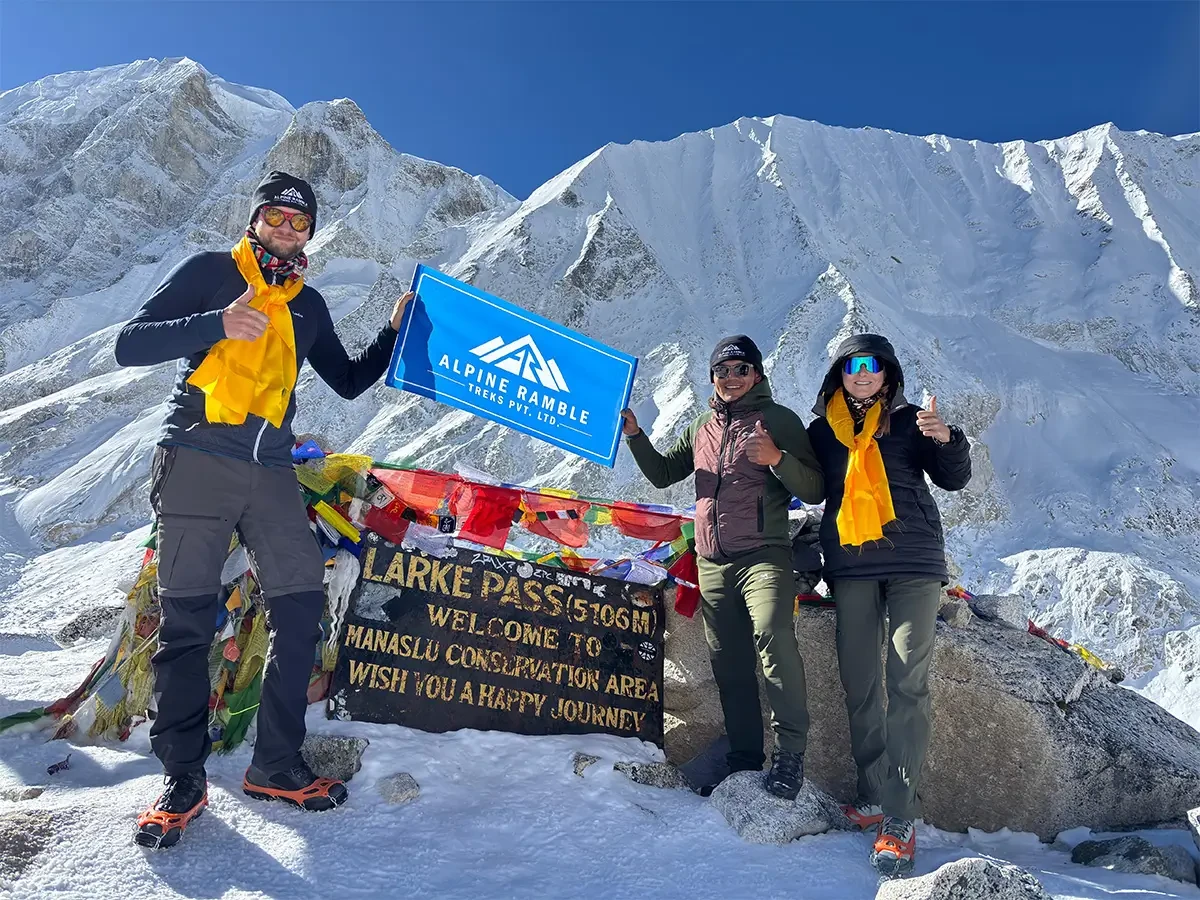
15-Days Manaslu Circuit Trek (8,163 m) : Nepal Travel planning
US$955
Book Now

15-Days Manaslu Circuit Trek (8,163 m) : Nepal Travel planning

1530+ reviews in TripAdvisor
400+ reviews in Google
106+ reviews in TrustPilot
Trip Facts
Duration15 Days
Trip GradeEasy-Moderate
CountryNepal
Maximum Altitude5,106 M
Group Size1-20
StartsKathmandu
EndsKathmandu
ActivitiesTrekkingHiking
Best TimeMar-May, Sep-Nov
Overview

15-Day Manaslu Circuit Trek (8,163 m): Detailed Itinerary, Cost & Travel Planning

There are journeys you remember, and journeys that quietly rewrite you from the inside. The Manaslu Circuit belongs to the latter, not a checklist trek, but a living corridor through a Himalaya that resisted the modern world until very recently. 

Although Mount Manaslu itself was first climbed on 9 May 1956  by the Japanese expedition led by Toshio Imanishi and Gyalzen Norbu, the surrounding region remained largely closed to foreign trekkers for decades. 

Only in 1991 was the Manaslu area officially opened as a restricted trekking region, with tightly controlled access still in place today, making it one of the last great Himalayan routes where exploration feels contemporary rather than historical.

Here, discovery still feels possible. The remote trails of Manaslu do not merely show you the Himalaya, they offer the rare privilege of encountering it as explorers once did: uncertain, immense, and profoundly alive .

Why the Manaslu Trek Requires Licensed Guides and a Special Permit

Independent travel is not permitted in this restricted  Manaslu trek region, not as a limitation but as a quiet safeguard. Entry requires, special permits and licensed guides, guardians who know how to move gently through lands that are geologically restless, culturally sacred, and climatically unforgiving.

The result is rare ; a journey that feelsprotected rather than packaged

This is not a trail to a viewpoint. It is a passage through time itself, from humid river jungles to glacial wilderness, from Hindu lowland settlements to Tibetan Buddhist highlands where prayer flags snap in winds that have crossed entire continents without touching a city.

Major Highlights of Manaslu Circuit Trek

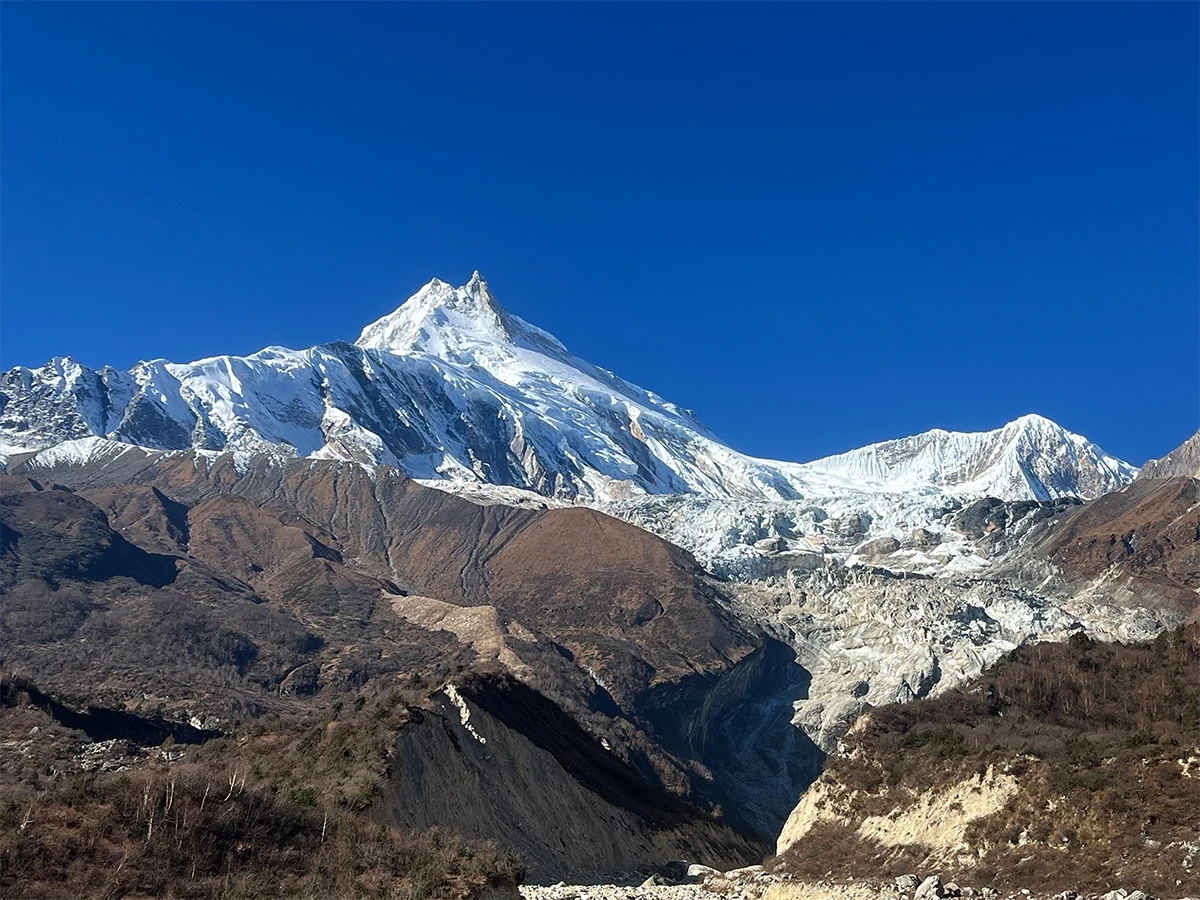
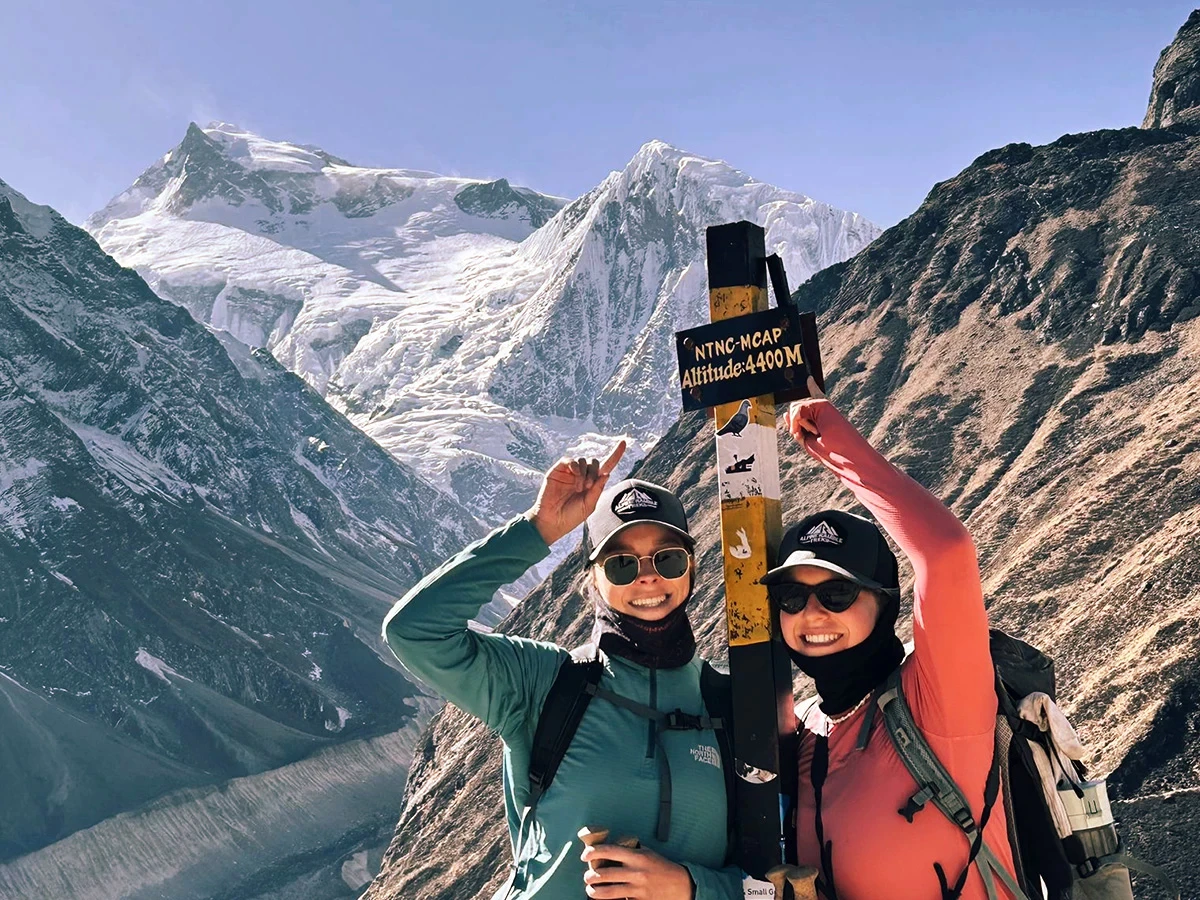
  • The journey includes jaw-dropping views of Himlung Himal, Nadi Chili (7871 m),Naike Peak, Ganesh Himal Range, Cheo Himal, and Kang Guru, among other magnificent peaks, including Mount Manaslu (8,163 meters/ 26,781 ft), the eighth highest peak in the world.
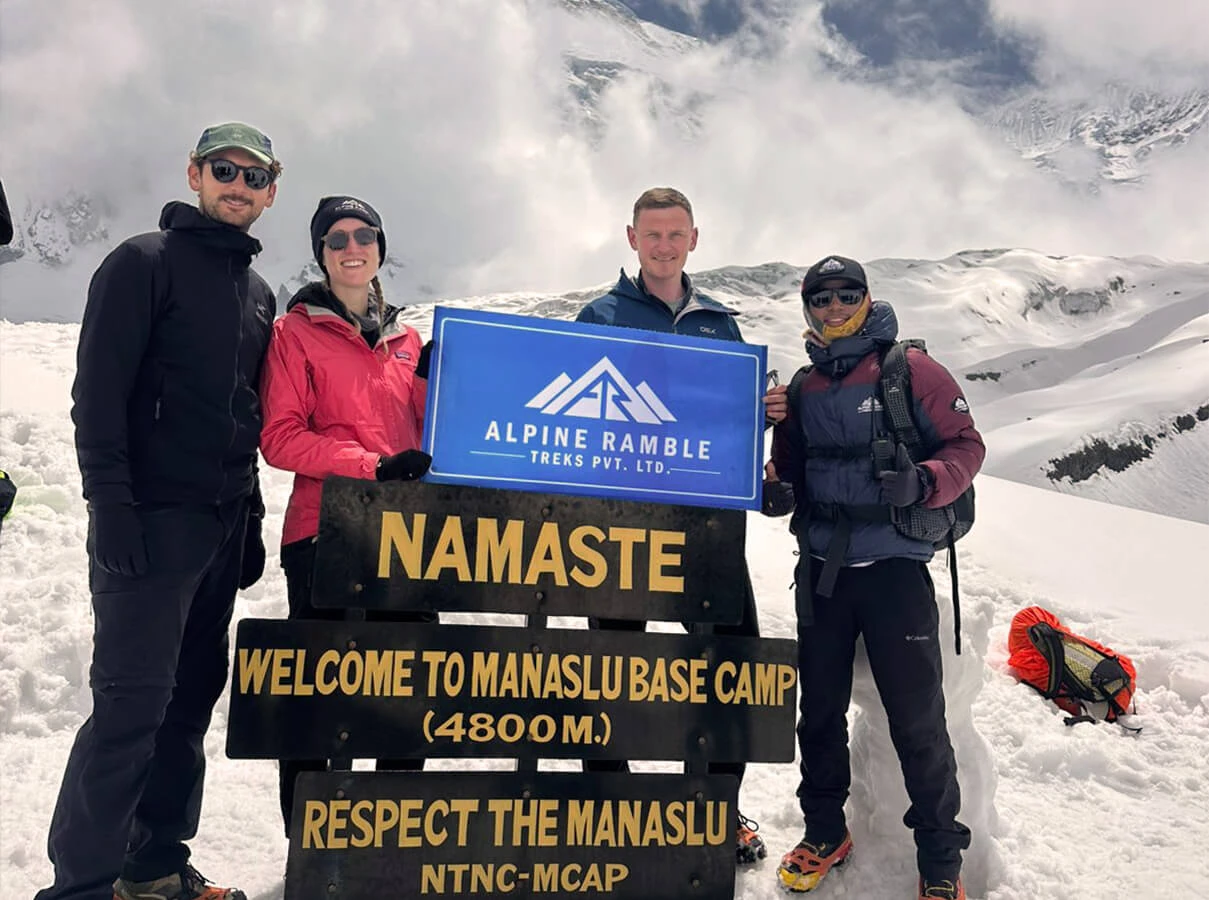
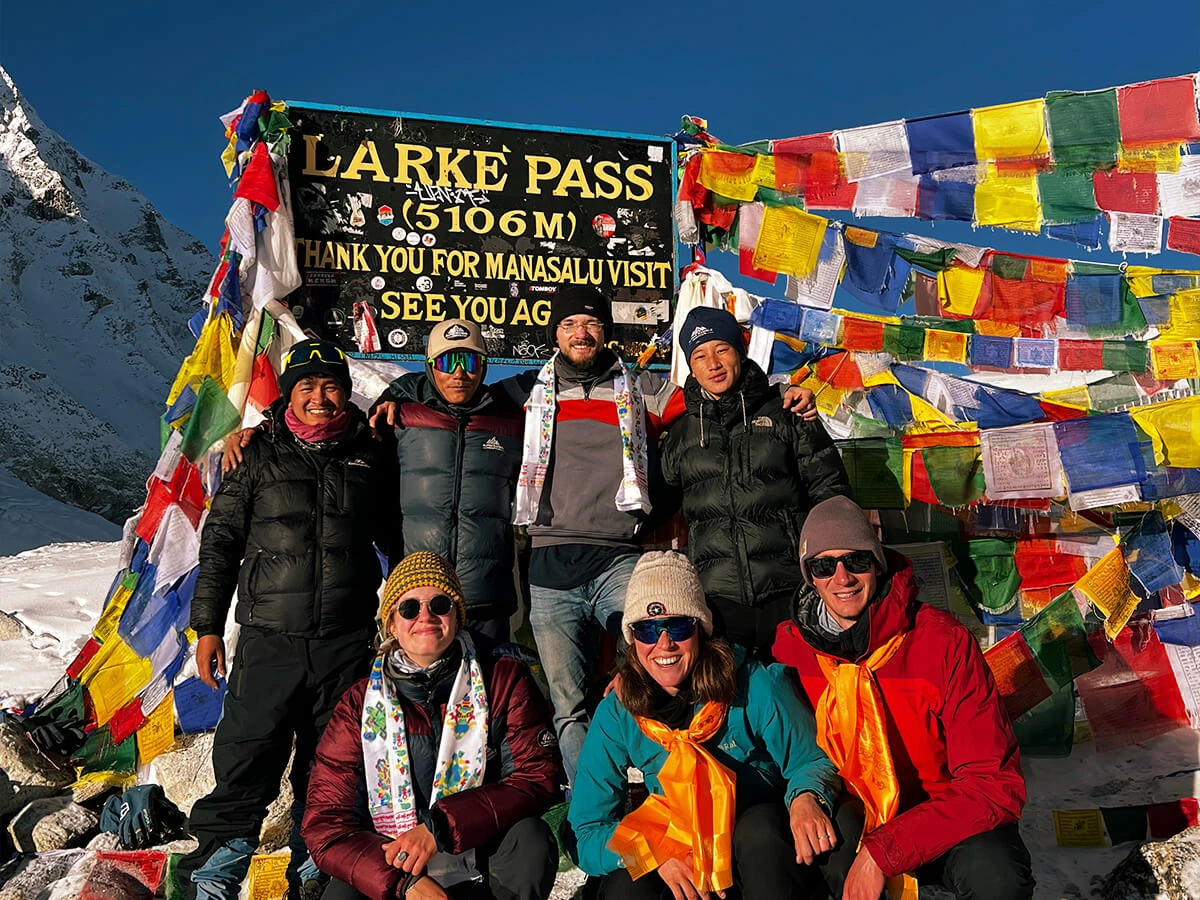
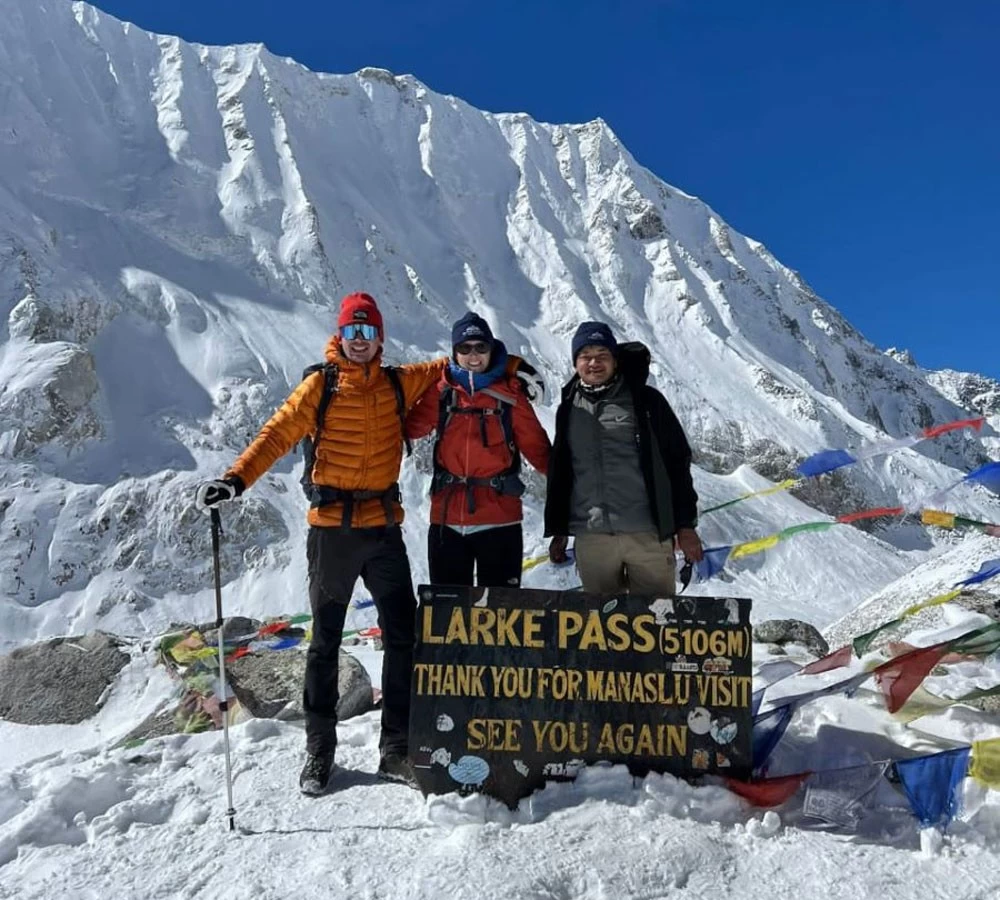
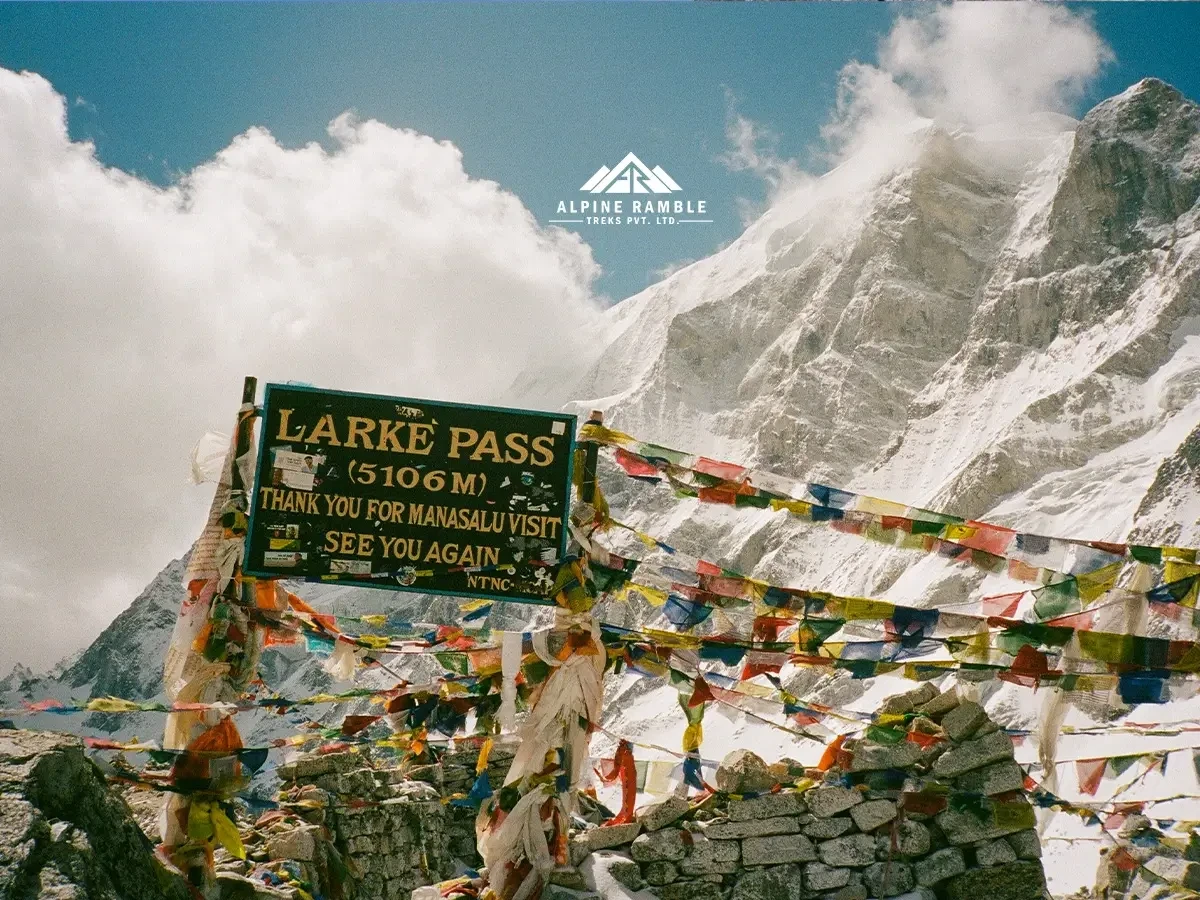
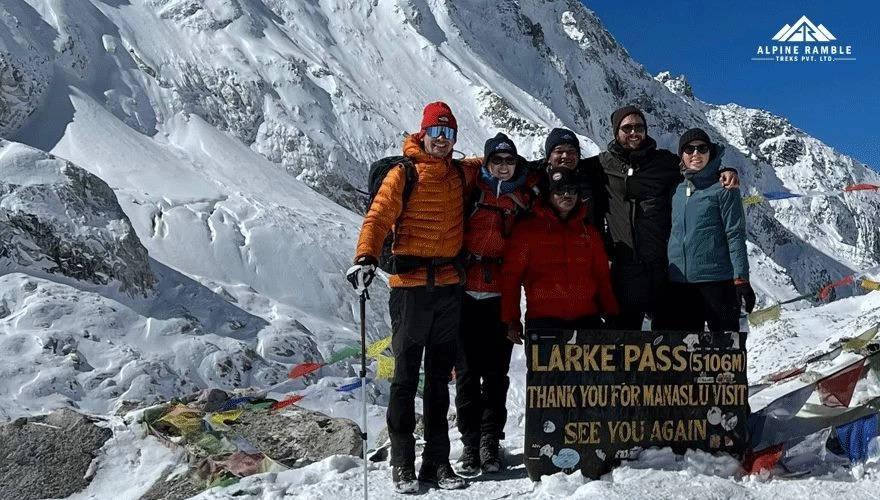
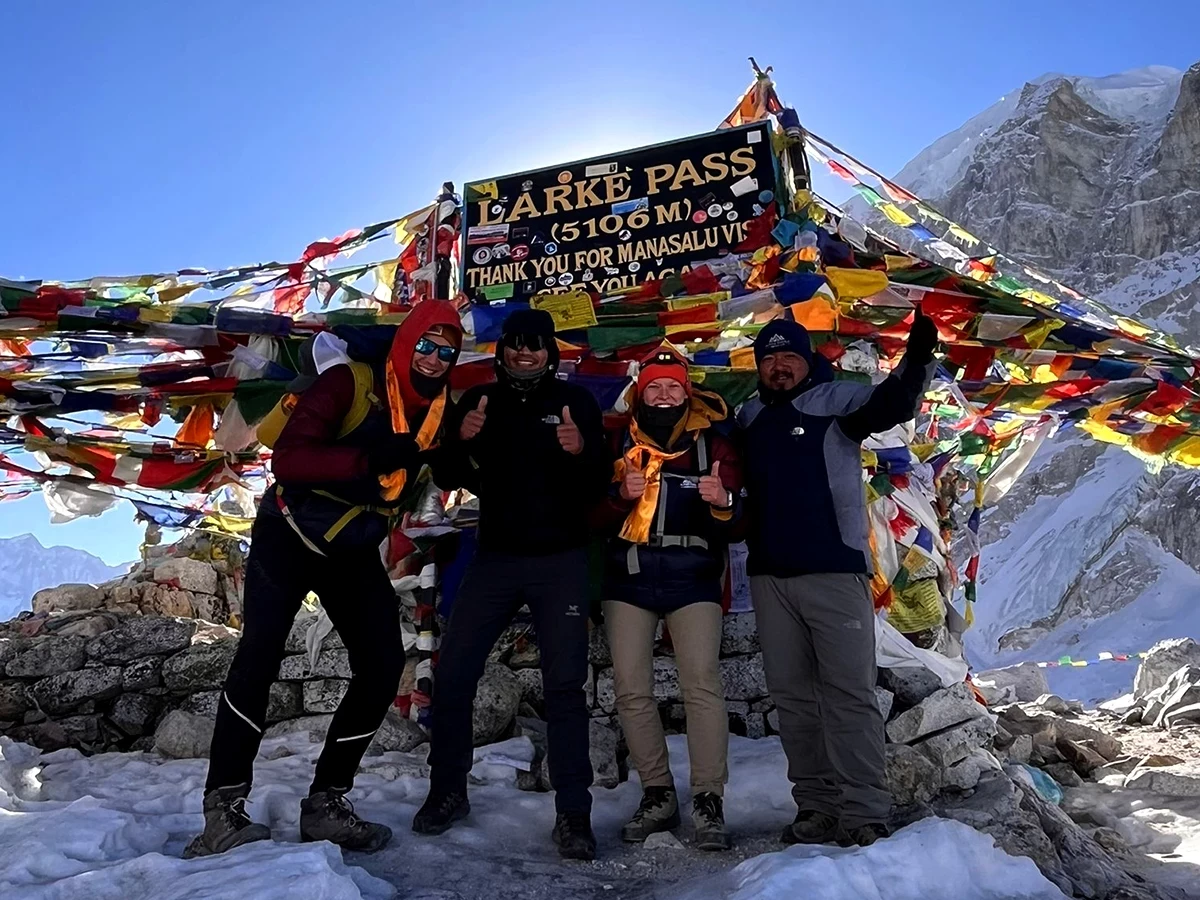
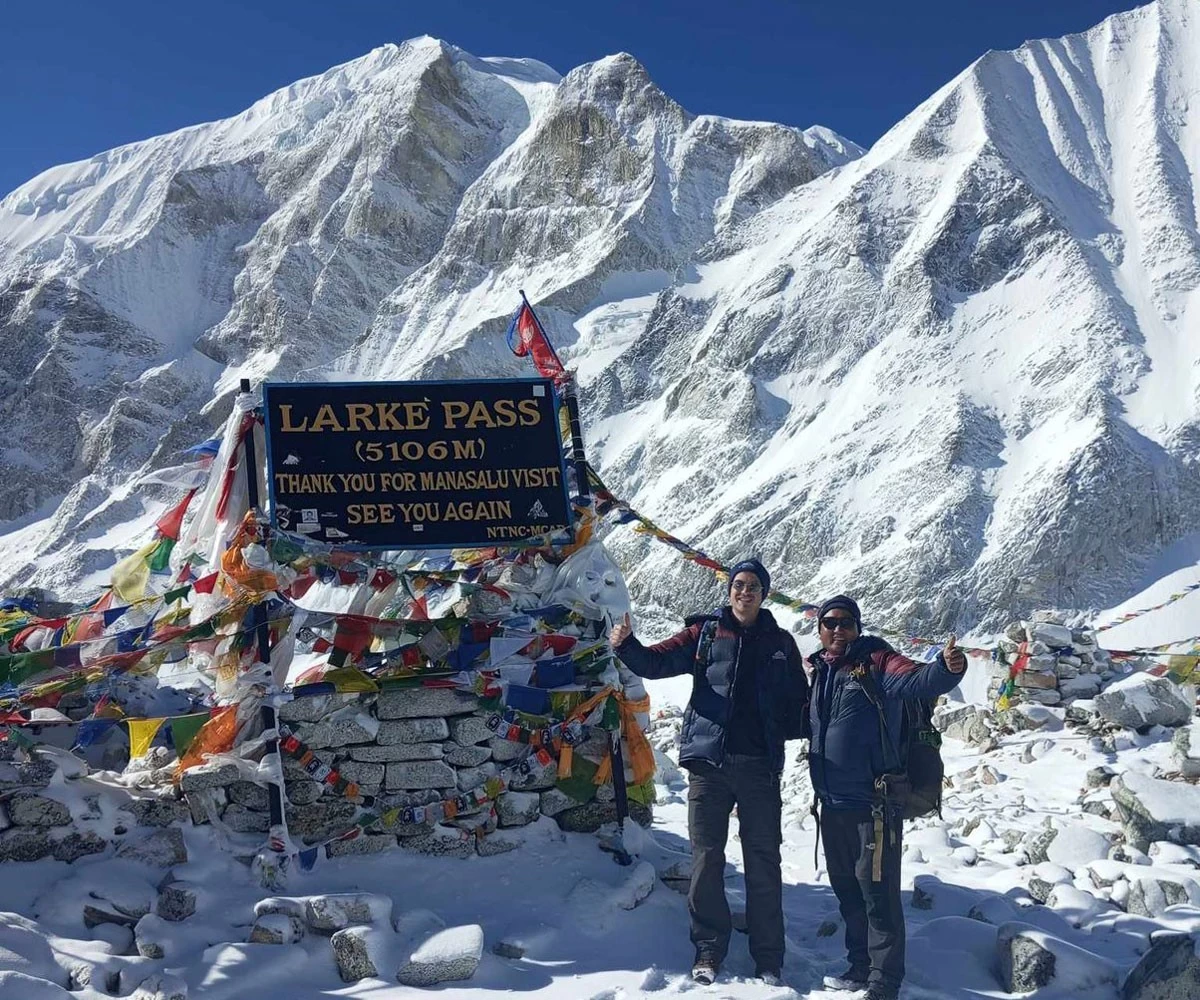
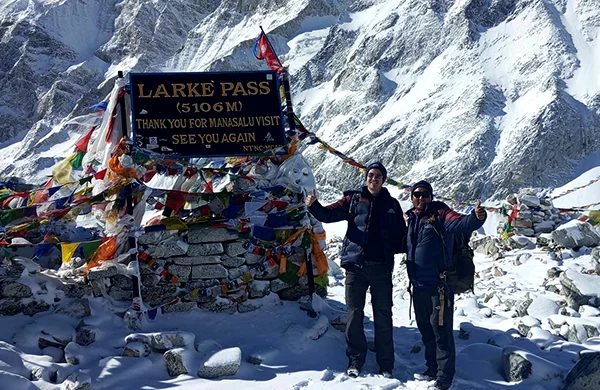
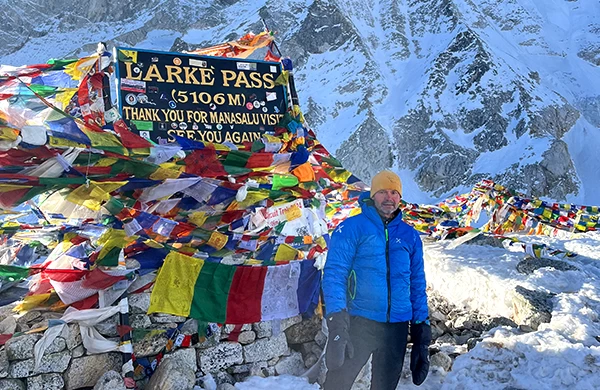
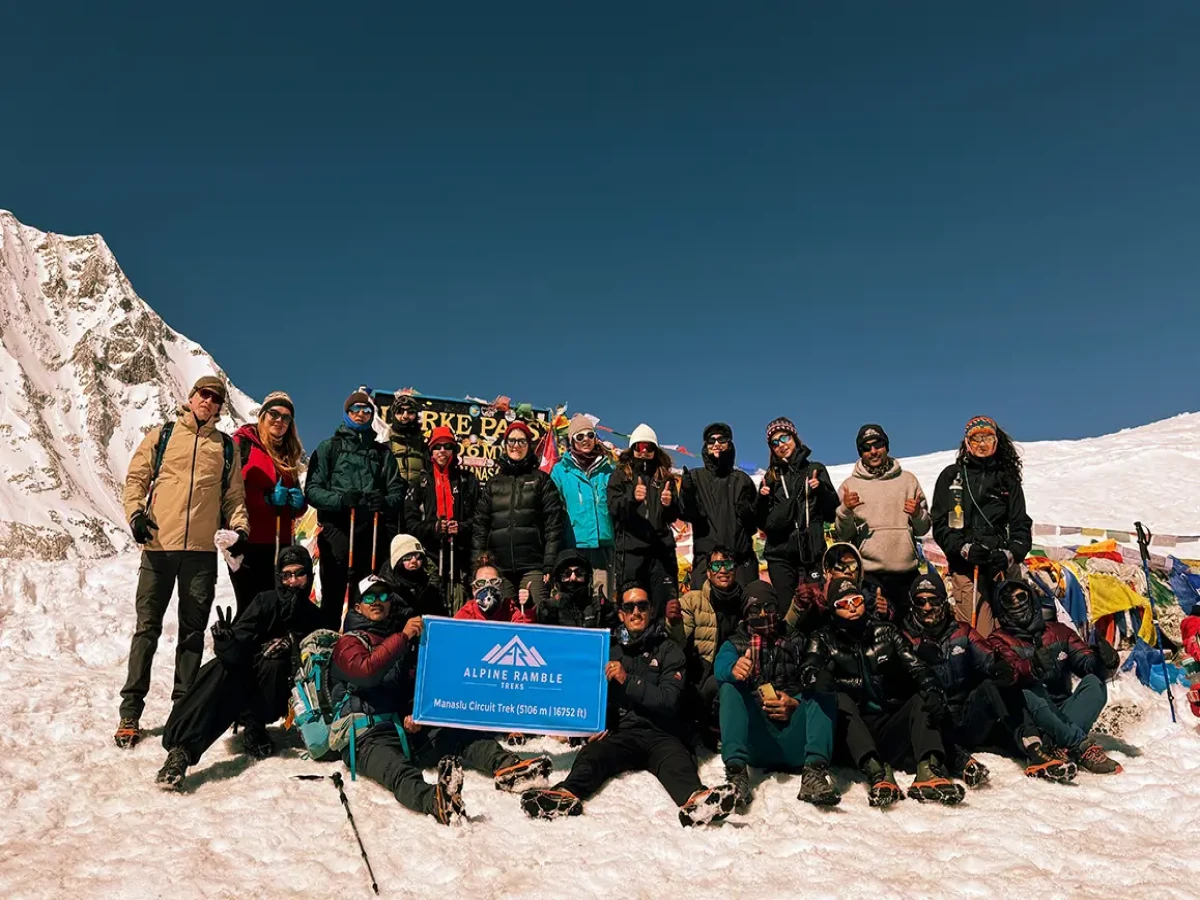
  • At 5,106 meters (16,752 feet), crossing the Larkya La Pass is a difficult yet thrilling experience with panoramic views of the mountains.
  • Catch sight of the ever-elusive snow leopardif you are lucky.
  • Other wildlife, including the blue sheep, Himalayan tahr, and various species of birds, including the colorful Danphe (Himalayan Monal),
  • Experience diverse cultural immersion in the indigenous communities of Gurung, Magar, and Tibetan.
  • Observe the practice of two equally unique Tibetan Buddhism in the Nubri Monastery and Monastery of Pungyen.
  • The diversity in this area is very rich, ranging from various types of tree species to dominant vegetation, which is, therefore, home to diverse plant species.
  • An awe-inspiring natural view of the Himalayas as you snake your way through the dense forests among the cascading rivers, waterside suspension bridges, and waterfalls.
  • Authentic experience of ethnic foods.
  • The trekking trail is relatively uncrowded, and further, one could expect a sort of quiet atmosphere with serenity.

Following the Budhi Gandaki River Into the Heart of the Manaslu Himalaya

The trek begins low, almost deceptively so, at Macha Khola, where warm air carries the scent of earth and cardamom. Soon the Budhi Gandaki River takes command, not a gentle companion but a roaring architect, carving one of the deepest gorges in the Himalaya.

Waterfalls plunge from unseen heights. Suspension bridges sway over white fury. Villages cling impossibly to cliffsides, as if placed there by memory rather than engineering. Jagat, Deng, Ghap names that feel less like destinations and more like brief permissions to rest before the mountains resume their conversation with gravity.

Step by step, the world grows quieter, wilder, older.

The Cultural Journey from Nepal’s Middle Hills to Himalayan Culture

Higher up, forests thin and the architecture shifts. Flat-roofed stone houses replace timber structures.Mani walls stretch like silent scriptures across the trail. Monasteries appear where logic says none should exist, their butter lamps burning against the cold.

At Lho and Shyala, the first true revelation arrives: the immense north face of Manaslu rising without warning, filling the sky with ice and shadow.

By Samagaon, a high-altitude village shaped by centuries of trade and isolation, life moves at a rhythm set by yaks, seasons, and faith. Nearby, Birendra Lake glows turquoise beneath the mountain, so still it feels less like water and more like polished sky fallen to Earth.

This is not staged culture. It is continuity.

Crossing Larkya La Pass (5,106 m) : The Highest Point of the Manaslu Circuit

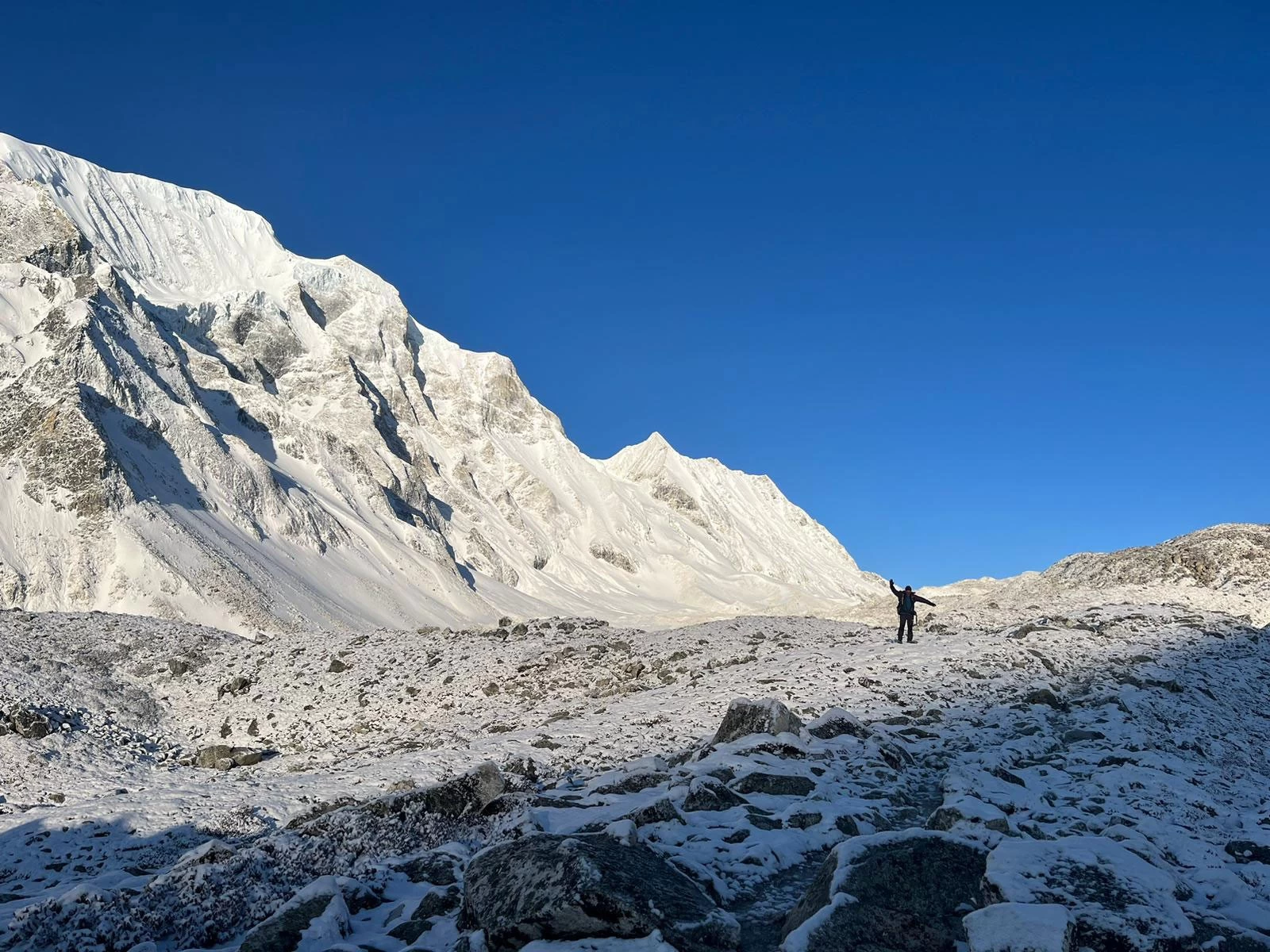
Beyond Samdo and Dharamsala , vegetation surrenders completely. The land becomes austere, lunar, elemental, a desert of stone and wind along the Nepal–Tibet frontier.

Then comes Larkya La Pass (in the range of 5,100–5,170 m), the crossing that defines the journey. The ascent begins in darkness, headlamps moving like a quiet constellation across the snow. Dawn arrives slowly, revealing a horizon crowded with giants named Manaslu, Himalchuli, Cheo Himal, Himlung Himal, Kang Guru, Annapurna II, Lamjung Himal, peaks not arranged for viewing, but simply existing in overwhelming abundance.

Standing there, surrounded by ice and sky, fear gives way to something deeper: awe edged with gratitude.

Descending from the High Himalaya Into the Annapurna Region

On the far side, the mountains soften. Glaciers release their grip. Alpine meadows reappear around Bhimthang, dotted with grazing animals and wildflowers that bloom in defiance of altitude.

Soon rhododendron forests return, followed by Gurung villages where warmth radiates from kitchens long before it reaches the air. By Dharapani and onward to Besisahar, the trail merges with the Annapurna region , civilization reentering gradually, almost reluctantly.

In just days, trekkers move from arctic solitude to fertile valleys, witnessing an ecological spectrum few places on Earth can compress into a single journey.

Comparing Manaslu Circuit vs Everest Base Camp and Annapurna Circuit

While famous routes like Everest Base Camp and Annapurna receive tens of thousands of trekkers each year, Manaslu remains deliberately quiet. Controlled access preserves both ecosystem and experience.

You may walk for hours hearing only wind, water, and your own breath, a rarity in the modern world, rarer still in the Himalaya.

This is why many experienced trekkers choose Manaslu: not because it is easier, but because it feels more meaningful.

Why Trekking with a Local Manaslu Guide Improves Safety and Experience

With over 20 years of guiding excellence with international collaboration, Alpine Ramble Treks leads travelers through this remote Himalayan world with care, knowledge, and deep local connections, balancing safety with the freedom to experience the wild honestly. Supported by a global community of 15,000+ trekkers and a remarkable 99% completion rate, the journey is meticulously planned yet emotionally open-ended.

Because the Manaslu Circuit is not merely about reaching the far side of a mountain.

It is about crossing a threshold, into silence, into scale, into a version of the Earth that still remembers how it was before we arrived.

Major Himalayan Peaks Visible on the Manaslu Circuit Trek

Mountain Height Notes
Manaslu 8,163 m World’s 8th highest mountain
Himalchuli 7,893 m One of the highest peaks in the Manaslu region
Ngadi Chuli 7,871 m Also known as Peak 29
Manaslu North 7,157 m Prominent northern summit of Manaslu
Ganesh Himal 7,422 m Visible from lower trekking sections

Manaslu Circuit Trek Quick Facts for Travelers

  • Region: Manaslu Conservation Area, Nepal

  • Duration: 15 Days (Kathmandu to Kathmandu)

  • Highest Point: Larkya La Pass — 5,106 m / 16,752 ft

  • Max Mountain: Manaslu — 8,163 m (World’s 8th highest)

  • Trek Distance: ~160–180 km depending on variations

  • Start Elevation: ~900 m (Machha Khola)

  • End Connection: Annapurna region at Dharapani

  • Best Seasons: Spring (Mar–May), Autumn (Sep–Nov)

  • Permit Status: Restricted Area (controlled tourism)

  • Accommodation: Local tea houses

Difficulty: Moderate to challenging (non-technical)

Itinerary

15-Days Manaslu Circuit Trek (8,163 m) : Nepal Travel planning Day-by-day Plan Itinerary

Kathmandu to KathmanduExpand all
Max Altitude: Altitude: 1400 m/ 4600 ft Meals: Meals: BreakfastAccommodation: Hotel Thamel Park
Max Altitude: 900 m Meals: Breakfast, Lunch, and DinnerAccommodation: Tea HouseDuration: 9-10 hours, approxDistance: 140 km
Max Altitude: 1,340 m (4397 ft) Meals: Breakfast, Lunch, and DinnerAccommodation: Tea HouseDuration: 6-7 hours, approxDistance: 16-17 km, approx
Max Altitude: 1,860 m (6,103 ft) Meals: Breakfast, Lunch, and DinnerAccommodation: Tea HouseDuration: 6-7 hours, approxDistance: 17-18 km, approx
Max Altitude: 2,630 m (8,629 ft) Meals: Breakfast, Lunch, and DinnerAccommodation: Tea HouseDuration: 6-7 hours, approxDistance: 17 km, approx
Max Altitude: 3,530 m (11,581 ft) Meals: Breakfast, Lunch, and DinnerAccommodation: Tea HouseDuration: 5-6 hours, approxDistance: 14 km, approx
Max Altitude: 3,530 m (~11,581 ft) Meals: Breakfast, Lunch, and DinnerAccommodation: Tea HouseDuration: 3-4 hours, approx
Max Altitude: 3,875 m (12,713 ft) Meals: Breakfast, Lunch, and DinnerAccommodation: Tea HouseDuration: 3-4 hours, approxDistance: 14 km, approx
Max Altitude: 4,460 m (14632.55 ft Meals: Breakfast, Lunch, and DinnerAccommodation: Tea HouseDuration: 3-4 hours, approxDistance: 14 km, approx
Max Altitude: Larkya La: 5,106 m (16,752 ft), Bhimtang: 3720 m (12,205m) Meals: Breakfast, Lunch, and DinnerAccommodation: Tea HouseDuration: 8-9 hours, approxDistance: 21-22 km, approx
Max Altitude: 2515 m (8251 ft) Meals: Breakfast, Lunch, and DinnerAccommodation: Tea HouseDuration: 6 hours, approxDistance: 11-12 km, approx
Max Altitude: 760 m/ 2495 ft Meals: Breakfast, Lunch, and DinnerAccommodation: Tea HouseDuration: 6 hours, approxDistance: 8 km, approx
Max Altitude: 1400 m/ 4600 ft Meals: Breakfast, Lunch, and DinnerAccommodation: Tea HouseDuration: 6 hours, approxDistance: 180 km, approx
Trail Guide

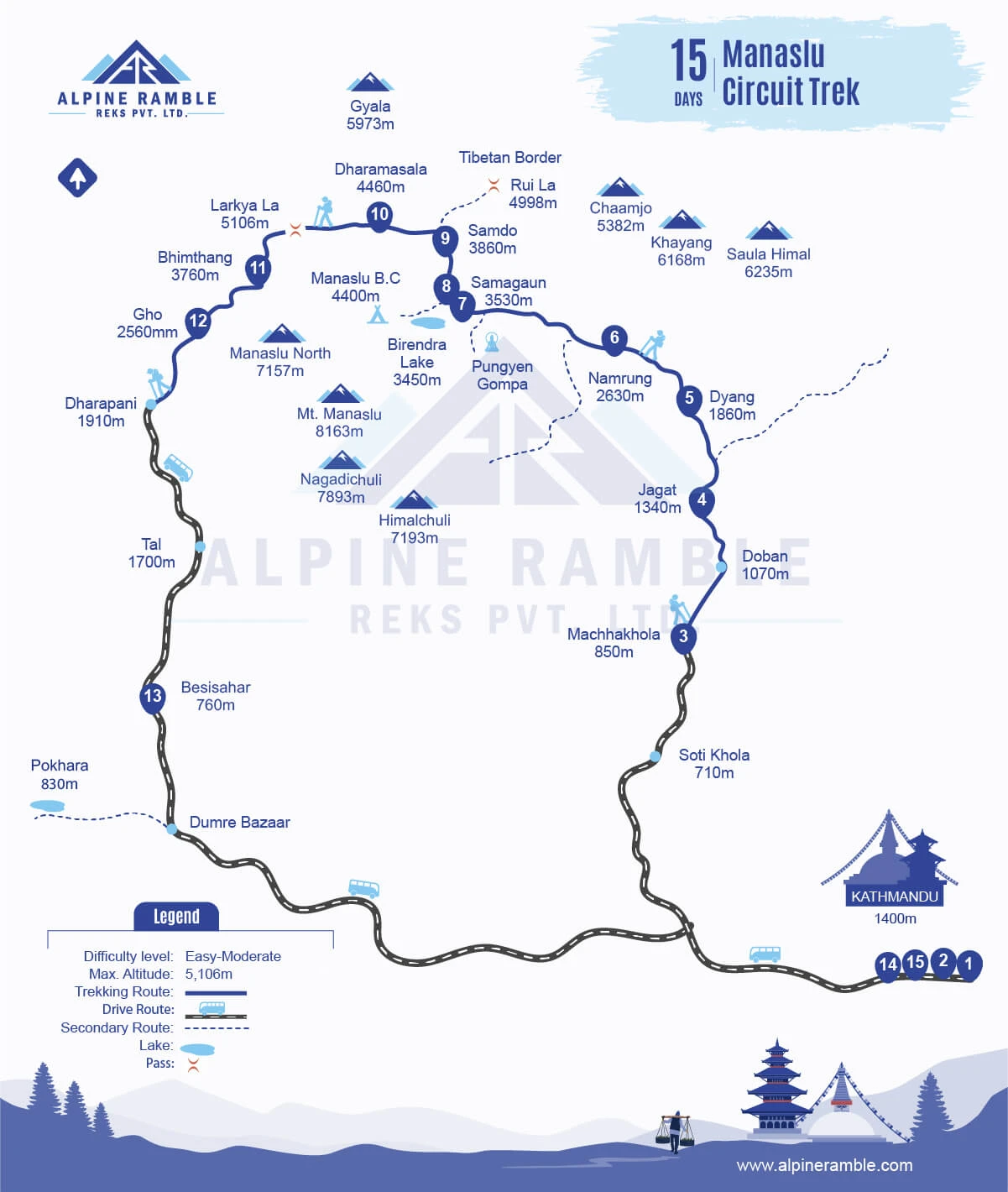
Route Map & Elevation

MANASLU MAP
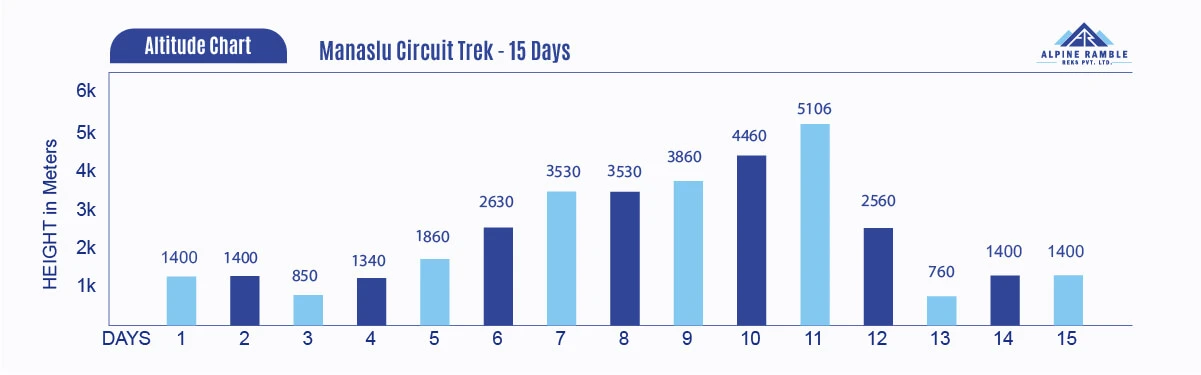
Altitude Chart
MANASLU CHART
Cost Details

15-Days Manaslu Circuit Trek (8,163 m) : Nepal Travel planning Cost Details

Includes

Food

  • Standard food as per the local teahouse menu (Breakfast, lunch, and Dinner) will be provided during the trek
  • Water purification tablets or drops to purify your water for safe drinking on a hike.
  • Seasonal fruits every evening on a hike

Transportation

  • Private transport from the airport (pick-up and drop-off service) to the hotel and back to the airport.
  • Tourist bus from Kathmandu to Machha Khola by bus, Dharapani–Besishar by local jeep, and Besishar–Ktm by bus.

Guide and Helper/Porter

  • Friendly, experienced, first-aid-trained, government-licensed, English-speaking local ART leader/guide.
  • An assistance guide if the group is bigger than 6 people.
  • One friendly helper/porter (1 porter for two trekkers; one porter can carry up to 20 kg weight, so 10kg each for the hike)
  • Guides' and porters' wages, meals, accommodation, insurance, and necessary equipment

Permits for Trek

  • Annapurna Conservation Area permit (ACAP)
  • Manaslu Conservation Area permit (MCAP)
  • Trekkers’ Information Management System (TIMS) card.
  • Manaslu restricted area Special permit through the immigration
  • Local and government taxes, as well as official fees.

Accommodation

  • Two nights at the best 3-star hotel in Kathmandu (1 night before and another night after the trek) with breakfast.
  • Accommodation at the teahouses/lodges, generally in twin-sharing rooms during the trek.

Luggage storage

  • Easy and free access to store the luggage (if any inessential trekking gear) at our ART's office or hotel, both in Kathmandu.

Medical Assistance

  • A first aid kit, including an Oximeter to measure pulse and oxygen levels daily in the mountains
  • Help in arranging a rescue operation in the complicated health situation (funded by your travel insurance).

Benefits and Souvenirs

  • Rental-free (free use) of ART's duffel/kit bag, sleeping bag, and down jacket.
  • ART's breathable Hiking t-shirt (sport-based), warm beanie and sun hat (all takeaways—souvenirs)

Farewell Dinner and Certification

  • Certificate of Appreciation at the end after the trek.
  • A farewell dinner with cultural shows in Kathmandu.

Excludes

  • Nepal Entry Visa (can be obtained easily after your arrival at the airport in Kathmandu with a fee of usd 30 for 15-day visa, usd 50 for 30-day visa, & usd 125 for 90-day visa)
  • Extra accommodation and meals behind schedule the schedules of this trekking trip program 
  • All kinds of beverages, including alcoholic and nonalcoholic as well as hot (Tea/coffee) and cold drinks
  • Personal expenses such as shopping, hot and cold drinks, hot showers, hard and soft alcohols, snacks, hot and cold water, Wi-Fi, battery re-charge fee, & helper
  • Travel insurance has to cover emergency rescue evacuation from high-altitude up to 6000 m.
  • Personal hiking/trekking gear and equipment
  • Tip fo trekking staffs and driver  
Departures

15-Days Manaslu Circuit Trek (8,163 m) : Nepal Travel planning Dates and Price

Private Trip

Manaslu Circuit Trekking Departure and BOoking for 2024/25/26

All departure trekking tours are guaranteed to go ahead. If the listed dates don't work for you, contact us to arrange a custom trip. Private trips are available year-round. Book now for our best deals or share with colleagues. We can personalize the tour for private or group preferences.

Must-Know

Essential Information

A Sanctuary of Wildlife and Wilderness

Protected within the Manaslu Conservation Area, this landscape shelters creatures rarely seen but deeply present: snow leopards ghosting across ridgelines, Himalayan tahr navigating impossible slopes, red pandas hidden in high forests, monals flashing iridescent color against grey stone, golden eagles riding thermals that begin in unseen valleys.

Here, humanity feels like a visitor rather than the default inhabitant.

Challenging, Yet Deeply Human

The trek is physically demanding, yes! - ong days, steep climbs, thin air, but it rewards effort with something gentler than conquest. Teahouses offer warmth, simple food, and conversations that transcend language. Strangers become companions. Guides become storytellers.

Nature may be harsh here, but the human presence is profoundly nurturing.

Why Manaslu Still Feels Real

For explorers seeking authenticity — Western adventurers chasing the spirit of early expeditions, Europeans drawn to wilderness, Japanese travelers honoring mountaineering history, Russians pursuing endurance, Chinese trekkers tracing cultural continuity, and global wanderers simply searching for something unmanufactured - Manaslu offers one defining gift:

It still feels undiscovered.

Not because no one has walked here before, but because the mountains never surrendered their mystery.


Why Manaslu Circuit Treks is more than just Mountains?

Everest Base Camp delivers a famous destination. Annapurna Circuit offers classic trekking with increasing road access. Manaslu, by contrast, remains a self-contained Himalayan world.

Here you experience:

  • One of Earth’s deepest river gorges — carved by the Budhi Gandaki

  • Massive Himalayan peaks: Manaslu, Himalchuli, Ngadi Chuli

  • Glacial lakes like Birendra Lake

  • Ancient monasteries such as Pungyen Gompa

  • High plateau villages near the Tibetan border

  • Rare wildlife habitats including snow leopard terrain

  • A true high-pass crossing at Larkya La

Most importantly: far fewer crowds.

Cultural Continuum — Walking Through Living History

Few places on Earth allow you to walk through a gradual civilizational transition.

Lower valleys reflect Sanatan (Hindu) traditions typical of Nepal’s mid-hills. As altitude increases, Tibetan Buddhism becomes dominant. Prayer flags replace temple bells. Mani walls carved with sacred mantras line the trails. Monasteries guide community life.

Villages such as Namrung, Lho, Samagaon, and Samdo maintain lifestyles shaped by centuries of trans-Himalayan trade with Tibet.

This is not museum culture. It is living culture.

Ecology — From Jungle to Glacier

Within two weeks, you traverse ecological zones equivalent to traveling from Southeast Asia to the Arctic.

  • Subtropical forests of sal and bamboo

  • Temperate pine and rhododendron woodlands

  • Subalpine juniper zones

  • Alpine meadows with yak pastures

  • Glacial landscapes above 4,500 m

Wildlife includes Himalayan tahr, musk deer, blue sheep, and occasionally snow leopard.

Safety, Acclimatization & Success Rate

Alpine Ramble Treks emphasizes gradual ascent profiles, experienced guides, and constant monitoring of altitude health — key factors behind our 99% completion rate.

Our teams understand high-altitude physiology, weather patterns, and emergency procedures in remote terrain.

Who This Trek Is Perfect For

  • Experienced trekkers seeking a less commercial route

  • Adventure-oriented travelers wanting authentic culture

  • University or study groups

  • Corporate team expeditions

  • Families with strong fitness

  • Photographers and naturalists

  • Spiritual seekers


Why Travelers From Around the World Choose Manaslu

  • Americans & Western Europeans: authenticity and wilderness

  • Japanese: historic connection to Manaslu’s first ascent

  • Germans & Northern Europeans: structured long-distance trekking

  • Russians: endurance and remote landscapes

  • Chinese: Tibetan cultural continuity

  • Singaporeans: escape from urban life


What Mountains Can You See on the Manaslu Circuit Trek? Full Peak List & Views


Mount Manaslu (8,163 m) — Manaslu / मनास्लु (Nepali) • Манаслу (Russian) • Manaslu (German) • 马纳斯鲁峰 (Mandarin)

Mount Manaslu, the eighth-highest mountain on Earth, takes its name from the Sanskrit Manasa, meaning “spirit” or “soul,” a title that feels earned the moment its vast ice walls rise above Samagaon. For centuries it remained hidden inside a restricted Himalayan corridor opened to foreigners only in 1992.

The region is home to the Nubri and Tsum peoples, Tibetan-origin communities practicing Nyingma Buddhism infused with older Bon traditions. Prayer wheels spin continuously, as if negotiating with the mountain’s unseen guardians, while monasteries like Pungyen Gompa face the summit in deliberate reverence.

Manaslu was first climbed on 9 May 1956 by Japanese mountaineer Toshio Imanishi and Sherpa Gyalzen Norbu. Earlier expeditions had angered locals after an avalanche destroyed fields and a monastery site, reinforcing beliefs that the mountain houses protective deities.

Its glaciers feed the Budhi Gandaki River, which carves one of Nepal’s deepest gorges. At its base lies Birendra Lake, a turquoise glacial basin formed by moraine collapse, surrounded by alpine herbs, blue sheep, and the occasional shadow of a snow leopard.


Himalchuli (7,893 m) — Himalchuli / हिमालचुली • Хималчули • Himalchuli • 喜马尔楚利峰

Himalchuli, whose name translates roughly as “Himalayan crest,” stretches across the southern skyline like a reclining titan. Unlike the solitary drama of Manaslu, this mountain expresses power through breadth, its ridges collecting monsoon clouds that feed dense mid-hill forests below.

Gurung and Tibetan-influenced communities farm terraced slopes nourished by glacial streams descending from its ice fields. Rhododendron forests bloom crimson each spring, sheltering langurs, Himalayan black bears, and pheasants that vanish like sparks into undergrowth.

The mountain was first climbed on 24 May 1960 by a Japanese expedition led by Y. Kato. Despite its height, it remains little known internationally, perhaps because it lacks the symmetrical summit pyramid that captures photographers’ attention.

Yet from villages such as Lho, Himalchuli dominates daily life. Meltwater channels sustain barley, millet, and potato fields, while seasonal yak migrations follow routes older than any written record, guided by instinct and ancestral memory.

Ngadi Chuli / Peak 29 (7,871 m) — Ngadi Chuli / न्गादी चुली • Нгади Чули • Ngadi Chuli • 纳迪楚利峰

Ngadi Chuli, also called Peak 29, rises as a stark pyramid west of Manaslu, its Tibetan-derived name often interpreted as “west peak.” Its slopes are notoriously unstable, sculpted by avalanches that redraw the mountain’s face each winter.

Attempts to climb it repeatedly failed until 1970, when a Japanese team finally reached the summit after navigating treacherous icefall zones. Even today, it remains one of the more dangerous high peaks in Nepal, respected rather than pursued.

High pastures beneath Ngadi Chuli host summer camps of yak herders who follow transhumance traditions, moving livestock between elevations as seasons shift. Stone shelters, black yak-hair tents, and butter lamps mark these temporary settlements.

The surrounding alpine zone is rich in medicinal plants such as yarsagumba and juniper. When burned, juniper smoke drifts across the valley as an offering to mountain spirits, a ritual believed to ensure safe passage and favorable weather.


Ganesh Himal Range (up to 7,422 m) — Ganesh Himal / गणेश हिमाल • Ганеш-Гимал • Ganesh Himal • 甘尼许喜马尔山脉

The Ganesh Himal range forms the eastern skyline of the Manaslu region, named after the Hindu god Ganesh, remover of obstacles and patron of beginnings. Devotees claim certain ridges resemble the deity’s elephant head and trunk.

These mountains are culturally significant to Tamang communities, who maintain syncretic beliefs blending Buddhism with ancient animist practices. Sacred sites dot the foothills, where offerings of rice, flowers, and butter lamps are placed to appease local deities.

Ecologically, the range marks a transition zone from subtropical forests to alpine terrain. Rivers born here plunge southward toward the Trishuli basin, supporting agriculture and settlements far downstream, linking high Himalaya to lowland economies.

Because of difficult access and spiritual restrictions, the Ganesh Himal peaks remain relatively unclimbed and unexplored. This isolation has preserved wildlife habitats, including red pandas, Himalayan tahr, and diverse bird species rarely seen on busier trekking routes.


Shringi Himal (7,187 m) — Shringi Himal / श्रृंगी हिमाल • Шринги-Гимал • Shringi Himal • 施林吉喜马尔峰

Shringi Himal’s sharply pointed summit resembles a ritual horn or conch, objects sacred in Hindu and Buddhist ceremonies. The name “Shringi” evokes this symbolism, reinforcing the mountain’s association with sound, prayer, and divine presence.

Local legends describe it as a dwelling place of protective spirits guarding hidden valleys known as beyuls, sanctuaries prophesied by Guru Rinpoche (Padmasambhava) in the 8th century as refuges during times of turmoil.

The mountain remained unclimbed until 1981, partly due to remoteness and partly because local lamas discouraged attempts out of respect for its spiritual significance. Even today, expeditions are rare compared to neighboring peaks.

Wildlife thrives in its shadow. Snow leopards patrol high ridges, while lammergeiers glide overhead, dropping bones onto rocks to access marrow, a stark reminder that life here adapts to scarcity with ruthless efficiency.


Cheo Himal & Larkya Peak (around 6,800 m+) — Cheo Himal / चिओ हिमाल • Чео-Гимал • Cheo Himal • 切奥喜马尔峰

Near the Larkya La Pass, the landscape becomes austere and almost lunar, dominated by Cheo Himal and Larkya Peak. Vegetation thins to lichens and hardy grasses, while frozen lakes lie scattered across glacial moraines like fragments of broken sky.

These highlands were historically part of trans-Himalayan trade routes connecting Nepal and Tibet. Caravans carried salt, wool, and grain across passes that demanded both physical endurance and spiritual fortitude.

Yak herders still use summer pastures here, constructing temporary stone shelters. Wind howls continuously, sculpting cornices and sending plumes of snow streaming from ridgelines like banners of ice.

Sunrise turns these peaks rose-gold, an alpenglow phenomenon caused by low-angle light scattering through thin atmosphere. For trekkers crossing the 5,106-meter pass, the scene feels less like Earth and more like another planet.


Annapurna II (7,937 m) — Annapurna II / अन्नपूर्णा II • Аннапурна II • Annapurna II • 安纳普尔纳 II 峰

After the ordeal of Larkya La, Annapurna II appears like a revelation on the western horizon. Its name comes from the Hindu goddess Annapurna, provider of food and nourishment, symbolizing abundance after hardship.

The peak was first climbed on 17 May 1960 by a British-Indian-Nepalese expedition led by J. O. M. Roberts. Unlike the secrecy surrounding Manaslu, Annapurna II stands boldly above the Marsyangdi Valley, visible from great distances.

The Marsyangdi River, fed by glaciers from the Annapurna massif, supports agriculture and hydropower downstream. Gurung and Manangi communities cultivate barley, potatoes, and apples in settlements adapted to high-altitude conditions.

Culturally, this region reflects a blend of Hindu and Tibetan Buddhist traditions. Stone mani walls, chortens, and prayer flags coexist with temples dedicated to Hindu deities, illustrating centuries of cultural exchange along Himalayan trade corridors.


Kang Guru & Lamjung Himal — Kang Guru / काङ गुरु • Канг Гуру • Kang Guru • 康古鲁峰

Kang Guru rises dramatically near the transition into the Annapurna region, its avalanche-scarred slopes a reminder of Himalayan volatility. In 2005, a devastating avalanche struck near its base, killing trekkers and highlighting the unpredictable nature of these mountains.

Lamjung Himal, meanwhile, marks a geographical gateway between regions. Its glaciers feed tributaries that join the Marsyangdi River, sustaining villages scattered along steep valley walls.

These peaks are less mythologized than Manaslu or Annapurna yet no less integral to local life. Seasonal migration, terrace farming, and pastoralism all depend on water systems born from their snowfields.

Together they form the closing chapter of the Manaslu Circuit’s mountain narrative — a reminder that the Himalaya is not a collection of isolated summits but an interconnected system of geology, culture, ecology, and belief stretching across an entire continent.


The Rivers of the Manaslu Circuit, Currents That Turn a Trek Into an Expedition

On the Manaslu Circuit, rivers are not scenery they are the force that makes the journey feel raw, dangerous, ancient, and profoundly alive. You hear them before you see them, a distant thunder in the gorge, a hiss beneath ice, a roar under swinging bridges. They dictate where trails exist, where villages survive, and where humans must surrender to nature’s terms. Following these waters is like tracing the circulatory system of the Himalaya itself, from jungle heat to glacial silence. Each river transforms the trek into something less like hiking and more like crossing a primordial world.


Budhi Gandaki River

English: Budhi Gandaki River
Nepali: बुढी गण्डकी नदी
Russian: река Будхи-Гандаки
Mandarin: 布迪甘达基河
Japanese: ブディ・ガンダキ川
German: Budhi-Gandaki-Fluss

This is the river that escorts you deep into the forbidden valley, a relentless torrent born from Manaslu’s glaciers. For days, the trail clings to cliffs hundreds of meters above its gray, churning waters. Crossing it on long suspension bridges feels less like walking and more like surrendering to gravity and wind. Historically it carried salt caravans; today it carries the sound of the mountain itself — thunderous, unstoppable. In Sanatan thought, Gandaki waters are sacred purifiers; in Buddhism, their ceaseless motion embodies impermanence. Trekking beside it feels primal, as if you are moving through a landscape still being created.


Dudh Khola (Manaslu Side)

English: Milk River
Nepali: दूध खोला
Russian: река Дудх-Кхола
Mandarin: 杜德河
Japanese: ドゥード・コーラ川
German: Dudh-Khola-Fluss

Emerging from the Manaslu Glacier, this river appears ghostly pale — milky with pulverized rock ground by ancient ice. Near Samagaon, it feeds the luminous Birendra Lake beneath towering ice walls. Walking beside it, you feel the proximity of the glacier itself, a frozen force slowly grinding mountains into dust. The water is so cold it numbs skin instantly, a reminder that this landscape operates on geological time, not human comfort. Its quiet presence makes the valley feel suspended between seasons — neither alive nor frozen, but waiting.


Hinang Khola

English: Hinang River
Nepali: हिनाङ खोला
Russian: река Хинанг
Mandarin: 希南河
Japanese: ヒナン川
German: Hinang-Fluss

This tributary drains hidden valleys beneath Himalchuli, one of the world’s highest peaks. Crossing it feels like peering into a side chapter of the Himalaya — remote, rarely visited, and silent. The water runs clear and cold over polished stones, contrasting with the muddy violence of the main river below. Yak caravans once used these valleys as summer grazing routes, and even today the landscape feels untouched by modern presence. It is the kind of place where sound travels unusually far and solitude becomes almost tangible.


Pungyen Khola

English: Pungyen River
Nepali: पुङ्गेन खोला
Russian: река Пунгьен
Mandarin: 彭坚河
Japanese: プンゲン川
German: Pungyen-Fluss

Flowing beneath the slopes of Manaslu toward Pungyen Gompa, this river accompanies one of the trek’s most haunting side excursions. The monastery sits above it in near isolation, surrounded by moraine and silence. Walking here feels like stepping out of the human world entirely — no villages, no roads, only glacier, wind, and prayer flags. The river’s steady flow is the only sign of movement in a landscape that otherwise feels frozen in time.


Larkya Khola

English: Larkya River
Nepali: लार्क्या खोला
Russian: река Ларкья
Mandarin: 拉尔基亚河
Japanese: ラルキャ川
German: Larkya-Fluss

After crossing Larkya La Pass, this river guides your descent from the high Himalayan void into a world where life gradually returns. It begins as braided meltwater streams slicing through gray moraine — raw, cold, and newborn. As you follow it downward, grasses appear, then shrubs, then forests, as if the river is reintroducing you to Earth itself. The psychological shift is powerful: from survival mode to relief, from stark emptiness to abundance.


Salpudanda Khola

English: Salpudanda River
Nepali: साल्पुदण्डा खोला
Russian: река Салпуданда
Mandarin: 萨尔普丹达河
Japanese: サルプダンダ川
German: Salpudanda-Fluss

In the Bhimthang valley, this gentler river winds through wide alpine meadows where yaks graze and wildflowers bloom in summer. After the harshness of the pass, the openness feels almost surreal — a quiet, luminous landscape framed by snow peaks. The river’s calm flow contrasts sharply with the ferocity of the Budhi Gandaki, offering a rare sense of peace. Many trekkers describe this area as dreamlike, as if they have emerged from a storm into a hidden sanctuary.


Dudh Khola (Annapurna Side)

English: Milk River (Annapurna)
Nepali: दूध खोला
Russian: река Дудх-Кхола
Mandarin: 杜德河
Japanese: ドゥード・コーラ川
German: Dudh-Khola-Fluss

This second “milk river” descends from the Annapurna glaciers, its pale waters nourishing forests and terraced fields. By now, villages feel warmer, more connected, more human. The river accompanies your return to populated valleys, where children’s voices replace the wind and distant thunder of glaciers. It marks the gradual transition from expedition back to civilization.


Marsyangdi River

English: Marsyangdi River
Nepali: मर्स्याङ्दी नदी
Russian: река Марсьянгди
Mandarin: 马相迪河
Japanese: マルシャンディ川
German: Marsyangdi-Fluss

Meeting the Marsyangdi at Dharapani feels like rejoining the wider world. Broad, powerful, and comparatively accessible, it carries the waters of the Annapurna region toward the plains of South Asia. After days in the narrow Budhi Gandaki gorge, this river feels expansive — almost liberating. Roads follow it, villages grow larger, and the sense of isolation begins to fade. It is the river that tells you, unmistakably, that the wild heart of Manaslu is now behind you.


Why These Rivers Make Manaslu Feel “Out of This World”

Because they are not background features they are the reason the landscape exists. They dictate altitude gain, trail placement, settlement patterns, and even cultural boundaries. Following them feels less like trekking and more like moving through a living geological process.

You don’t conquer Manaslu.
You are carried through it one river at a time.


Lakes of the Manaslu Circuit — Sacred Stillness, Sound, and the Experience of Śūnyatā

High Himalayan lakes are not merely geographical features — they are acoustic sanctuaries. Far from roads, aircraft corridors, and industrial noise, these basins exist in a rare state of near-primordial silence. In both Sanatan contemplative traditions and Tibetan Buddhism, water and silence are linked to inner purification and realization. Moving water invites nāda (sound) meditation; still water invites śūnyatā (emptiness) meditation. Many trekkers experience something uncanny here: when you speak, your voice returns after a delay, echoing across slopes that have heard little human sound for centuries.

Birendra Lake

English: Birendra Lake
Nepali: बिरेन्द्र ताल
Russian: озеро Бирендра
Mandarin: 比兰德拉湖
Japanese: ビレンドラ湖
German: Birendra-See

At 3,691 m, Birendra Lake lies directly below Manaslu’s glacier, its turquoise color created by suspended mineral particles. Named after King Birendra (r. 1972–2001), it formed behind moraine deposits as glaciers retreated in recent decades. The silence here is profound: wind, distant icefall cracks, and occasional water movement become magnified. Many visitors instinctively lower their voices. In Buddhist understanding, such stillness mirrors the mind free from disturbance — a direct encounter with śūnyatā. When sound does occur, it travels cleanly across the basin, returning as a soft echo that feels almost deliberate.

Ponkar Lake

English: Ponkar Lake
Nepali: पोंकर ताल
Russian: озеро Понкар
Mandarin: 彭卡湖
Japanese: ポンカー湖
German: Ponkar-See

Situated around 4,100 m above Bhimthang, Ponkar Lake occupies a glacial basin shaped by ice erosion thousands of years ago. The surrounding amphitheater of peaks creates natural acoustic containment, so even a small sound — footsteps, wind through grass, a distant yak bell — carries unusually far. Yak herders historically camped here during summer grazing seasons, but human presence remains sparse. The lake’s mirror-like surface amplifies the feeling of suspended time, inviting quiet contemplation rather than activity.

Kalo Tal (Black Lake)

English: Black Lake
Nepali: कालो ताल
Russian: Чёрное озеро
Mandarin: 黑湖
Japanese: 黒い湖
German: Schwarzer See

At roughly 3,800–4,000 m, Kalo Tal absorbs light due to depth and mineral content, giving it a dark, opaque appearance. The surrounding terrain is stark and wind-sculpted, producing a subdued acoustic environment where sound seems muted rather than echoed. In contemplative traditions, dark still water often symbolizes the unmanifest — depth beyond perception. Trekkers frequently report an instinctive quietness here, as if the landscape itself discourages noise.

Unnamed Moraine Lakes

English: Moraine Lakes
Nepali: हिमताल / ग्लेसियर ताल
Russian: моренные ледниковые озёра
Mandarin: 冰碛湖
Japanese: モレーン湖
German: Moränenseen

Above 4,000 m, numerous small lakes form behind ridges of glacial debris. Many are temporary, appearing and disappearing with climate cycles. Their remote positions mean they may go months without human presence. In such conditions, natural sounds dominate: wind across rock, distant avalanches, meltwater dripping beneath ice. Speaking aloud often feels intrusive, reinforcing the sense that these basins belong primarily to geological rather than human time.


Seasonal Snowmelt Pools — Larkya La Region

English: Larkya Snowmelt Pools
Nepali: लार्क्या हिमताल
Russian: снежные озёра Ларкья
Mandarin: 拉尔基亚雪融湖
Japanese: ラルキャ雪解け湖
German: Larkya-Schmelzwasserseen

Near Larkya La Pass (5,106 m), shallow meltwater pools form during warm periods. These exist at the threshold of habitability: temperatures fluctuate rapidly, and oxygen levels are roughly half of sea level. The acoustic environment is dominated by wind, sometimes strong enough to mask all other sound. When the wind drops, silence feels almost absolute, broken only by distant ice movement. Such moments often leave a lasting impression of vastness and isolation.


Why These Lakes Feel Meditative

Unlike rivers, which impose motion and sound, high-altitude lakes create a space where perception sharpens. With minimal external noise, subtle sounds become prominent, and many trekkers naturally shift toward quieter behavior. In philosophical terms, the experience reflects both traditions encountered along the trek:

  • Sanatan perspective: Water as purifier and carrier of life force

  • Buddhist perspective: Stillness as insight into impermanence and emptiness

Whether interpreted spiritually or scientifically, these lakes offer something increasingly rare on Earth — environments where natural processes dominate sensory experience.


How to Come to Nepal for the Manaslu Circuit Trek - A Complete International Guide (Flights, Costs, Packing, Permits, Climate)

Planning a journey to the Manaslu Circuit is not like booking a typical holiday. You are traveling to one of the last great remote trekking regions on Earth — a restricted Himalayan corridor where logistics, timing, and preparation matter. The process can feel complex from overseas, but in practice it unfolds smoothly when handled step-by-step. Experienced operators such as Alpine Ramble Treks coordinate the paperwork, local arrangements, and on-ground support so that travelers can focus on the journey itself rather than bureaucracy.


Step 1 — International Flights to Nepal

All international travelers arrive at Tribhuvan International Airport (KTM), Kathmandu. There are currently no regular direct flights from Europe or North America; most routes involve one transit stop in major aviation hubs.

From Europe (Germany, France, Scandinavia, etc.)

Typical routes connect via Doha, Istanbul, Dubai, Abu Dhabi, Delhi, or Bangkok. Airlines frequently used include Qatar Airways, Turkish Airlines, Emirates, and Etihad. Total travel time: 11–16 hours. Round-trip fares usually fall between US$900–1,800 depending on season.

From the United Kingdom

Travel patterns mirror Europe: one stop via the Gulf or Istanbul. London departures are common. Flight duration: about 12–15 hours total. Typical fares: US$1,000–2,000.

From the United States and Canada

Expect one or two stops, often through the Middle East or South/Southeast Asia. Total travel time ranges from 18 to 24 hours depending on connections. Round-trip fares generally range US$1,200–2,800.

From Australia

Flights typically transit through Bangkok, Singapore, Kuala Lumpur, Delhi, or Doha. Total travel time: 14–20 hours. Typical fares: US$1,000–1,800.

From China

China offers some of the easiest access in Asia. Direct or near-direct flights operate from cities such as Guangzhou or Chengdu, while Beijing and Shanghai usually require one stop. Typical fares: US$400–800.

From Japan

Japan has particularly favorable connections, including periodic nonstop flights from Tokyo. Travel time: about 7–9 hours nonstop or slightly longer with transit. Typical fares: US$700–1,200.

From India

Kathmandu is only about 1 hour 40 minutes from Delhi by air, with frequent direct flights from Delhi, Kolkata, Mumbai, and other major cities.


Step 2 — Arrival, Visa, and Entry Process

Most nationalities can obtain a Visa on Arrival at Kathmandu airport.

  • 15 days — US$30

  • 30 days — US$50 (recommended for trekkers)

  • 90 days — US$125

You need:

  • Passport valid for at least six months

  • One passport photo (digital kiosks are available)

  • Visa fee in cash or card

After immigration, you collect baggage and exit to the arrival hall, where your trekking team typically meets you.


Step 3 — Trek Permits for Manaslu

The Manaslu region is classified as a Restricted Area, which means trekking independently is not allowed. Permits must be arranged through a licensed Nepal trekking company.

Required permits:

  • Manaslu Restricted Area Permit (RAP)

  • Manaslu Conservation Area Permit (MCAP)

  • Annapurna Conservation Area Permit (ACAP)

  • TIMS Card (issued through the trekking agency)

All paperwork is normally completed in advance so trekkers do not need to visit government offices themselves.


Step 4 — Climate and Best Season

Manaslu spans climates from subtropical river valleys to alpine tundra.

Best seasons:

  • Spring (March–May): Rhododendron forests in bloom, stable weather

  • Autumn (September–November): Clear skies, best mountain visibility

Temperatures vary dramatically:

  • Kathmandu: 10–25°C

  • Mid-elevation villages: 5–20°C

  • High camps and Larkya La Pass (5,106 m): −15°C to +5°C

Weather can change quickly at altitude, so layered clothing is essential.


Step 5 — What to Pack

A well-prepared kit ensures comfort and safety.

Clothing

  • Thermal base layers

  • Insulated down jacket

  • Waterproof shell jacket and pants

  • Trekking trousers

  • Warm hat and sun hat

  • Gloves (inner + insulated)

  • Trekking socks (multiple pairs)

Footwear

  • Broken-in trekking boots

  • Lightweight camp shoes

Equipment

  • Sleeping bag (−10°C rating recommended)

  • Trekking poles

  • Headlamp

  • Sunglasses (UV protection)

  • Water bottles or hydration system

  • Power bank

Personal Items

  • Toiletries

  • Sunscreen (SPF 50+)

  • Lip balm

  • Personal medication

  • Travel insurance documents

  • Passport copies

Alpine Ramble Treks provides or rents specialized gear, reducing what travelers must bring from home.


Step 6 — On-Ground Trek Cost

A typical Manaslu Circuit package includes:

  • Airport transfers

  • Hotel in Kathmandu

  • Licensed guide and porters

  • Accommodation on trek (tea houses)

  • Three meals per day during trekking

  • Transportation to and from trailheads

  • All required permits

A standard group package price is about US$955, though prices vary by group size and services included.

Additional recommended budget:

  • Visa: US$50

  • Personal spending: about US$25 per day

  • Tips for the guide and porter

  • Travel insurance

Estimated land cost in Nepal: roughly US$1,500 total


Step 7 — Total Trip Cost by Region

Including flights, the full journey typically costs:

  • Europe / UK: US$2,400–3,800

  • USA / Canada: US$2,900–4,300

  • Australia: US$2,500–3,300

  • Japan: US$2,200–2,600

  • China: US$1,900–2,400

  • India: often under US$1,700

These ranges vary by season and booking timing.


Step 8 — Why Support Matters

The Manaslu Circuit involves remote logistics: restricted permits, mountain transport, altitude planning, and cultural navigation through Tibetan-influenced villages. Travelers unfamiliar with Nepal often worry about visas, documentation, gear requirements, or safety.

Reputable trekking operators handle these complexities quietly behind the scenes. Alpine Ramble Treks, for example, coordinates arrival logistics, permit processing, acclimatization planning, and local arrangements from the moment travelers land. Their long experience in Himalayan guiding means most issues are resolved before they ever reach the client.

Many trekkers also note the personal approach taken by the company’s leadership. CEO Dil Gurung is known for remaining directly involved in ensuring trips run smoothly, particularly for complex international arrivals or special requirements. This level of oversight is uncommon in large commercial operations but valued in remote expeditions where details matter.


Step 9 — Final Preparation Checklist

Before departure, confirm:

  • Passport validity

  • Travel insurance covering high altitude trekking

  • Flight details and arrival time shared with your trekking team

  • Sufficient cash for visa and personal expenses

  • Copies of important documents stored digitally

  • Emergency contact information


The Journey in Perspective

Traveling to Nepal for the Manaslu Circuit is not merely transportation from one country to another; it is a transition from modern urban life to a landscape shaped by geology, faith, and centuries of Himalayan culture. From crowded international airports to quiet monasteries beneath 8,000-meter peaks, the journey itself becomes part of the experience.

With proper planning — and the right local support — the process is far simpler than it appears. Thousands of trekkers from Europe, North America, East Asia, and Oceania complete this journey every year, discovering that the logistical challenge is modest compared to the reward: walking through one of the most extraordinary mountain regions on Earth.


Why Choose Alpine Ramble Treks

  • 20+ years guiding experience

  • Deep local community ties

  • Sherpa-led expertise

  • 15,000+ satisfied trekkers worldwide

  • 99% trek completion rate

  • Responsible tourism approach

We don’t just guide routes — we interpret landscapes, cultures, and stories.


​​Who Is the Manaslu Circuit Trek For?

A Clear, Practical, and Human Guide to Who Truly Belongs Here
 

Children (12+) to Adults (60+) in Sound Health

The Manaslu Circuit is a high-altitude trek, not a technical climb. Healthy individuals aged roughly 12 to 60+ can complete it with proper pacing. The trail crosses Larkya La Pass (5,106 m), where oxygen levels are about half of sea level. With acclimatization days, medical awareness, and guide support, thousands of non-athletes succeed each year. What matters is stamina, patience, and willingness to walk 5–7 hours daily.


Families Seeking a Shared Lifetime Memory

Few environments bond families like a remote mountain journey. Crossing suspension bridges over the Budhi Gandaki River, watching yaks graze near Samagaon, or sharing tea in stone lodges creates collective memory stronger than conventional holidays. Teenagers often describe this trek as their first real encounter with nature’s scale. Parents value the educational depth: geography, culture, climate science, and resilience learned through experience rather than textbooks.


Corporate Gift or Executive Experience

Some organizations reward key people with experiences instead of objects. Manaslu offers rarity: a restricted region requiring permits and guides, far from mass tourism. The journey communicates trust and appreciation without extravagance. Executives often return with renewed clarity after two weeks without constant digital noise. In leadership psychology, immersive nature experiences are linked to improved decision-making and reduced burnout.

Employee Travel and Team Development

Teams walking together through demanding terrain develop trust quickly. Research in organizational behavior shows shared physical challenge strengthens cohesion more than passive retreats. On Manaslu, hierarchy fades; everyone adjusts to altitude, weather, and terrain equally. Simple tasks — waiting for slower members, sharing snacks, encouraging one another — build authentic cooperation. Companies use such journeys to cultivate leadership, resilience, and communication.


Solo Travelers Seeking Meaningful Freedom

Independent travelers often want solitude without unnecessary risk. Because Manaslu is restricted, a licensed guide accompanies every trekker, providing safety while allowing mental independence. Many solo visitors describe long walking hours beside glacial rivers as deeply reflective. You are alone in thought but supported in logistics — an ideal balance rarely found in crowded destinations or completely unguided wilderness.


Groups and Friends’ Expeditions

Friend groups, alumni circles, or reunion travelers often choose Manaslu for its narrative structure. Each stage — forest valleys, Tibetan-influenced villages, high alpine zones, the pass crossing — feels like a chapter. Unlike city travel where people disperse into separate activities, the trek keeps everyone moving together. The result is a shared story retold for years.


First-Time Trekkers Ready for Something Real

Many assume beginners must start with easy routes. In reality, first-time trekkers in good health often thrive on meaningful challenges. Manaslu’s gradual ascent profile, acclimatization stops, and tea-house infrastructure make it achievable. The key is preparation, proper gear, and guidance. For many, this becomes not just a first trek but a life-changing introduction to mountain travel.


Cultural and Academic Explorers

Historians, anthropologists, and archaeologists are drawn to the region’s layered past. Trade routes linking Tibet and Nepal passed through these valleys for centuries, visible in mani walls, chortens, and monastery complexes. Linguists study the Nubri dialect, influenced by Tibetan language families. Architecture scholars examine stone houses designed to withstand harsh winters and seismic activity.


Scientists and Environmental Researchers

Geologists study the Himalaya here as an active collision zone between the Indian and Eurasian plates. Glaciologists monitor retreating ice near Manaslu’s north face. Biologists document altitude-dependent ecosystems ranging from subtropical forests to alpine tundra. Engineers analyze traditional suspension bridges — lightweight yet resilient structures adapted to extreme terrain. The trek is effectively an open-air laboratory.


Doctors, Health Researchers, and Physiologists

High altitude provides a natural setting to observe human adaptation. Medical professionals study acclimatization, oxygen saturation, and cardiovascular response. Many physicians trek personally to experience altitude physiology firsthand. The gradual ascent profile makes Manaslu suitable for observing how hydration, pacing, and nutrition affect performance above 4,000 meters.


Spiritual Seekers and Contemplative Travelers

Upper Manaslu reflects centuries of Tibetan Buddhist practice layered upon older Himalayan traditions linked to Sanatan roots. Monasteries such as Pungyen Gompa remain active spiritual centers rather than tourist exhibits. Silence, wind, and vast landscapes create conditions conducive to introspection. Many visitors report that the absence of constant noise allows thoughts to settle naturally.


Students and Cultural Exchange Groups

Educational institutions use the trek as experiential learning. Students witness how communities survive in extreme environments: terrace farming, yak herding, and seasonal migration patterns. They encounter living Buddhist culture rather than theoretical study. Environmental awareness becomes tangible when glaciers, landslides, and river systems are observed directly.


Why This Region Feels Different

Manaslu remained restricted to outsiders until 1991, preserving cultural continuity and ecological integrity. Compared with Everest or Annapurna routes, it still feels quieter and less commercial. The trek circles Mt. Manaslu (8,163 m), the world’s eighth-highest peak, offering close contact with Himalayan scale without the crowds.


Why Experience Matters Here

Remote logistics, permits, altitude planning, and safety require local expertise. Alpine Ramble Treks has strong roots in the region, and its leadership understands the terrain not just professionally but personally. CEO Dil Gurung was born in this broader Himalayan area and has organized treks for over a decade. That background contributes to routes that balance safety, authenticity, and adventure without unnecessary risk.


Key Facts at a Glance

Factor

Details

Minimum Age

~12 years (with supervision)

Maximum Practical Age

60+ with good fitness

Highest Point

Larkya La Pass — 5,106 m

Typical Trek Duration

14–18 days

Daily Walking

5–7 hours

Technical Climbing

None required

Guide Requirement

Mandatory (restricted area)


Unique Strengths of the Manaslu Circuit

  • Remote yet accessible tea-house infrastructure

  • Rich Tibetan-influenced culture

  • Diverse ecosystems across altitude zones

  • Major Himalayan peak proximity

  • Lower crowd density than popular routes

  • Strong educational and spiritual value


The Core Requirement: Readiness, Not Heroism

Manaslu does not demand elite athleticism. It asks for preparation, humility, and consistency. Age matters less than health, mindset, and guidance. A disciplined teenager can succeed as readily as a fit professional or active retiree.


Final Thought

This trek attracts a rare diversity of people: families, scientists, executives, students, spiritual seekers, and solo travelers. What unites them is not background but intention — the desire to step outside routine and encounter something genuine.

The Manaslu Trek is not reserved for a single type of traveler.
It is for anyone ready to walk into one of the last truly immersive mountain journeys on Earth — safely guided, culturally rich, and unforgettable.

The Manaslu Circuit is often described as the last great Himalayan circuit not yet transformed by mass tourism.

You begin in a vibrant ancient city, follow a river born from glaciers, walk through forests alive with birds, share meals with families whose ancestors traded across high passes, cross a mountain pass higher than any peak in Europe, and descend into new landscapes carrying memories of places few travelers ever see.

Manaslu is not a destination.
It is a passage through nature, culture, and self.

With Alpine Ramble Treks, that passage becomes safe, meaningful, and unforgettable.

Step beyond the familiar.
Walk the real Himalaya.


Do I need travel insurance?

Yes, travel insurance is mandatory for trekking in Nepal. Your travel insurance must cover medical and emergency repatriation, inclusive of helicopter rescue and evacuation expenses at high altitude, at least for individual trekking members.

Please kindly provide us with your insurance at the time of booking your trip or later, before your trip gets started. It is imperative that you get your travel insurance before entering Nepal. Your travel insurance for a trek must cover certain elevations corresponding to your trekking destination’s highest point.


How do I book the trek?

Alpine Ramble Treks (P) Ltd. is a government-authorized and registered trekking and adventure operator based in Nepal. The company's registered number is 178805/074/075.

We are also associated with various local and international tourism associations; therefore, any adventure-interested person is heartily welcomed to be booked and be part of our family. We treat you as family members while traveling with us. We are called the Mountain family, away from home.

To process a trip booking with us, you're required to deposit 20% of the full trip cost in advance to make sure all the reservations, such as hotels, guides, trekking permits, transportation, etc.

The remaining payment can be easily made to us on your arrival by credit card or in cash; cash would be much appreciated. At the same time, we would also like to request that you send all the required documents, such as a passport, copies of your travel insurance, and flight details, at the time of booking.

Last-minute booking

We accept any last-minute bookings from our valuable customers. To process the last-minute booking, please click here. Moreover, full payment is required for the last-minute booking. But last-minute bookings may not be acceptable for Bhutan and Tibet trips.

Arrival and Departure

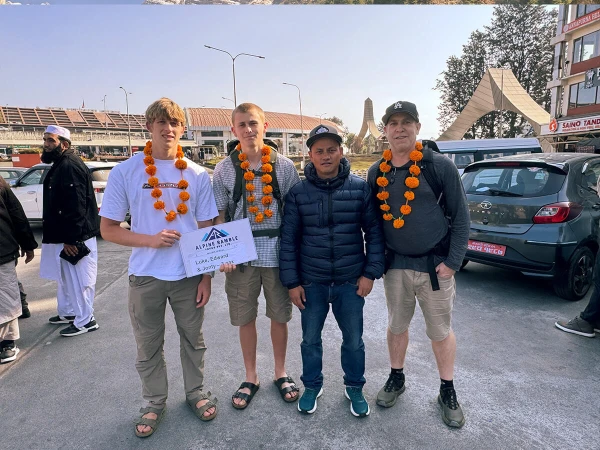
Upon your arrival, our personnel will be there to pick you up at the airport. The person will be carrying a board with your name so you can spot them easily. A private car will transfer you to your hotel in Thamel. For departure, our personnel will be there to drop you off at your airport on your designated flight schedule in our private car.

Trip FAQs

15-Days Manaslu Circuit Trek (8,163 m) : Nepal Travel planning FAQs

Yes, you do require a VISA to enter Nepal. You can get a visa on arrival at the Tribhuvan International Airport or apply beforehand online. You will require a valid passport for at least six months beyond your intended stay in Nepal. Indian citizens do not require visas, and Chinese citizens require visas but can get them for free. For more information regarding your country, you can visit the immigration website of Nepal.

Manaslu Restricted Area Permit (MRAP)

Manaslu Conservation Area Project (MCAP) Permit

Annapurna Conservation Area Project (ACAP) Permit (if your trek extends into the Annapurna region)

No, solo trekking or going independently on the trails of the Manaslu Circuit is not allowed. It is mandatory to hire a licensed trekking guide through a registered trekking company for this trek. The rule was implemented by the government for the safety of trekkers and the conservation of the protected area.

The difficulty level of the Manaslu Circuit Trek can be described as the range of moderately challenging to difficult. While the difficulty of this trek is a subjective matter, you are required to attain a good level of physical and mental fitness to comfortably complete this journey. Training exercises and mental preparation are extremely crucial, while prior trekking experience isn’t a requirement, but it certainly will be beneficial.

Having well-functioning gear and equipment is the most important thing during any outdoor activity, especially when trekking to the mountains. Making a well-coordinated packing list for the trek will save you the hassle of guessing if you have everything you need or, worse, forgetting an essential item during the trek. You will require items like sturdy hiking boots, warm layers (fleece, down jacket), waterproof and windproof outerwear, trekking poles, a comfortable backpack, a sleeping bag (rated for cold temperatures), a headlamp, sunscreen, sunglasses, a water bottle or hydration pack, and basic first-aid supplies.

Yes, travel insurance is required to do any trek in Nepal. The insurance should cover the medical and accidental emergencies along with emergency mountain rescue at at least 6000 meters altitude.

The starting point for the Manaslu Circuit Trek is either Soti Khola or Machha Khola, based on your itinerary. And you can get there by two options: a public bus or a private jeep from Kathmandu. Alpine Ramble makes transportation arrangements for your journey.

The accommodation throughout the Manaslu Circuit trekking trail comes in the form of a local teahouse. The facilities are basic, with rooms with twin-sharing beds and a common bathroom. The higher you ascend, the more basic the accommodation facilities get.

The meals served during the Manaslu Circuit Trek range from local Nepalese dishes to some limited ranges of Western options. The local food are usually dal bhat (rice, lentils, and vegetables), noodles, momo (dumplings), Tibetan bread, etc., while the western food consists of options like Pizza, Pasta, Spaghetti, pancakes, etc.

Yes, normal tap drinking water is readily available on the trek. However, bottled mineral water or hot water costs an extra charge, while the regular tap water is free. So, it is better to carry a portable water filter or water purifying tablets for safe drinking water.

The highest elevation or point to be reached on the Manaslu Circuit Trek is the reputable Larkya La Pass, which sits at an elevation of approximately 5,106 meters (16,752 feet) above sea level.

While you surely can carry prescribed medications to avoid altitude sickness, the best way to manage it would be ascending gradually and doing acclimatization. Trek high, sleep low is a classic way to effectively reduce the chances of getting altitude sickness. During the Manaslu Circuit Trek, you will spend an extra day at the same place as a part of the acclimatization process. And make sure to eat a proper balanced diet and hydrate during the trek.

For the most part, yes, there will be electricity to charge your devices. However, you must pay a certain sum of money to charge your devices. Also, be aware the electricity can be unreliable, especially at higher elevations. So, it is recommended you carry a power bank during your trek.

Yes, there is internet or phone connectivity on the trek but it is very limited and unreliable. The lower region of the trek is able to provide some wifi access or you can buy an internet data pack on your local sim card but as you ascend to higher elevations, both the wifi and phone connection will be limited.

The currency of Nepal is Nepalese Rupees (NPR). The amount of money you should bring is something subjective and mostly depends on your own spending habits. After you have paid for the trekking package, it will cover your road transportation, three meals a day, and accommodation. So, any amount you spend will be on your personal splurging. Thus, you can calculate the amount you want to spend per day and make the budget. 

All the locations only accept Nepalese currency, so make sure to exchange money before the trek. You can withdraw money from an ATM anywhere in Kathmandu Valley but are not available once you’re on the trekking trail.

Tipping the guides and porters who have worked day and night to accommodate you and made your trek successful is a customary act and is expected. It is recommended to tip at the very end of the trek and to tip them at least 20 percent of the trek package cost. Apart from tips, acknowledging their work via small gestures like thank yous and a handshake also goes a long way.

Yes, the Manaslu Circuit is generally considered to be safe, but one does need to be aware of potential risks such as altitude sickness, rough trails, the physical demand of trekking for at least a minimum of 6 hours a day, and unpredictable weather. The best way to remain safe during the trek is to have a licensed trekking guide with you and trust the guide’s judgment. 

While meat is something you can definitely get during the Manaslu Circuit Trek, it primarily might be yak meat. However, it is not recommended you indulge in them for various reasons. One of them being hygiene issues, which in turn can cause you to get sick. So it is better not to take any chances and instead eat primarily vegetarian diets, which are thoroughly cooked and delicious. It is not only safe but also delicious, which gives you all the energy required for hours of hiking every day.

The porter can carry anywhere from 25 to 30 kilograms of weight. There are regulations and ethical guidelines that should be adhered to, which is why efficient packing must be done. Porters are the backbone of trekking and mountaineering, so being respectful to them as a company and as a client is implied and expected.

Showers are available in the lower regions of the trekking trail and hot showers cost extra money. But just like any other facilities, the higher you ascend, the fewer chances there are of getting them. The teahouses at higher altitudes do not offer showers; however, they can offer you a bucket of hot water for a shower. So, you should consider showering only if you have to during the trek. It is normal to go without showering for a few days during the trek.

The best time to do the Manaslu Circuit Trek is spring (March-May) and autumn (September-November). These two seasons provide the best views with clear skies, pleasant weather, and moderate temperatures. 

The monsoon season (June-August) gets heavy rainfall, which makes traveling a bit of a risk due to landslides in many parts of Nepal. The winter season (December-February) can be a good time to trek due to clear weather and stunning views, but you must be prepared for the extreme cold and snow. Both monsoon and winter are trekkable but only with good preparation and the chances of delays and cancellations are always high.

The Manaslu Circuit Trek is not allowed without a guide, so you will automatically be assigned one by the company you choose. With Alpine Ramble, you are guaranteed to be assisted by the most experienced licensed guide in the industry.

Yes, you can absolutely add extra days as a part of the acclimatization process. In fact, it is highly recommended to do so because adding an extra day reduces your chances of getting altitude sickness and helps you complete your trek instead of cancellation or, even worse, emergency evacuation. If you wish to add an extra day, you should consult with your guide, who will take the required measures to assist you. There might be an additional cost associated with extra days.

Dil Gurung
Speak to an Expert+977 9851175531
Dil Gurung

Words from ART Clients

Video Reviews

Alpine Ramble Treks Client Review

Alpine Ramble Treks Client Review

Cherry - United States

You May Also Like

Manaslu Circuit Trek 12 Days

Manaslu Circuit Trek 12 Days

Price From
US$990US$1290
15 Days Tsum Valley Trek
Guaranteed Departures

15 Days Tsum Valley Trek

Price From
US$850US$1280
Manaslu Tsum Valley Trek 18 Days
Guaranteed Departures

Manaslu Tsum Valley Trek 18 Days

Price From
US$1090US$1500