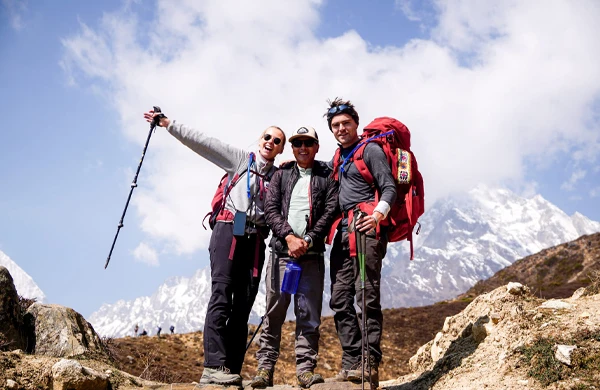
Unlike some of Nepal's other high-altitude passes, crossing the Larkya La Pass is not technically difficult, but it does demand sustained effort at altitude, favorable weather, and proper acclimatization. Located in the Manaslu region under the area of the Manaslu Conservation Area, which then connects to the Annapurna Conservation Area, this is an exceptional part of the entire journey.
The experience itself begins with passing through emote valleys and traditional mountain villages, which further takes you to the top of the Larkya La, from where you can see the panoramic Himalayan views of Himlung Himal, Cheo Himal, Kang Guru, Annapurna II, and other iconic peaks.
This guide covers exactly what to expect when crossing Larkya La Pass, from the early start and the approach to the summit to the descent into Bimtang on the other side, along with the practical details you'll need to prepare.
Quick Facts: Larkya La Pass at a Glance
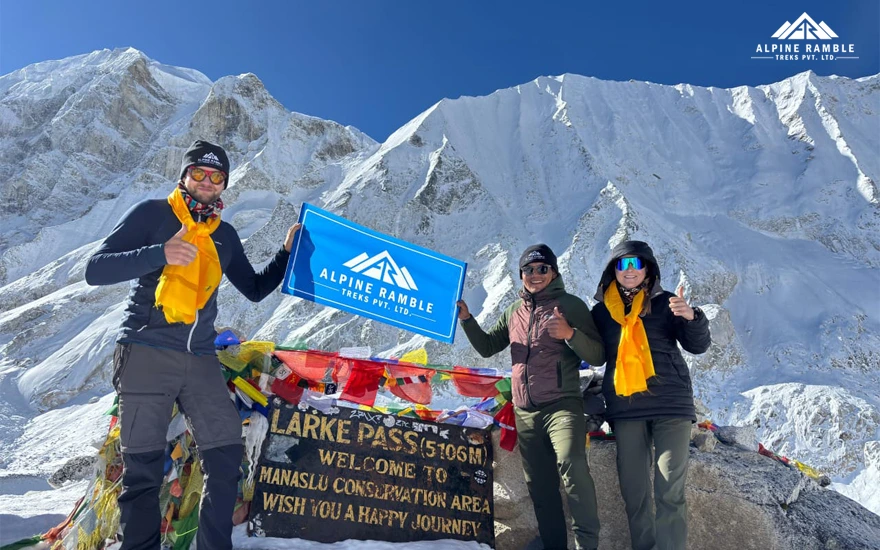
Elevation: 5,106 meters (16,752 ft)
Location: Between Dharamsala and Bimtang
Connects: Nubri Valley (Manaslu region) to Manang Valley (Annapurna region)
Trek days to reach the pass: Approximately 9–10 days from Soti Khola
Typical crossing time: 7–9 hours
Permit required: Restricted Area Permit (RAP), MCAP and ACAP permits, minimum 2 trekkers
Guide requirement: Mandatory, independent trekking is not permitted.
Best seasons: Spring (March to May) and autumn (September to November)
Nearby peaks visible: Himlung Himal, Cheo Himal, Kang Guru, Annapurna II
Larkya La Pass marks the highest point of the Manaslu Circuit Trek and the boundary between two distinct regions of Nepal. Crossing it is what most trekkers consider the physical and logistical high point of the entire route.
Where Larkya La Pass Fits on the Manaslu Circuit Itinerary
The Manaslu Circuit Trek follows a clear progression toward the pass, and understanding this sequence makes the crossing day easier to prepare for. From day 1, our main goal will be to make ourselves ready enough to cross the pass with as few problems as possible.
The trek typically begins in Soti Khola, following the Budhi Gandaki River through lower-elevation villages before climbing into the Nubri Valley. Some of the major villages for stops along the way include Namrung, Samagaon (the main acclimatization stop, with views of Manaslu itself), and Samdo, the last major village before the high altitude and the climb for the Larkya La Pass begin.
From Samdo, the trail continues to Dharamsala, also known as Larkya Phedi, which sits at the base of the pass. This is the final stop before the crossing and where most trekkers rest before an early departure the next morning. Whether it is the Manaslu Circuit Trek of 10 Days or the Manaslu Circuit Trek of 12 days, acclimatization stops before crossing the pass is crucial.
After crossing Larkya La Pass, the trail descends into Bimtang, a wide glacial valley on the Manang side, before continuing down toward the Annapurna region and the trek's final few days.
What the Crossing Day Actually Feels Like
The entire schedule:
- 4am Wake-Up
- Breakfast/packed lunch
- Ascent to the top
- Descent to Bimtang
Crossing day begins early, usually between 4:00 and 5:00 AM, to allow enough daylight for the long descent that follows the summit. Trekkers depart from Dharamsala while it is still dark, walking by headlamp for the first hour or more. It is better to reach the top before midday, as the wind begins to progress as the day passes.
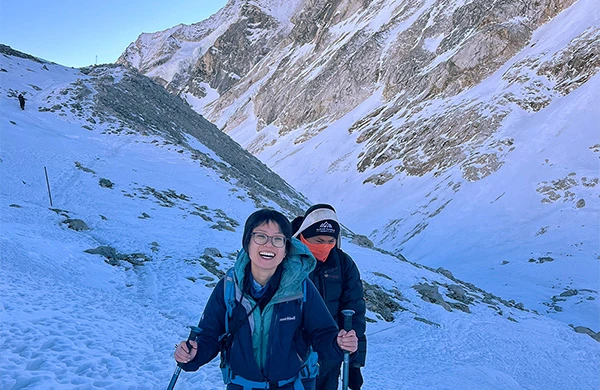
The ascent is gradual but sustained, gaining roughly 900 meters over several hours of steady climbing. The terrain shifts from a rocky trail to snow and ice as elevation increases, and pace slows considerably due to the thinning air. Most trekkers describe this stretch as more mentally demanding than technically difficult, requiring patience and consistent, deliberate steps rather than speed.
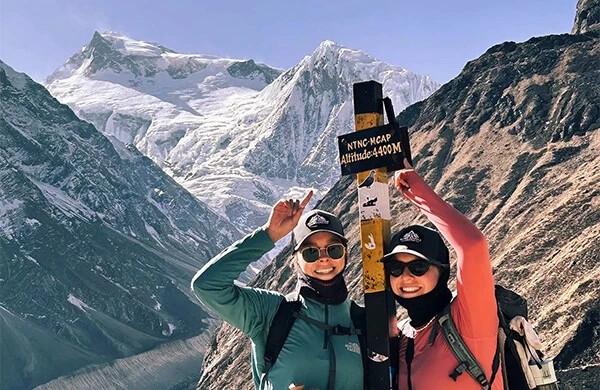
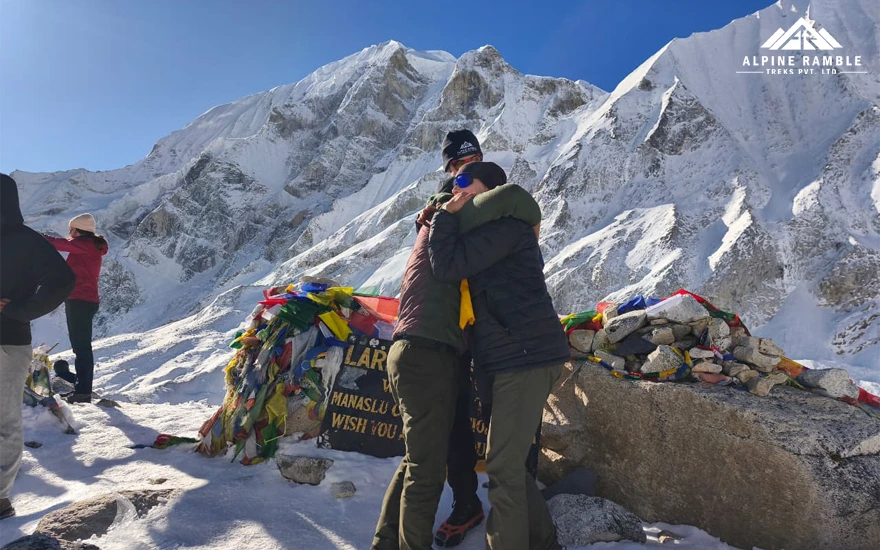
The summit is typically reached by mid-morning. Prayer flags mark the top of the pass, and on clear days, views extend to Himlung Himal, Cheo Himal, Kang Guru, and Annapurna II. Wind at the summit can be strong, and trekkers generally spend a limited amount of time here before beginning the descent.
The descent to Bimtang is longer than the ascent and drops through glacial terrain before reaching the valley floor. This section can be hard on the knees and joints, and trekking poles are recommended. Reaching Bimtang typically takes the remainder of the day, making crossing day one of the longest and most demanding single days on the entire route.
Is Larkya La Pass Difficult?
Larkya La Pass is widely considered the most physically demanding section of the Manaslu Circuit Trek, though the difficulty comes primarily from altitude, duration, and remoteness rather than technical climbing skill.
No mountaineering experience, ropes, or specialized climbing equipment are required. The trail itself is a walking route, not a technical ascent. That said, several factors combine to make crossing day significantly harder than a typical trekking day at lower elevation:
High altitude: At 5,106 meters, oxygen levels are roughly half of what they are at sea level, which slows pace and increases physical strain regardless of fitness
Long duration: The crossing typically takes 7 to 9 hours, making it one of the longest single days on the entire circuit.
Cold and wind exposure: Temperatures at the summit can drop well below freezing, and wind chill adds to the physical strain.
Snow and ice underfoot: The final stretch to the pass often involves packed snow or icy trail sections, particularly in early spring or late autumn
Limited rescue infrastructure: Unlike more heavily trafficked routes, teahouses and emergency support are sparse along this stretch, so weather delays or health issues carry more risk.
Steep, prolonged descent: The drop into Bimtang is longer than the ascent and can be hard on knees and joints after an already exhausting climb.
Altitude remains the single biggest factor in how difficult the pass feels. Proper acclimatization in the days leading up to the crossing, particularly the rest day in Samagaon, plays a major role in how manageable the day turns out to be.
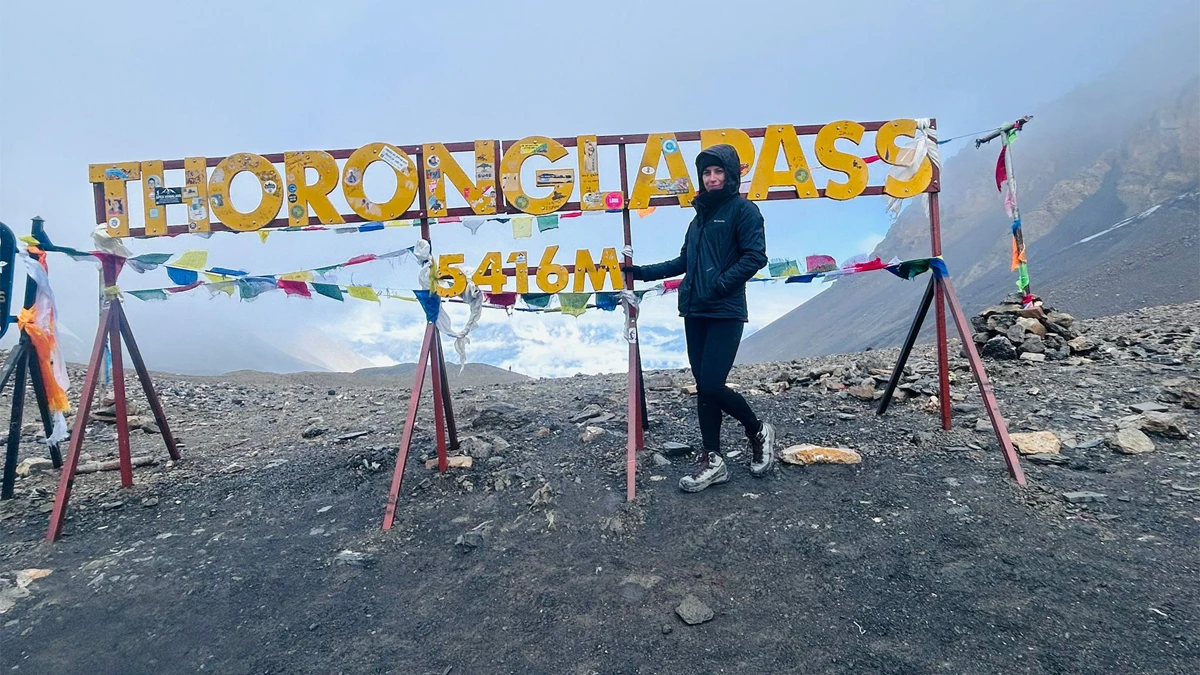
Compared to Thorong La Pass on the Annapurna Circuit, Larkya La Pass is generally considered more remote and less supported, with fewer teahouses and less trekker traffic along the route. Thorong La sits slightly lower in elevation but sees far higher foot traffic and more developed infrastructure. Overall, Larkya La Pass suits trekkers with prior high-altitude trekking experience and a solid level of fitness, rather than those attempting their first Himalayan trek.
Best Time to Cross the Larkya La Pass
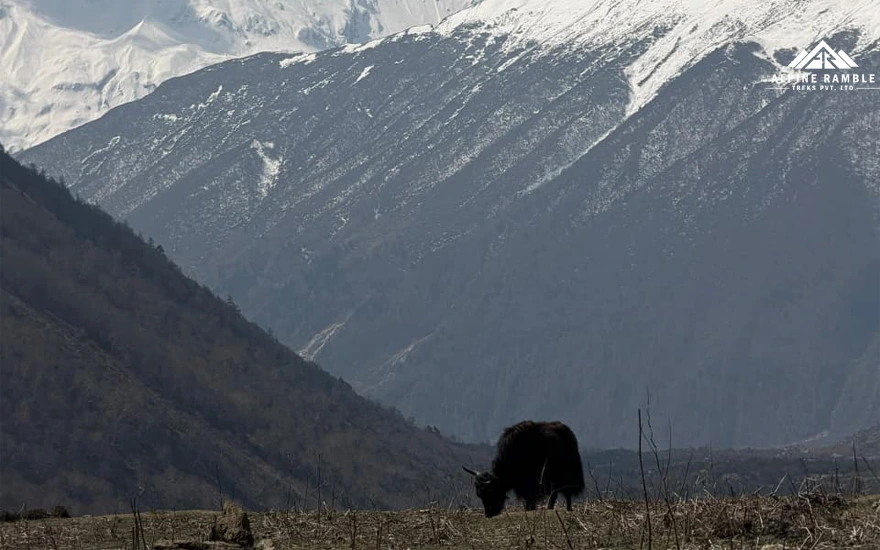
Timing matters more on Larkya La Pass than on many other Himalayan crossings, since weather conditions here can shift quickly and the route offers little shelter once the ascent begins.
Autumn (September to November) is generally considered the best season to cross. Skies are typically clear, visibility is strong, and temperatures, while cold at altitude, are more stable than at other times of year. This is also the most popular season for the Manaslu Circuit overall, which means better-prepared teahouses along the route.
Spring (March to May) is the second-best option. Temperatures are milder at lower elevations, and rhododendron blooms add scenery to the lower stretches of the trek. However, spring can bring more variable weather at altitude, including occasional afternoon cloud cover near the pass.
Winter (December to February) is generally avoided. Heavy snowfall can make the pass difficult or impossible to cross safely, and many teahouses in the higher villages close during this period due to low trekker numbers.
Monsoon season (June to August) is also avoided. Rain, leeches at lower elevations, and poor visibility at altitude make this the least favorable time to attempt the crossing, and landslide risk increases along the lower trail sections.
A few practical notes on timing:
- Weather at the pass can change within hours, even during the recommended seasons, so guides often adjust the departure time or delay a crossing by a day if conditions look unfavorable
- Early morning departures aren't just about daylight; they also take advantage of calmer weather before afternoon winds pick up
- Trekkers planning a trip during shoulder periods (early March or late November) should build a buffer day into their itinerary in case of a weather delay at Dharamsala
Permits and Guides for Larkya La Pass
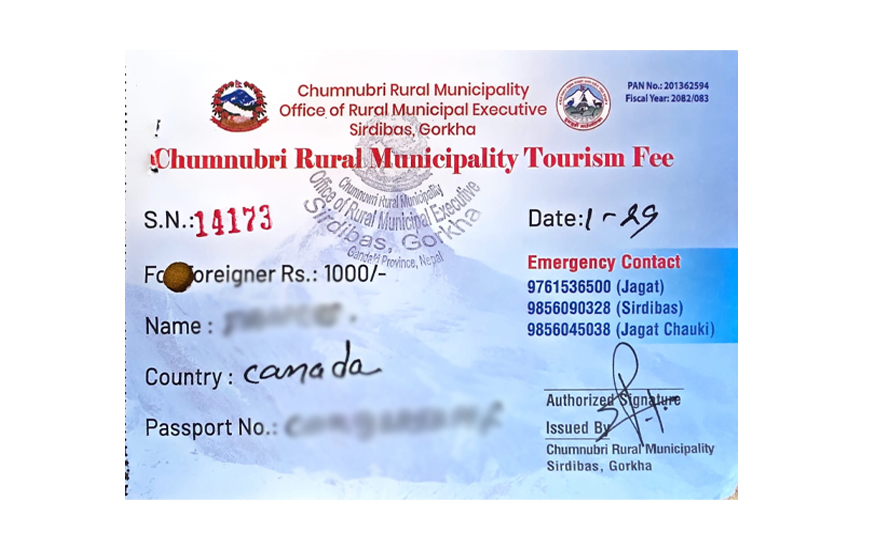
The Manaslu region, including Larkya La Pass, falls within a restricted area of Nepal, which means the permit and guide requirements differ from more commercialized routes like Annapurna or Everest.
Permits Required for Larkya La Pass
Restricted Area Permit (RAP): Required for the entire Manaslu Circuit. Costs vary by season, with higher rates during peak trekking months (September to November) and lower rates during the off-season.
Manaslu Conservation Area Permit (MCAP): A separate permit is required alongside the RAP, covering the conservation area the trek passes through.
Annapurna Conservation Area Permit (ACAP): Needed for the final stretch of the trek after crossing into the Manang side near Bimtang
Chumnubri Rural Municipality Permit: A permit issued from the local communities themselves
Other Requirements
Minimum group size: At least two trekkers are required to obtain the permit, so solo trekkers need to join a group or arrange a second permit holder
Mandatory licensed guide: Independent trekking is not permitted in this region. A licensed guide must accompany all trekkers for the duration of the trek, including the pass crossing.
Because permits, guide arrangements, and logistics must be organized in advance, most trekkers book through a registered trekking agency rather than arranging the trek independently. This is also why the Manaslu Circuit sees a fraction of the traffic of Annapurna or Everest, since the restricted-area system limits access.
Culture of the Manaslu Circuit Trek to Larkya La Pass
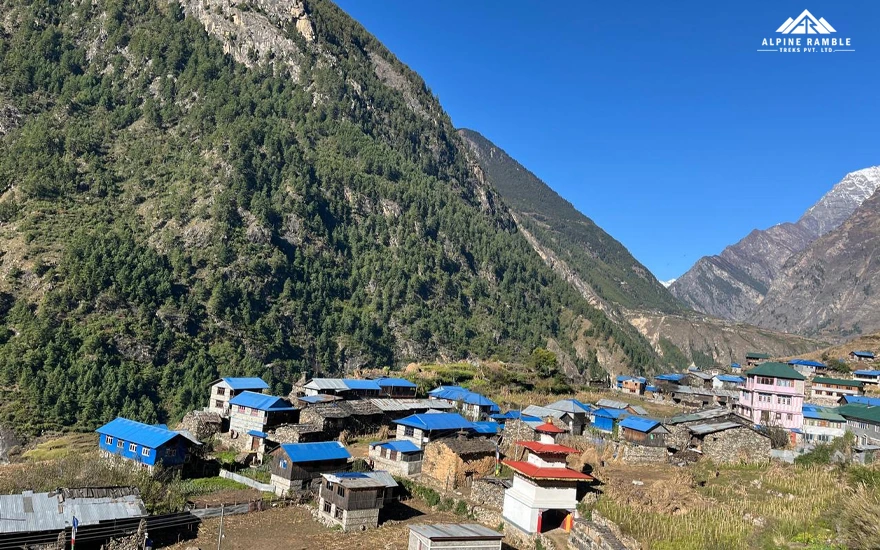
One of the aspects that sets the Manaslu Circuit apart from more commercialized routes is the cultural landscape trekkers pass through on the way to Larkya La Pass, particularly in the upper Nubri Valley.
The villages between Samagaon and Samdo, including Lho and Sama, reflect strong Tibetan Buddhist influence, a result of the region's historical isolation and its proximity to the Tibetan border. Prayer flags, mani walls, and chortens line the trail in this section, and several villages maintain active monasteries that trekkers can visit.
Samagaon, the main acclimatization stop before the pass, sits beneath Manaslu itself and is home to a community that has preserved much of its traditional way of life, including farming practices and religious customs largely unchanged for generations. The Pungyen Gompa, a monastery near Samagaon, is a common side trip during the rest day here.
This cultural layer is closely tied to the region's history as a restricted area. Manaslu was only opened to foreign trekkers in 1991, and the permit system that remains in place today has helped limit tourism-driven change compared to routes like Annapurna or Everest. For many trekkers, this cultural preservation is as significant a draw as the mountain scenery itself.
Altitude Sickness and Safety
Altitude sickness is one of the most common occurrences among trekkers while trekking in the Himalayas; it is not only exclusive to the Manaslu Circuit Trek while crossing the Larkya La Pass.
Acute Mountain Sickness can affect trekkers regardless of their fitness level. It is all about the body adjusting to the high altitude. Some common symptoms include:
- Headache
- Nausea or loss of appetite
- Dizziness or fatigue beyond normal exertion
- Difficulty sleeping
- Shortness of breath at rest
Most itineraries build in acclimatization days, most notably the rest day in Samagaon, to help the body adjust before pushing higher toward Samdo and Dharamsala. Ascending gradually and avoiding rapid elevation gain in the days before the pass significantly reduces the risk of serious AMS.
A few safety practices trekkers should follow in the lead-up to crossing day:
- Stay well hydrated, since dehydration can worsen AMS symptoms
- Avoid alcohol in the days before the crossing
- Report any symptoms to the guide immediately rather than pushing through them
- Descend if symptoms worsen, since altitude is the only effective treatment for serious AMS
Because Larkya La Pass sits in a remote section of the trek with limited access to emergency services, a licensed guide's judgment plays a critical role in deciding whether conditions and a trekker's health are safe enough to proceed on crossing day. This is one of the key reasons independent trekking is not permitted in this region.
What to Pack for the Larkya La Pass

Crossing day involves early-morning cold, strong wind, and variable underfoot conditions, so having the right gear matters more here than on most other days of the trek.
Insulated jacket: A down or synthetic jacket rated for below-freezing temperatures
Base and mid layers: Moisture-wicking thermals paired with a fleece or insulating mid-layer
Waterproof and windproof outer shell: Both jacket and pants, given exposure to wind at the summit
Insulated gloves: With a thin liner glove underneath for dexterity during breaks
Trekking poles: Particularly useful for the long, steep descent into Bimtang
Gaiters: Recommended for snow and loose scree sections near the top
Sunglasses or snow goggles: UV exposure and glare off snow are significant at this altitude
Headlamp with spare batteries: Needed for the pre-dawn departure from Dharamsala
Footwear should be broken-in, waterproof trekking boots with good ankle support, ideally already tested on earlier trek days rather than worn for the first time on crossing day.
What Happens if the Pass is Closed?
The pass will not be closed without any unjustified reason. One of the main reasons why the Larkrya La Pass gets closed is due to the bad weather, low visibility or heavy snow blocking the path. There are a few options on what happens if the pass is closed:
Delay at Dharamsala: If the weather is not good, you must be ready to spend extra days at Dharamsala until it becomes safe to trek again
Buffer days in the itinerary: Since there are chances of delays, having a day or two extra as a buffer will keep your schedule on time.
Local porter and guide knowledge: Always take advice and information from the local guides and porters. As guides based on this region are more well informed and have real-time information, relying on their judgement is the best.
Turning back: On very rare occasions, turning back will be the only viable and safe option. It will be easier and safer to turn back than to continue crossing the pass, and even more so if the situation is a matter of life and death.
No alternative route: Once you’re on this path, there are no alternative routes you can take to cross Larkya La Pass. Completing the Manaslu Circuit as a through-route depends on the pass being passable.
Final Thoughts
Larkya La Pass is more than a single milestone on a map. It is the physical and logistical high point of the Manaslu Circuit Trek and the day that most trekkers remember long after the trip ends. Reaching it takes preparation, patience, and proper acclimatization, but the reward, standing at 5,106 meters with Himlung Himal, Cheo Himal, and Kang Guru on the horizon, is what draws trekkers back to this route year after year.
Compared to more heavily trafficked crossings in Nepal, Larkya La Pass remains remote, less commercialized, and closely tied to the culture of the Nubri Valley communities that surround it. That combination of physical challenge and cultural depth is what makes the Manaslu Circuit Trek stand apart from other Himalayan routes.
For trekkers planning this journey, understanding what crossing day actually involves, from the early departure to the descent into Bimtang, is the best way to prepare both physically and mentally.
Frequently Asked Questions (FAQs)
Is Larkya La Pass dangerous?
Larkya La Pass is not technically dangerous in the mountaineering sense, as no climbing equipment or specialized skills are required. The main risks come from altitude, cold, and weather, particularly the potential for altitude sickness and the pass's remote location with limited emergency access.
Do you need crampons for Larkya La Pass?
Crampons are not typically required for a standard crossing during the recommended seasons. However, in years with heavier snowfall or if crossing outside peak season, guides may recommend microspikes for added traction on icy sections near the summit.
Can beginners cross Larkya La Pass?
Larkya La Pass is better suited to trekkers with some prior high-altitude trekking experience. While no technical skill is required, the combination of altitude, distance, and cold makes it a demanding day even for physically fit beginners, so realistic expectations and proper acclimatization are essential.
How long does it take to cross Larkya La Pass?
The crossing typically takes between 7 and 9 hours from Dharamsala to Bimtang, depending on pace, weather, and trail conditions. This makes it one of the longest single days on the entire Manaslu Circuit Trek.
How much does the Larkya La Pass permit cost?
Permit costs vary by season, with the Restricted Area Permit priced higher during peak months (September to November) and lower during the off-season. A minimum group size of two trekkers is required to obtain the permit.