Today, Everest appears in viral TikTok adventures, Instagram reels, major documentaries, academic papers, and mountaineering legends. But long before social media and summits, Everest existed as a rising ocean floor, a sacred goddess, and a geographic mystery.
Whether you dream of trekking to Everest Base Camp, summiting the peak itself, or simply understanding its past, learning Everest’s history reveals something profound:
Everest is not just the highest point on Earth. It is the highest point of human imagination.
Introduction to Mount Everest
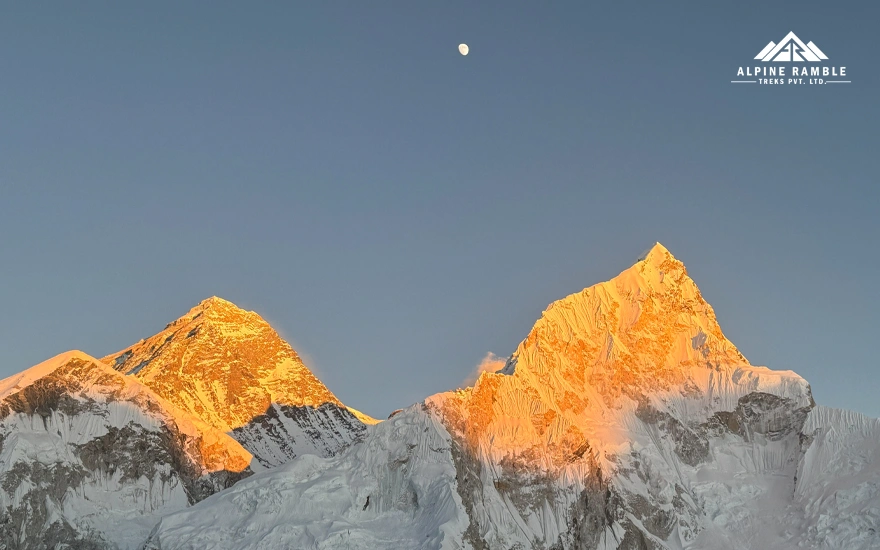
Standing at an elevation of 8,848.86 meters (29,031.7 feet), Mount Everest is one out of thousands of mountains in the Mahalangur Himal in Nepal’s Solukhumbu region and stretches across the border into Tibet. The Nepalese call it Sagarmatha, a name officially adopted in the 1960s.
Across the border, Tibetans call it Chomolungma, a name far older than any modern map, one that appears in ancient scriptures, prayers, and the oral traditions of Himalayan communities.
Geologically, Everest, like all the peaks of the Himalayas, has a unique origin story resulting from the slow but unstoppable collision of the Indian and Eurasian tectonic plates. This process began more than 50 million years ago and is still reshaping the Himalayas today. Because of this collision:
- Everest rises by about 3–5 millimeters each year.
- The entire Himalayan range continues to drift northward.
- And ancient ocean fossils remain preserved near the summit, proof that this giant once lay at the bottom of the Tethys Sea.
These geological forces, combined with the mountain’s cultural significance and its legendary role in exploration, make the history of Mount Everest far deeper than the famous climbs we hear about today.
Before diving into its hidden stories, here’s something worth remembering: Everest’s history began long before humans ever arrived, and it’s still unfolding, year after year.
12 Hidden Facts About Mount Everest & Sagarmatha
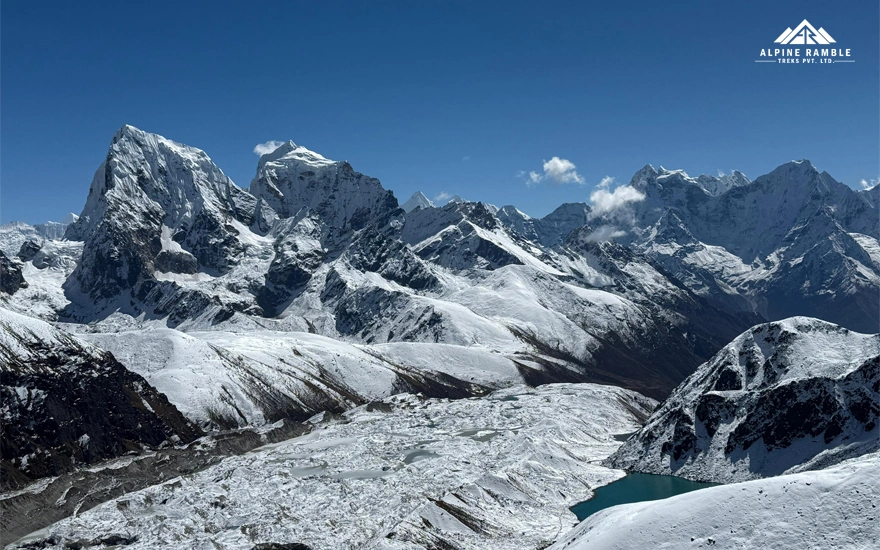
1. The Naming History of Mount Everest
How the world’s tallest mountain came to be known as Mount Everest is very fascinating. The local Sherpas called it Chomolungma, “Goddess Mother of Earth,” and Sagarmatha, meaning “Forehead of the Sky” in Nepali.
However, the name Chomolungma appeared in ancient Tibetan manuscripts hundreds of years before British cartographers arrived. So it wasn’t until 1865, Andrew Waugh, the British Surveyor General of India, proposed naming Peak XV after his predecessor, Sir George Everest.
Ironically, George Everest himself had opposed naming it after him. And officially, by the 1920s, the mountain was called Mount Everest on British maps, but this name was mostly known to Europeans. It was a decision that would change the world of Mountaineering forever.
Today this mountain carries three names, each reflecting a different culture, era, and worldview:
| Name |
Meaning |
Origin |
| Chomolungma |
Goddess Mother of the World |
Tibetan/Sherpa |
| Sagarmatha |
Forehead of the Sky |
Nepali |
| Everest |
Named after Sir George Everest |
British Survey of India |
2. The First Everest Ascent Attempt in History
There’s a misconception that George Mallory was the first person to attempt to summit Mount Everest, but it is factually incorrect to say so. While he did participate in the expedition itself, he was only a member of the team. Initially, the first summit attempt at Mount Everest was led by Charles Howard-Bury from the North Side of Everest, as Nepal was not open to foreigners in 1921.
Most people don't know that the 1921 expedition’s main objective was
- To find the route,
- To identify the mountain, and locate Everest precisely
- To see if climbing was possible
- To Study glaciers and understand the weather patterns
However, in the following years, George Mallory emerged as one of the early pioneers by attempting to summit Everest and ultimately became the face of the first Everest expedition and summit attempt.
He and his partner Andrew Irvine would attempt two more times before ultimately vanishing while summiting in 1924.
And it was not until 1953 that Tenzing Norgay Sherpa and Sir Edmund Hillary became the first people to successfully reach the "top of the world."
3. Everest Was Not Always Considered the World’s Highest Mountain
Before precise measurements existed, Everest wasn’t the obvious tallest peak. In fact, several mountains briefly held the title of “world’s highest.” And not because they were taller, but because early surveying technology couldn’t accurately determine distance, elevation, atmospheric refraction, and curvature of the Earth.
How confusion happened:
Early 1800s:
Dhaulagiri (8,167 m) was widely believed to be the tallest mountain in the world. At the time, it was one of the most accurately surveyed peaks.
Later in the 19th century, Kangchenjunga took over the title with an estimated height of 8,582 meters, becoming the new “highest mountain” according to available calculations.
The real tallest peak was overlooked: Peak XV (Everest) remained unknown and unmeasured for years because of its extreme distance, limited sightlines, and geopolitical restrictions that prevented surveyors from getting close.
By 1856, the Great Trigonometrical Survey of India had confirmed Peak XV as the tallest at 8,848 meters, shutting down all other possible options for the title.
This moment reshaped global geography, Everest’s fame began not with climbing but with mathematics.
4. The First Measurement of Mount Everest
The journey of mapping Everest began when the British colonial administrators wanted to map the entire subcontinent systematically. The surveyors began their journey north from the coast of India, taking measurements of rivers, valleys, and mountains.
Although it had not yet been named Everest, by 1852 they had determined that Peak XV was likely the highest peak on Earth. The distance was determined to be 29,002 feet from monitoring stations located 240 km (150 miles) away. Therefore, the first Everest survey was done without ever seeing the mountains directly.
Key figure: Radhanath Sikdar
Indian mathematician Radhanath Sikdar was the one who made the breakthrough calculation. Based on thousands of data points and trigonometric corrections, he concluded Peak XV was the highest mountain on Earth.
Fun fact: The first recorded height of 29,002 feet was so precise that modern re-measurements differ by less than one meter.
5. Mount Everest Actually Grows Every Year
Believe it or not, Mount Everest actually grows every year. Yes, the mountain made up of rocks and snow grows, and it's a scientific fact. The ongoing collision between the Indian Plate and the Eurasian Plate pushes the Himalayas upward a few millimeters every year.
The reasons for this growth are
- The collision of tectonic plates
- The Indian Plate moves north at ~67 mm/year
- Some energy dissipates in earthquakes
The remainder causes uplift of the Himalayas
This uplift explains why the summit contains marine fossils, specifically in the Yellow Band limestone, which dates back to the prehistoric Tethys Ocean. The Himalayas are among the world’s youngest mountain ranges, geologically speaking. They will continue rising for millions of years, until and unless tectonic motion eventually slows, reverses, or reaches equilibrium.
6. The Oldest Recorded Reference Came from Tibetan Texts
The oldest recorded reference to the mountain was not from Nepal or Britain but from Tibetan sources. Long before surveyors, explorers, or climbers ever set eyes on it, Mount Everest was already known and revered in Tibetan Sherpa culture.
Before the British, before the Survey of India, before Nepal’s “Sagarmatha,” Everest was a goddess in Tibetan spiritual cosmology. Ancient Tibetan scriptures referenced “Jomo Langma,” later standardized to Chomolungma.
Why Tibetan references came first:
- Tibetan Buddhism reveres mountains as manifestations of divine beings
- Trade routes between Tibet and Khumbu predate modern borders
- Sherpa ancestors migrated from Eastern Tibet ~500 years ago
- Tibet was more open to early explorers than Nepal
For Sherpas and Tibetans, the mountain was never an object of conquest but a powerful, sacred presence.
The Western concept of “climbing” Everest emerged only in the 20th century, centuries after Tibetans recognized it spiritually.
7. Nepal Didn’t Open Everest to Foreigners Until 1950
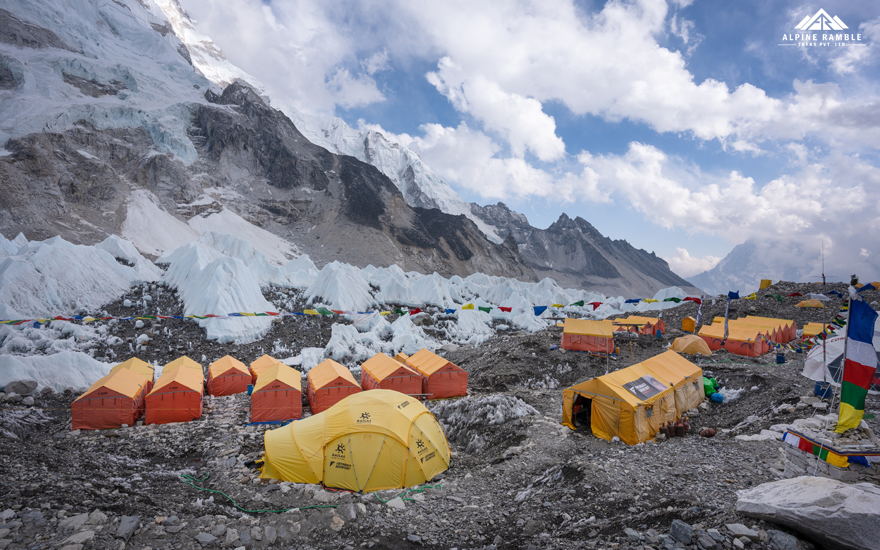
For centuries, Nepal followed strict isolationist policies and allowed no foreigners into the country. Even during the British Colonial Empire, Nepal was not open to foreigners. This meant all early expeditions approached Everest through Tibet, climbing from the North Ridge and North Col.
Why Nepal opened in 1950:
- Political modernization
- International interest after WWII
- Establishing diplomatic relations
Once open, Nepal immediately became the center of global mountaineering. The southern route through the Khumbu Icefall, Western Cwm, and South Col became the world’s most famous path to the summit.
Today:
- Mountaineering, especially Everest expeditions, has become a multi-million dollar industry.
- Over half of all 10,055 summits occurring in the past ten years
- More than 70% of climbers use the Nepal side
- The Everest Base Camp Trek attracts tens of thousands yearly
- Nepal’s opening marked the beginning of Everest’s modern era.
8. Tenzing Norgay Was Nominated Three Times Before Making History
Before he made history alongside Sir Edmund Hillary in 1953, Tenzing Norgay had already been part of Everest’s story for years. So the success of the first-ever summit wasn’t luck or coincidence; it was the result of years of experience, discipline, and unmatched knowledge of Everest’s terrain.
His Everest journey before 1953:
| Year/Expedition |
Tenzing Norgay’s Role & Significance |
| 1935 British reconnaissance expedition |
One of Tenzing’s earliest Himalayan expeditions; recognized for his strength and potential as a high-altitude climber. |
| 1936 British expedition (led by Hugh Ruttledge) |
Worked as a high-altitude porter; gained deeper experience on the North Side of Everest |
| 1938 British expedition (led by Eric Shipton) |
Part of Shipton’s lightweight reconnaissance team; earned a reputation for exceptional climbing ability |
| 1952 Swiss expedition |
Reached the South Col and nearly the summit with Raymond Lambert; this was Tenzing’s closest approach before 1953 and proved the South Col route was viable |
These experiences made him an expert Everest climber. His expertise in navigating the Khumbu Icefall and surviving at high altitudes was undisputed by the 1953 British expedition.
9. Sherpas Didn’t Originally Live in Solukhumbu
The Sherpas, often called the greatest mountaineers in the world, were not originally from the Everest region. Approximately five centuries ago, they migrated from Eastern Tibet, crossing high Himalayan passes and settling in the Khumbu Valley.
Over time, they adapted to the harsh high-altitude environment and became renowned for their endurance, strength, and mountaineering skills. Their name “Sherpa” comes from the Tibetan words Shar (East) and Pa (People), meaning “People from the East.”
Why Sherpas became legendary:
- Naturally strong adaptation to high altitudes
- Deep cultural respect for mountains
- Buddhist traditions centered around harmony with nature
- Intimate generational knowledge of Himalayan terrain
- Extraordinary lung capacity and low-oxygen efficiency
Sherpa climbers deliver extraordinary contributions to Himalayan climbing:
- Kami Rita Sherpa: Holds the record for most ascents to the summit of Mount Everest (31 summits as of 27 May 2025)
- Lhakpa Sherpa: Most Everest summits by a woman
- Nima Rinji Sherpa: Youngest person to climb all 14 of the world's 8,000-meter peaks at 18 years of age.
- Sherpas didn’t just become part of Everest’s history; they are Everest’s history.
10. Sagarmatha National Park Became a UNESCO Site Early
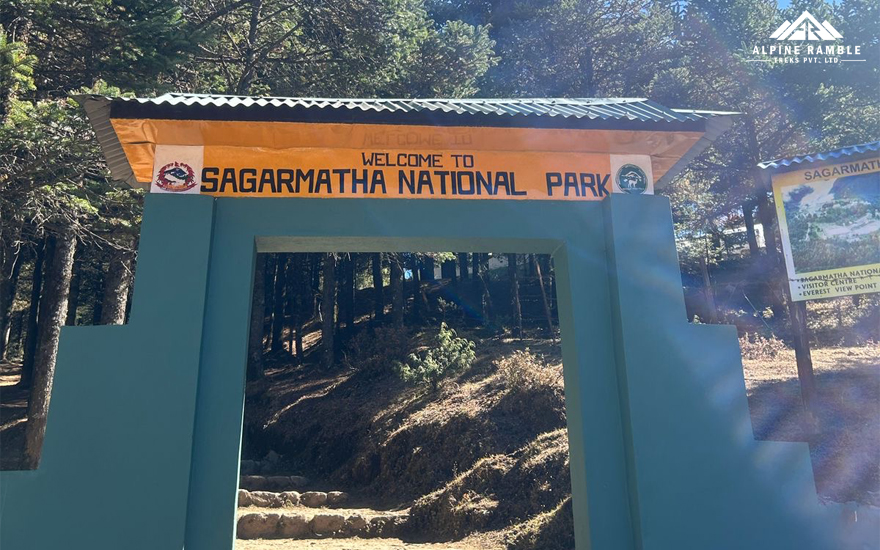
Sagarmatha National Park, established in 1976, was formally declared a UNESCO World Heritage Site in 1979. While the successful summit of Mount Everest had already occurred, the mainstream of Mount Everest climbing did not emerge until the 1990s.
What the park protects:
- The Everest massif
- Lhotse, Nuptse, Ama Dablam, Thamserku
- World-class glacial systems
- Sherpa villages, monasteries, and cultural sites
- Endangered species like the snow leopard and red panda
UNESCO cited the region’s “exceptional natural beauty” and “unique cultural traditions” as defining factors for the early recognition.
Today, Sagarmatha National Park is one of the most iconic protected regions in the world.
11. Most Climbers Never Stand on the “True Summit”
Did you know this Everest fact? When climbers proudly claim to have “summited Mount Everest,” most people imagine them standing on the absolute highest point on Earth, but in reality, very few actually set foot on the true summit.
The true summit, a tiny ridge of snow and rock, is only accessed by those ready to take on:
- Extreme wind exposure
- Knife-edge ridge lines
- Delicate snow cornices
- Crowding delays during peak season
The “true summit” of Everest is a small mound of snow and rock that rises just a few feet above what’s known as the South Summit. The South Summit sits at around 8,749 meters (28,704 feet), while the true Mount Everest summit, the precise highest point, reaches 8,848.86 meters (29,031.7 feet).
Today’s climbers typically continue to the true summit, but bad weather or human traffic still forces some to turn around.
12. Everest’s Summit Contains Marine Fossils
As unbelievable as it may appear, scientists have discovered fossilized marine creatures. Perhaps the most astonishing fact of all: the summit of Mount Everest was once the seafloor of the Tethys Ocean.
Inside the Yellow Band limestone, scientists found:
- Trilobite fossils
- Crinoid stems
- Ancient marine sediment layers
This proves that the Himalayas formed when continental plates pushed ocean-floor rock upward.
Why this matters:
- Everest reveals Earth’s ancient climate
- The rocks at the highest point on Earth were once underwater
- It confirms the theory of continental drift
- The Himalayas are geologically young
It's amazing that what was deep underwater is now the top of the world. So, when climbers stand on top of Everest, they’re literally standing on what was once the bottom of an ancient ocean!
The Historical Timeline of Mount Everest Expedition
The Golden Age of Everest Expeditions (1921–1952)
The years between 1921 and 1953 are known as Everest’s Golden Era, a period of reconnaissance, triumph, tragedy, and discovery.
1921 Reconnaissance Expedition
This was the first British expedition to reach the summit of Everest.
Key achievements include:
- Mapped the North Col route.
- Produced first photographs
- Identified feasible paths toward the summit
1922 Expedition
This expedition made history as
- The first climb above 8,000 meters
- The first recorded deaths on Everest (avalanche)
1924 Mallory & Irvine Mystery
- Disappearance of Mallory and Irvine
- Irvine and Mallory were last seen on June 8, 1924
The 1952 Swiss Expeditions
The Swiss reached within 250m of the summit and pioneered the South Col route, paving the way for the British success in 1953.
- Tenzing Norgay played a critical role here.
The Historic 1953 Ascent
On 29 May 1953, the world changed. Sir Edmund Hillary of New Zealand and Tenzing Norgay Sherpa of Nepal became the first known people to reach the summit of Mount Everest.
The team:
- Sir Edmund Hillary of New Zealand
- Tenzing Norgay Sherpa of Nepal
Key challenges they overcame:
- The treacherous Khumbu Icefall
- Crossing the Western Cwm
- Surviving the “Death Zone”
- Overcoming the famous Hillary Step
Their success was announced on June 2, 1953, the day of Queen Elizabeth II’s coronation, making it a global sensation. For Nepal, Tenzing’s achievement was a moment of national pride and global recognition.
Post-1953 Evolution of Everest Expeditions
The decades after 1953 saw rapid evolution:
1960s–1980s
- China opened the North Ridge
- New technical routes explored
- Japanese and Italian climbers established pioneering records
1990s
- Commercial expeditions began
- The 1996 disaster (documented in Into Thin Air) defined the risks
2000s–Present
- Climate change impacts
- Traffic jams on summit ridge
- Drone mapping
- High-tech gear and weather forecasting
Everest changed from a mysterious peak to a global mountaineering industry.
All Climbing Routes to the Summit
| Route |
Location |
Difficulty |
What Makes It Stand Out |
Best For |
| South Col Route |
Nepal |
Moderate to Hard |
Famous Khumbu Icefall and the classic 1953 path |
Guided groups and most climbers |
| North Ridge Route |
Tibet |
Hard |
Long, exposed ridges and colder conditions |
Climbers wanting an alternative to the south side |
| West Ridge Route |
Nepal |
Very Hard |
Steep, sharp ridgelines and technical climbing |
Experienced mountaineers only |
| Southwest Face |
Nepal |
Extremely Hard |
A huge wall of rock, snow, and ice |
High-level technical expeditions |
| Kangshung Face (East Face) |
Tibet |
Extreme |
Remote, unstable, and very rarely climbed |
Elite teams seeking a serious challenge |
| North Face Great Couloir and other variants |
Tibet |
Extreme |
Highly technical alpine terrain |
Expert climbers attempting unique lines |
Technological Evolution in Everest Climbing
Climbing Everest in the 1950s versus today is the difference between raw human endurance and human endurance assisted by advanced technology. Over 70 years, gear, logistics, and safety systems have transformed the mountain from an almost impossible challenge into one that hundreds attempt every year.
The technologies that changed Everest:
Oxygen Systems
Early oxygen bottles were heavy steel cylinders that exhausted quickly. Modern systems use lightweight aluminum, optimized regulators, and precise flow control.
Fixed Ropes & Ladders
Each season, the Icefall Doctors install ladders, ropes, and anchors to stabilize the Khumbu Icefall, a life-saving system unimaginable in the early 20th century.
Weather Prediction
Before the 1990s, climbers relied on visual cues. Today, satellite data, jet-stream forecasts, and real-time wind models predict safe summit windows.
Communication
From handwritten notes to radios to GPS trackers and satellite phones, communication transformed rescue capability and expedition management.
Clothing & Gear
Down suits, synthetic insulation, Kevlar gloves, crampons, ultralight tents, and aerodynamic thermal layers replaced wool.
Technology hasn’t removed Everest’s danger, but it has changed what’s possible.
Sherpa History & Contribution
If Everest is the body of Himalayan mountaineering, the Sherpas are the heart and soul. Nearly every modern ascent relies on their strength, knowledge, and spiritual connection to the mountain.
Why Sherpas excel at high altitude:
- Larger lung capacity
- Greater hemoglobin efficiency
- Genetic adaptations to thin air
- Cultural lifestyle at 3,000–4,000 meters
- Centuries of living in mountainous terrain
Sherpa cultural worldview
Mountains are sacred. They are protectors, gods, and living beings. Before expeditions, climbers participate in the puja ceremony at Tengboche Monastery, seeking blessings from the mountain deities.
Here is the list of some legendary Sherpa climbers and their notable achievements:
| Tenzing Norgay |
First confirmed Everest summit in 1953 |
| Kami Rita Sherpa |
31 Everest summits, the all-time record |
| Apa Sherpa |
21 Everest summits, former record holder |
| Lhakpa Sherpa |
Most Everest summits by a woman |
| Mingma David Sherpa |
Member of the historic K2 winter ascent team |
| Ang Rita Sherpa |
Only person to summit Everest 10 times without bottled oxygen |
| Mingma Sherpa (Seven Summit Treks) |
First South Asian to climb all 14 eight-thousanders |
| Phurba Tashi Sherpa |
21 Everest summits and over 30 climbs of peaks above 8,000 m |
| Lakpa Gelu Sherpa |
Fastest Everest ascent (10 hours 56 minutes), a celebrated speed record |
| Babu Chiri Sherpa |
21 hours spent on Everest summit without oxygen, multiple records |
Sherpas risk their lives each season fixing ropes, carrying loads, breaking trail, setting camps, and guiding climbers through the Death Zone.
They are the unsung heroes of Everest.
Milestones & “Firsts” on Everest
Everest’s long history is filled with extraordinary achievements. Each milestone represents the evolution of human ambition, technology, and resilience.
| Year |
Milestone / First |
Details |
| 1921 |
First Reconnaissance |
A British team maps Everest’s north side. |
| 1922 |
First Summit Attempt |
Climbers reach above 8,000 m for the first time. |
| 1924 |
Mallory & Irvine Disappearance |
Mystery remains as to whether they reached the summit. |
| 1953 |
First Successful Ascent |
Edmund Hillary & Tenzing Norgay reach the summit. |
| 1960 |
First Ascent from North Side |
Chinese team claims summit via North Ridge. |
| 1963 |
First American Ascent |
Jim Whittaker; West Ridge, by Hornbein & Unsoeld. |
| 1975 |
First Woman to Summit |
Junko Tabei (Japan). |
| 1978 |
First Ascent Without Oxygen |
Reinhold Messner & Peter Habeler |
| 1980 |
First Winter Ascent |
Krzysztof Wielicki (Poland). |
| 1980 |
First Solo Ascent |
Reinhold Messner via North Face |
| 1993 |
First Nepali Woman to Summit |
Pasang Lhamu Sherpa. |
| 2000 |
First Full Ski Descent |
Davó Karnicar from summit to base. |
| 2001 |
First Blind Climber |
Erik Weihenmayer |
| 2010 |
Oldest Summiter |
Yuichiro Miura (age 80). |
| 2023 |
First Above-Knee Double Amputee |
Hari Budha Magar. |
These “firsts” form a tapestry of Everest’s global cultural significance.
Tragedies on Everest
Everest’s beauty comes with serious risks, and over the years, the mountain has claimed many lives. Many tragedies have occurred on Everest throughout mountaineering history, resulting in numerous fatalities during summit attempts.
| Year |
Event |
Details |
Fatalities |
| 1922 |
Avalanche |
The first recorded Everest climbing deaths |
7 |
| 1970 |
Japanese Expedition |
Tragedies on the Southwest Face exposed its extreme difficulty. |
7 |
| 1996 |
May Disaster |
Sudden storm hit climbers near the summit; highly publicized |
8 |
| 2014 |
Khumbu Icefall Avalanche |
Avalanche on the South Col route, mostly Nepali guides |
16 |
| 2015 |
Nepal Earthquake & Avalanche |
A massive earthquake triggered avalanches across the Everest region. |
22+ |
| 2019 |
Summit Crowding |
Overcrowding and long delays in the death zone |
11+ |
| Various (Early Expeditions) |
British & Solo Climbers |
Many climbers have been lost while attempting extreme or uncharted routes. |
Numerous |
Why Everest is so deadly:
- The Death Zone (above 8,000 m) causes cell death
- Frostbite, AMS, HAPE, HACE
- Jet-stream winds
- Avalanches and serac collapses
- Crowding delays lead to oxygen depletion
Despite safety improvements, Everest will never be predictable.
Everest Tourism & Commercial Climbing
- Growing global interest: Travelers from around the world became more curious about high-altitude adventures.
- Success of guided expeditions: Reliable guiding companies made the climb feel more achievable.
- Improved routes and infrastructure: Better trails, camps, and fixed lines increased accessibility.
- Media attention: Films, news stories, and social media helped Everest gain worldwide visibility.
How the system works:
- Climbing permits: Nepal issues permits at around $11,000 per climber.
- Guiding companies: Climbers join organized expeditions that handle logistics and safety.
- Sherpa support: Sherpas carry loads, set ropes, and establish the higher camps.
- Base Camp life: During the season, Base Camp grows into a temporary mountain community.
Costs for Everest Expedition
- Budget expeditions: $30,000–$40,000
- Premium expeditions: $60,000–$120,000
- VIP options: $150,000+
Challenges:
- Summit traffic: Crowds can form during short weather windows.
- Ethical concerns: Ongoing discussions around fairness and responsibility.
- Environmental pressure: Increased tourism impacts the fragile ecosystem.
- Sherpa safety: High-risk work raises concerns for those supporting the climbs.
Despite these challenges, the trek to Everest Base Camp remains one of the most popular and meaningful journeys for adventure travelers worldwide.
Environmental Challenges
Everest faces serious environmental pressures:
The Issues:
- Melting glaciers due to climate change
- Trash left behind by climbers
- Human waste management
- Microplastic contamination
- Changing icefall patterns
In recent years, Nepal launched cleanup expeditions, removing tons of garbage, old oxygen cylinders, tents, and bodies.
Climate research shows the Khumbu Glacier may shrink dramatically by the end of the century if warming continues.
The mountain’s environmental health is directly tied to the future of Himalayan water systems and regional climate.
The Science of High Altitude on Everest
Climbing Everest means entering an environment the human body was never designed to survive in.
The Altitude Zones:
- 3,000–5,000 m: Acclimatization zone
- 5,000–7,000 m: High altitude
- 7,000–8,000 m: Extreme altitude
- 8,000 m+ (Death Zone): Cellular death begins
Common altitude illnesses:
AMS: Acute Mountain Sickness
HAPE: High Altitude Pulmonary Edema
HACE: High Altitude Cerebral Edema
Why oxygen is essential:
At the summit, the oxygen is only 33% of sea level, forcing the body to work at extreme metabolic stress. Without supplemental oxygen, each step feels like sprinting. Everest is a laboratory for human physiology, showing both our limits and our extraordinary adaptability.
Cultural, Religious & Local Significance
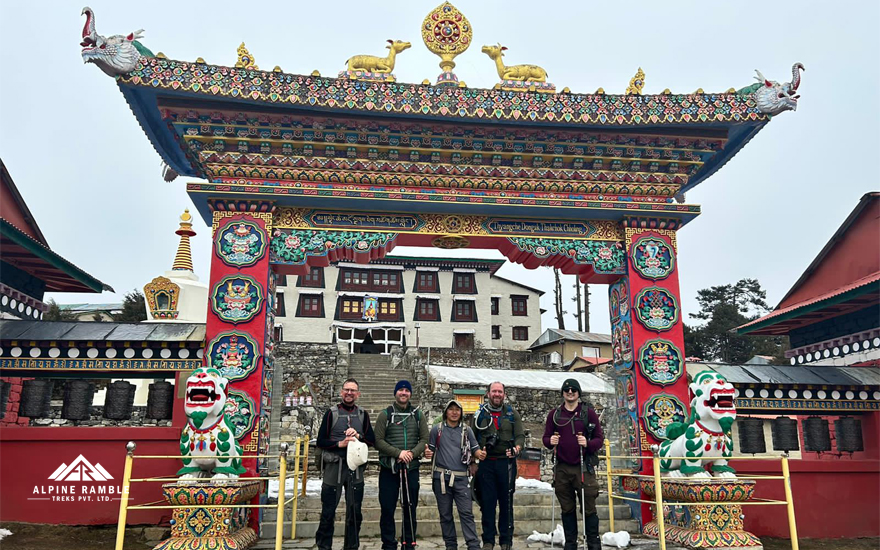
Everest holds far more significance than just the title of the “world’s highest peak.” To understand Everest, you must understand the spiritual identity of the Himalayas. Before climbers, before expeditions, before global fame, Everest was (and still is) a sacred being.
Sherpa & Tibetan Beliefs
For Sherpas and Tibetans, Everest (Chomolungma) is a holy goddess who watches over the people of the mountains. She is not simply a peak; she is a deity with power, presence, and protection.
Buddhist Rituals
Before stepping onto any part of the mountain, climbers participate in the puja ceremony led by local monks. During the ceremony:
- Sherpas pray for safety
- Climbers receive blessings
- Gear is purified with incense
- Everest is asked for permission
Tengboche Monastery
The spiritual heart of Khumbu, Tengboche Monastery stands on a ridge overlooking Everest, Lhotse, and Ama Dablam. For centuries, monks here have conducted rituals for:
- Expedition blessings
- Mountain protection
- Community well-being
Everest in Nepali Identity
- Sagarmatha represents:
- National pride
- Geographic magnificence
- Cultural heritage
- Global recognition
Everest is more than a mountain; it is a symbol woven into the stories, prayers, and identity of Himalayan communities.
Everest Region: Geography & Villages
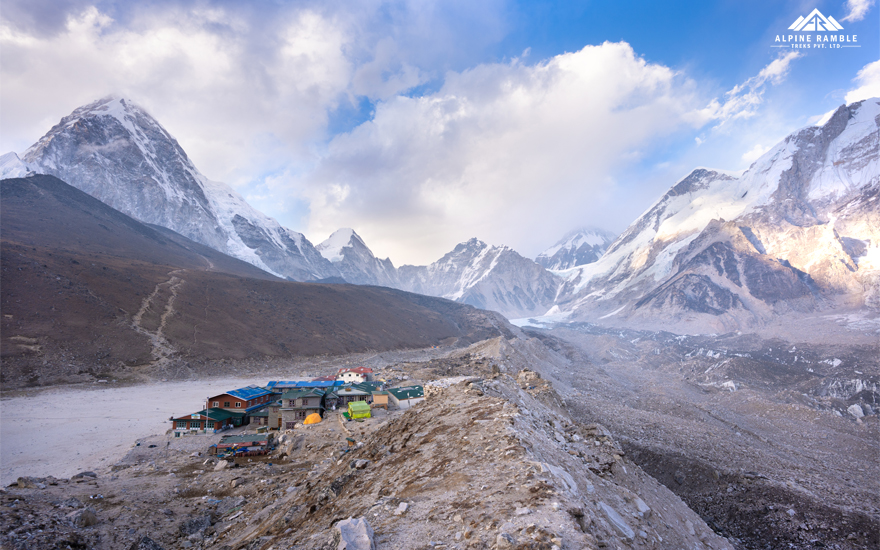
The Everest region, known as Khumbu, is a living landscape of glaciers, valleys, rivers, and ancient settlements. It is home to the Sherpa community and iconic landmarks known worldwide.
Key Locations in the Region
Lukla (2,860 m)
Home to the famous Tenzing-Hillary Airport, the gateway to Everest.
Namche Bazaar (3,440m)
The economic and cultural capital of the Sherpas. A horseshoe-shaped town surrounded by mountains.
Tengboche (3,867m)
Spiritual hub with a monastery that has blessed every expedition since the 1930s.
Khumjung & Kunde
Traditional villages with deep Sherpa heritage.
Dingboche, Lobuche, Gorak Shep
The final acclimatization settlements before Everest Base Camp.
Everest Base Camp
A seasonal village of tents, climbers, Sherpas, medics, and logistics teams, alive with international mountaineers from March to May.
Landscape Highlights
- Khumbu Glacier
- Khumbu Icefall
- Gokyo Lakes
- Ama Dablam’s sharp pyramid
- Kala Patthar viewpoint
Khumbu is more than a route; it is a living documentary of human adaptation to extreme environments.
Everest in Media, Literature & Pop Culture
Everest has inspired writers, filmmakers, photographers, and storytellers for over a century. Its combination of beauty and danger created a cultural phenomenon that extends far beyond mountaineering.
Books & Literature
Into Thin Air by Jon Krakauer
The Climb by Anatoli Boukreev
High Adventure by Edmund Hillary
Touching My Father’s Soul by Jamling Tenzing Norgay
These works shaped how the world perceives Everest as a place of triumph and tragedy.
Movies & Documentaries
Everest (2015)
Sherpa (2015)
14 Peaks (Nirmal Purja, 2021)
Beyond the Edge (2013)
BBC & National Geographic Everest specials
Pop Culture Influence
Everest memes
Social media adventures
Drone footage
VR and 360-degree summit videos
Global fascination with climbers like Nims Dai & Kami Rita Sherpa
Everest has moved beyond geography into the realm of global storytelling.
The Future of Everest
Summary Timeline: Everest From Ancient Sea to Modern Icon
Here is a clear, concise timeline of Everest’s entire history:
| Period/Year |
Key Events |
| 50–60 million years ago |
The Indian Plate collides with the Eurasian Plate.
The Himalayan uplift begins
Tethys Sea sediments rise upward |
| Ancient Era |
Tibetan texts reference Chomolungma
Sherpas migrate to the Khumbu region |
| 1840s–1850s |
The Great Trigonometrical Survey identifies “Peak XV.”
Radhanath Sikdar calculates it as the world’s tallest peak |
| 1921–1924 |
First British reconnaissance and climbing expeditions
Mallory & Irvine disappear near the summit |
| 1952 |
Swiss expeditions map the South Col route |
| 1953 |
Sir Edmund Hillary & Tenzing Norgay successfully reach the summit |
| 1976–1979 |
Sagarmatha National Park established
Later receives UNESCO World Heritage status |
| 1990s–2000s |
Commercial climbing begins to grow rapidly
1996 disaster brings global attention to Everest safety |
| 2010s–2020s |
Summit traffic jams become common
Sherpa climbers set numerous world records
Nepal & China jointly confirm Everest’s height: 8,848.86 m (2020) |
Key Takeaways: Everest Beyond Adventure
Everest is a masterpiece created by tectonic collision, shaped by glaciers, honored by Buddhist tradition, discovered through mathematical brilliance, and conquered by generations of climbers.
Everest’s true story contains:
- Ancient fossils that show the mountain once lay beneath the ocean
- Tibetan spiritual identity as Chomolungma long before Western mapping
- The history of Sherpa migration and their cultural development in Khumbu
- Scientific breakthroughs that measured its height and opened climbing routes
- Moments of triumph and tragedy that shaped modern mountaineering
- A fragile environment that is changing quickly with climate and tourism
Everest is not just a climb; it is a tapestry of Earth’s history, human courage, and cultural identity.
Everest in Modern Times
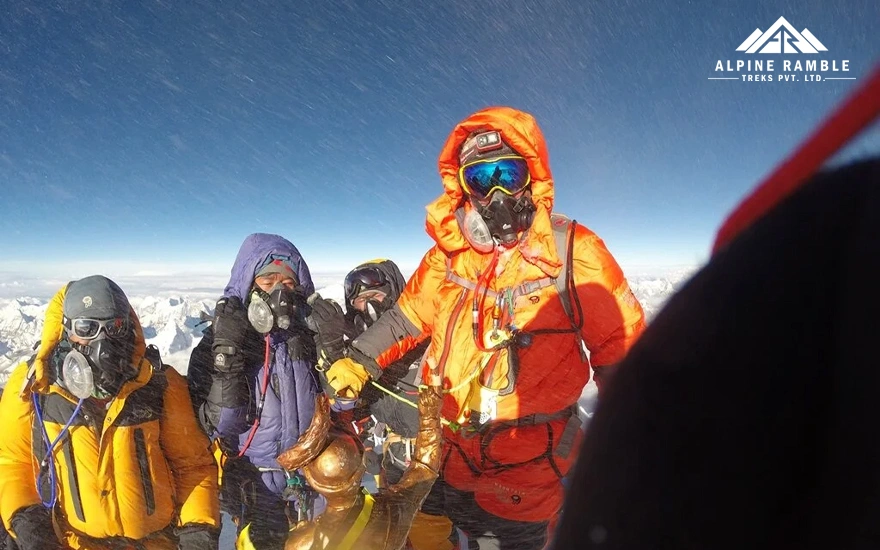
In today’s world, Everest is everywhere: TikTok, Instagram, books, films, and global news. Modern mountaineers like Nirmal Purja (Nims Dai) and Kami Rita Sherpa have rewritten record books.
The Everest Base Camp Trek continues to be Nepal’s most iconic trekking route, bringing tens of thousands of adventurers each year.
Meanwhile, the mountain undergoes reshaping due to climate change, crowds challenge its limits, and local communities balance economic opportunities with environmental responsibility.
Everest remains a symbol of ambition and a reminder of nature’s power.
Conclusion
Mount Everest’s history is not a single story. It is four different histories woven into one:
- Geological history: an ancient seabed rising upward to become the world’s highest peak
- Cultural history: a sacred mountain honored as a goddess by Sherpas and Tibetans
- Exploration history: a legacy shaped by courage, hardship, and remarkable discovery
- Modern history: a blend of technology, tourism, and global fascination
From the spiritual name Chomolungma to the Nepali identity of Sagarmatha to the worldwide recognition of “Everest,” the mountain represents a meeting point between nature, culture, and human ambition.
To understand Everest’s past is to see how our planet changes, how people adapt, and how powerful stories endure through generations.
Frequently Asked Questions
1. What is the meaning of “Sagarmatha” in Nepali?
“Sagarmatha” translates to “Forehead of the Sky.” It symbolizes the mountain rising so high that it touches the heavens.
2. Who officially named Mount Everest, and when did that happen?
In 1865, Andrew Waugh, the British Surveyor General of India, named the mountain “Mount Everest” in honor of his predecessor, Sir George Everest.
3. Was Mount Everest known by other names before it was called Everest?
Yes. Long before Western explorers arrived, the mountain was known as:
Chomolungma (Tibetan/Sherpa): “Goddess Mother of the World”
Sagarmatha (Nepali): “Forehead of the Sky”
4. Who first discovered that Sagarmatha was the highest mountain in the world?
In 1852, Indian mathematician Radhanath Sikdar used data from the Great Trigonometrical Survey to calculate that Peak XV (Everest) was the tallest mountain on Earth.
5. How old is Mount Everest geologically?
Everest is geologically young, formed 55–65 million years ago when the Indian Plate collided with the Eurasian Plate, lifting the ocean floor upward to form the Himalayas.
6. Is Sagarmatha still growing every year?
Yes. Everest rises approximately 3–5 millimeters per year due to ongoing tectonic pressure. Major earthquakes may slightly alter this height.
7. Who attempted to climb Sagarmatha first before Hillary and Tenzing?
Early attempts include:
- British expeditions of 1921, 1922, and 1924
- Mallory & Irvine’s legendary 1924 attempt
- The Swiss expeditions of 1952 nearly reached the summit.
These expeditions paved the way for the 1953 success.
8. Why is Tenzing Norgay so important in Everest’s history?
Tenzing Norgay Sherpa contributed decades of experience on Everest and, along with Sir Edmund Hillary, became the first confirmed person to reach the summit on May 29, 1953. He is a global symbol of Sherpa strength, skill, and leadership.
9. What role did Sherpa communities play in early Everest exploration?
Sherpas were crucial contributors:
- High-altitude porters
- Route fixers
- Rescue specialists
- Cultural guides
- Expedition leaders
Their physiological adaptation and mountain wisdom made Everest exploration possible.
10. What is the cultural and spiritual meaning of Mount Everest in Sherpa tradition?
To Sherpas, Everest is Chomolungma, the Goddess Mother of the Earth, a divine, sacred mountain that protects the region. Every expedition begins with a puja ceremony honoring the mountain.
11. Does Buddhism consider Sagarmatha sacred?
Yes. In Tibetan Buddhism, mountains, especially Everest, are sacred beings watched over by protective deities. Climbing is considered an act that requires spiritual permission.
12. What is the difference between Sagarmatha Base Camp and Everest Base Camp?
Only the name changes:
Nepalis use Sagarmatha
The international community uses Everest
The physical location is the same Base Camp on the Nepal side.
13. Has climate change affected the glaciers of Mount Everest?
Yes. Scientific studies show significant glacial thinning, especially since the 1990s. The Khumbu Glacier and other ice masses are retreating rapidly.
14. Who were the earliest foreign explorers to visit the Khumbu region?
Jesuit missionaries and early explorers like John Cabral (1620s) and later British surveyors were among the first outsiders to document or travel near the region.
15. What is the story behind George Mallory and the 1924 Everest attempt?
Mallory and Andrew Irvine disappeared on June 8, 1924, near the summit ridge.
They were last seen climbing strongly, but no one knows if they reached the top.
Their story is one of mountaineering’s greatest mysteries.
16. Why was Everest once debated as the highest mountain?
Nepal and China disagreed for decades over whether to measure:
- The snow height, or The rock height
This caused a 4-meter discrepancy until the joint 2020 measurement.
17. Why is Mount Everest important to South Asian identity?
Everest represents:
- Geological wonder
- Cultural pride
- Spiritual heritage
- Global recognition
- Nepal’s national symbol
It is a landmark of both natural and cultural identity.
18. What equipment did early Everest expeditions use compared to today?
Early climbers used:
- Wool clothing
- Heavy oxygen cylinders
- Primitive crampons
- Cotton tents
Today’s climbers use advanced down suits, ultralight gear, satellite comms, and high-performance oxygen systems.
19. How did media coverage change Everest's history?
Media turned Everest from a state-sponsored exploration into a global adventure sport, especially after:
- Newsreels (1920s)
- 1953 summit announcements
- Into Thin Air (1996)
- Viral social media in the 2010s–2020s
20. How many climbers have successfully summited Mount Everest?
As of recent counts:
- 7,200+ individuals have summited
- 12,800+ total summits, including repeats
These numbers grow each season.
21. Why do people still attempt Everest despite the risks?
People climb Everest for:
- Adventure
- Personal limits
- National pride
- Mountaineering passion
- Psychological accomplishment
- Lifelong dreams
For many, Everest symbolizes the ultimate test of human potential.