Lukla’s Geography: More Than Just an Airport

Dil Gurung
Updated on March 21, 2026
Luklageography

Lukla : More Than Just an Airport

If you land in Lukla expecting a remote airstrip, the first shock is how alive it is. Prayer flags snap in the wind, porters haul cargo loads heavier than most airline baggage carts, helicopters thud in and out, bakery ovens glow before sunrise, and within minutes you realize this place runs on far more than aviation.

Lukla is a town, a religious landscape, a logistics base, a Sherpa community, and the single most important access node to the Everest region.

Key Fact Detail
Official airport name Tenzing–Hillary Airport
IATA code LUA
District Solukhumbu District
Municipality Khumbu Pasang Lhamu Rural Municipality
Province Koshi Province, Nepal
Former local unit Chaurikharka Village Development Committee (VDC)

Origin of the Name “Lukla”

Before aircraft, before hotels, before trekking agencies, the place had a pastoral identity.

In Sherpa language, “Luk” is commonly interpreted as sheep or goats, and “La” often refers to a pass or high place. Lukla therefore loosely conveys “a high place with livestock”.

Historical accounts describe open grazing slopes dotted with temporary shelters rather than dense settlement. Seasonal movement of animals defined the landscape.

This origin matters, because it explains why the terrain was relatively open enough for later airstrip construction.

Life Before the Airport — The Jiri Route Era

Until the mid-1960s, reaching this region required a long overland approach from the Kathmandu Valley via the middle hills.

You would have walked through:

  • Dolakha region
  • Jiri area
  • Lamjura Pass
  • Numerous river valleys

The journey could take two weeks or more. Early Everest expeditions, including the successful 1953 ascent, followed this general route.

Lukla was not the starting point then. It was simply one stop along a chain of villages.

Local life centered on:

  • Agriculture, especially potatoes, buckwheat, and barley
  • Yak and sheep herding
  • Trade with Tibet prior to border closure in 1959
  • Monastic travel networks

Permanent structures were modest, built from stone and timber.

Construction of Tenzing–Hillary Airport, Dates, Builders, Engineering

Why It Was Built

After the 1953 ascent, Sir Edmund Hillary created the Himalayan Trust to improve living conditions in the Khumbu.

Building schools and hospitals was nearly impossible without air access. An airstrip became essential.

Construction Timeline

  • Planning began: early 1960s
  • Construction started: around 1964
  • Airstrip operational: about 1965
  • Paving upgrades: later decades
  • Renamed Tenzing–Hillary Airport: 2008

Who Built It

Not a large international construction firm. The runway was created primarily by:

  • Local Sherpa labor
  • Himalayan Trust support
  • Nepal government cooperation

Early leveling reportedly involved manual tools and community work rather than heavy machinery.

Engineering Constraints

Feature Geographic Reason
Short runway (about 527 m) Limited flat land
Uphill slope (about 12%) Needed braking assistance
Cliff at lower end Valley drop-off
Mountain wall at upper end No go-around possible

Airport elevation is about 2,845 m (9,334 ft).

Aircraft commonly operating include:

  • De Havilland Twin Otter
  • Dornier 228

Airlines serving Lukla typically include:

  • Tara Air
  • Summit Air
  • Sita Air, depending on operations and season

Why Flights Often Depart from Ramechhap

During peak seasons, many flights operate from Manthali Airport, Ramechhap, rather than Kathmandu due to congestion at Tribhuvan International Airport.

Travelers often drive about 4 to 5 hours from Kathmandu to Ramechhap before flying onward to Lukla.

Geography: Where Lukla Sits in the Himalaya

Lukla occupies a ridge above the upper Dudh Koshi River basin.

Nearby major geographic features include:

  • South of Namche Bazaar
  • Below the high Khumbu glacier region
  • Within the Sagarmatha watershed
  • On a slope between forest belt and subalpine zone

Surrounding mountains and peaks visible or nearby include:

  • Kusum Kanguru (6,367 m)
  • Kongde Ri (6,187 m)
  • Thamserku (6,608 m)
  • Kangtega (6,782 m)

These peaks dominate the skyline even before reaching Everest itself.

Climate and Weather — Why Forecasts Matter

Searches for weather in Lukla are not casual curiosity. Weather determines whether you arrive or leave at all.

Seasonal patterns are broadly as follows:

  • Spring (March to May): Mild, with increasing clouds
  • Summer Monsoon (June to September): Heavy rain and frequent cancellations
  • Autumn (October to November): Clear skies and peak trekking conditions
  • Winter (December to February): Cold mornings and often stable visibility

Morning flights are preferred because conditions usually deteriorate later in the day.

Population and Administration

Lukla falls under Khumbu Pasang Lhamu Rural Municipality in Solukhumbu District. The district headquarters is in Salleri.

The population is predominantly Sherpa, though Rai, Tamang, and other Nepali groups are also present due to trade, tourism, and migration.

Population fluctuates dramatically with trekking seasons.

Religious Sites and Spiritual Landscape

Lukla is embedded in Tibetan Buddhist cultural geography.

Key religious features include:

  • Chortens marking village boundaries
  • Mani walls carved with sacred texts
  • Prayer wheels along trails
  • Small monasteries and meditation spaces

Nearby major monasteries accessible from Lukla include:

  • Tengboche Monastery, further north
  • Thame Monastery, via alternative routes

These institutions anchor the spiritual life of the Khumbu.

Healthcare Facilities

Lukla hosts a functioning medical center serving both locals and trekkers.

Facilities typically include:

  • Primary healthcare services
  • Altitude sickness management
  • Emergency stabilization
  • Coordination for helicopter evacuation

Serious cases are usually flown to Kathmandu.

Education

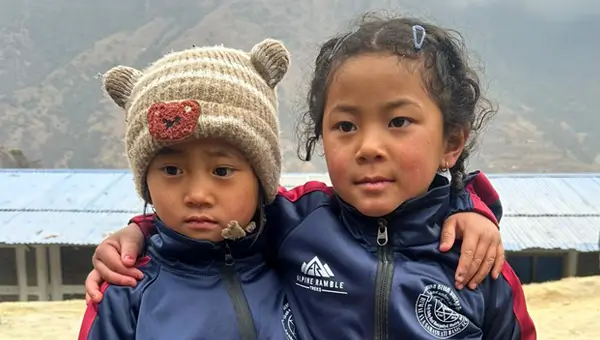
Schools in Lukla serve local children from surrounding settlements.

Many educational improvements in the wider region were enabled by development work associated with the Himalayan Trust and other support organizations.

Hotels, Lodges, and Accommodation

Contrary to expectations, Lukla offers a meaningful range of lodging options.

Notable establishments frequently mentioned by trekkers include:

  • Yeti Mountain Home Lukla
  • Everest Summit Lodge Lukla
  • Hotel Mera Peak
  • Various family-run tea houses and lodges

Amenities may include:

  • Heated dining rooms
  • Western-style meals
  • Hot showers
  • Wi-Fi access

Cafes, Bakeries, and Restaurants

Lukla has one of the most diverse food scenes in the Everest region.

You will find:

  • Traditional Sherpa dishes
  • Tibetan bread and noodle soups
  • Pasta, pizza, and rice dishes
  • Fresh bakery items
  • Espresso coffee and tea houses

Bakeries often open early to serve trekkers catching morning departures.

Shops and Supplies

Last-minute trekking gear is widely available in Lukla.

Common items include:

  • Gloves, hats, and socks
  • Trekking poles
  • Batteries and electronics
  • Snacks and bottled water
  • Medical supplies

Because everything is transported by air or porter, prices are typically higher than in Kathmandu.

Internet and Communication

Connectivity has improved significantly.

Options may include:

  • Mobile networks, though variable
  • Satellite internet
  • Lodge Wi-Fi
  • Charging stations

Electricity is supported by micro-hydro systems and backup generators.

Helicopter Operations

Helicopters are integral to Lukla’s infrastructure.

They are used for:

  • Emergency rescue
  • Cargo delivery
  • Luxury trekking itineraries
  • Direct transfers to higher camps and settlements

Multiple helipads exist near the airport and within surrounding terrain.

Routes That Begin in Lukla

Lukla is the starting point for numerous treks, including:

  • Everest Base Camp Trek
  • Gokyo Lakes Trek
  • Everest Three Passes Trek
  • Ama Dablam Base Camp Trek
  • Everest Panorama Trek

Approximate route timings include:

Route Segment Typical Time
Lukla to Phakding About 3 to 4 hours
Lukla to Namche Bazaar About 2 days
Lukla to Everest Base Camp About 8 to 10 days

These trails follow the Dudh Koshi valley and ascend through progressively harsher terrain.

Daily Life: How the Town Functions

Morning routine in Lukla often includes:

  • Cargo unloading from aircraft
  • Preparation of pack animals
  • Market activity
  • School attendance

Afternoons bring incoming trekking groups and changing weather. Evenings are centered around lodge dining rooms rather than nightlife.

Why There Is No Road

Lukla remains roadless because of extreme terrain.

Goods arrive via:

  • Aircraft
  • Helicopter
  • Porters carrying loads
  • Yak and mule caravans

This logistical constraint defines the regional economy and preserves traditional movement systems.

A Global Village at High Altitude

During peak seasons, Lukla hosts travelers from dozens of countries simultaneously.

Languages commonly heard include:

  • Sherpa
  • Nepali
  • English
  • German
  • French
  • Spanish
  • Korean
  • Japanese
  • Mandarin

Few settlements of comparable size anywhere on Earth experience such international turnover.

Final Perspective: Lukla as a Complete Mountain System

Lukla is:

  • A pastoral landscape transformed into a gateway
  • A Sherpa community adapting to global tourism
  • A high-altitude engineering experiment
  • A religious and cultural landscape
  • A logistical hub for Everest expeditions

The runway is simply the most visible layer.

Understanding Lukla requires looking beyond aircraft to the geography, culture, infrastructure, and human systems that make life possible at nearly 3,000 meters.

This is not an airport with a village attached. It is a mountain society that happens to host one of the world’s most famous airstrips.


Article Source

# Source Type Institution / Author Context Covered Exact URL
1 UNESCO Report UNESCO World Heritage Centre Sagarmatha National Park official evaluation https://whc.unesco.org/archive/advisory_body_evaluation/120.pdf
2 Government Plan Sagarmatha National Park Authority Official management plan https://www.snp.gov.np/uploads/download/1597001947.pdf
3 Academic Paper NEPJOL Ecotourism impacts in Sagarmatha region https://www.nepjol.info/index.php/hijase/article/download/56129/41969/168324
4 Scientific Study ICIMOD Khumbu region geography and development https://lib.icimod.org/records/w0yba-k2n54/files/VHP-72.pdf
5 Climate Research University of Maine Climate Change Institute Khumbu Glacier and Dudh Koshi basin survey https://climatechange.umaine.edu/2018/07/25/12760/
6 Environmental Science SCIRP Journal Water quality and tourism impact in Khumbu https://www.scirp.org/journal/paperinformation?paperid=101668
7 Anthropology Research Jeremy Spoon / Springer Sherpa livelihoods and tourism transition https://www.researchgate.net/publication/277303576_From_Yaks_to_Tourists_Sherpa_Livelihood_Adaptations_in_Sagarmatha_Mount_Everest_National_Park_and_Buffer_Zone_Nepal
8 Scientific Expedition National Geographic / Everest Research Climate change risks in Everest region https://arxiv.org/abs/2008.01010
9 Aviation Data Civil Aviation Authority of Nepal Tenzing–Hillary Airport operations https://caanepal.gov.np
10 Airport Technical Info Aviation Safety Network Lukla airport incidents and specifications https://aviation-safety.net/database/airport/airport.php?id=LUA
11 Government Tourism Nepal Tourism Board Official Everest region travel data https://ntb.gov.np
12 Geospatial Data NASA Earth Observatory Everest and Khumbu satellite imagery https://earthobservatory.nasa.gov
13 Topographic Survey Survey Department Nepal Official mapping of Solukhumbu https://dos.gov.np
14 Mountain Research International Mountain Society Himalayan ecosystem studies https://bioone.org/journals/mountain-research-and-development
15 UN Organization UN Environment Programme Himalayan environmental reports https://www.unep.org
16 Disaster Risk Research ICIMOD Glacial lake outburst risks in Everest region https://www.icimod.org
17 Mountaineering Records Himalayan Database Everest expeditions statistics https://www.himalayandatabase.com
18 Historical Archive Royal Geographical Society Early Everest exploration reports https://www.rgs.org
19 British Mountaineering Archive Alpine Club UK Everest expedition history https://www.alpine-club.org.uk
20 Government Statistics Central Bureau of Statistics Nepal Population and district data https://cbs.gov.np
21 UNESCO World Heritage Sagarmatha listing details https://whc.unesco.org/en/list/120
22 Academic Journal Human Ecology Sherpa cultural adaptation https://link.springer.com/journal/10745
23 Glaciology Research Journal of Glaciology Khumbu Glacier studies https://www.cambridge.org/core/journals/journal-of-glaciology
24 Hydrology Research IAHS Himalayan river systems https://iahs.info
25 Remote Sensing ESA Satellite observation Himalaya https://earth.esa.int
26 WHO World Health Organization High-altitude health research https://www.who.int
27 Academic University of Colorado Everest ice core research https://cires.colorado.edu
28 Polar Research National Snow & Ice Data Center Himalayan cryosphere https://nsidc.org
29 Tourism Research UNWTO Mountain tourism statistics https://www.unwto.org
30 Conservation NGO WWF Himalayan conservation projects https://www.worldwildlife.org
31 Academic Oxford Geography Mountain hazards research https://www.geog.ox.ac.uk
32 Scientific Publisher Nature Everest region climate studies https://www.nature.com
33 Science Journal Science Magazine Himalayan environmental change https://www.science.org
34 Engineering ASCE Library Mountain infrastructure studies https://ascelibrary.org
35 Disaster Research UNDRR Mountain risk reduction https://www.undrr.org
36 Climate Panel IPCC Himalayan climate assessments https://www.ipcc.ch
37 Academic Cambridge University Himalayan geology texts https://www.cambridge.org
38 Geology Survey USGS Plate tectonics Himalaya https://www.usgs.gov
39 Archaeology UNESCO Culture Himalayan heritage studies https://en.unesco.org
40 Medical Research High Altitude Medicine & Biology Altitude physiology https://www.liebertpub.com
41 Environmental Data World Bank Nepal mountain economy https://data.worldbank.org
42 Transport Research ADB Nepal infrastructure reports https://www.adb.org
43 Historical Records National Archives UK Everest expeditions archives https://www.nationalarchives.gov.uk
44 Anthropology Smithsonian Himalayan cultures https://www.si.edu
45 Mapping National Geographic Maps Everest cartography https://www.nationalgeographic.com/maps
46 NGO Himalayan Trust Khumbu development projects https://www.himalayantrust.org
47 Mountaineering American Alpine Club Everest climbing reports https://americanalpineclub.org
48 Journalism Archive BBC Everest region reporting https://www.bbc.com
49 Geography National Geographic Society Everest region science https://www.nationalgeographic.org
50 Global Research UNDP Nepal development reports https://www.undp.org

Need Help? Call Us+977 9813593530orChat with us on WhatsApp
Offer Packages
Everest Base Camp Trek
Best Seller

Classic Everest Base Camp Trek 14 Days

Price From
US$1299US$1599